
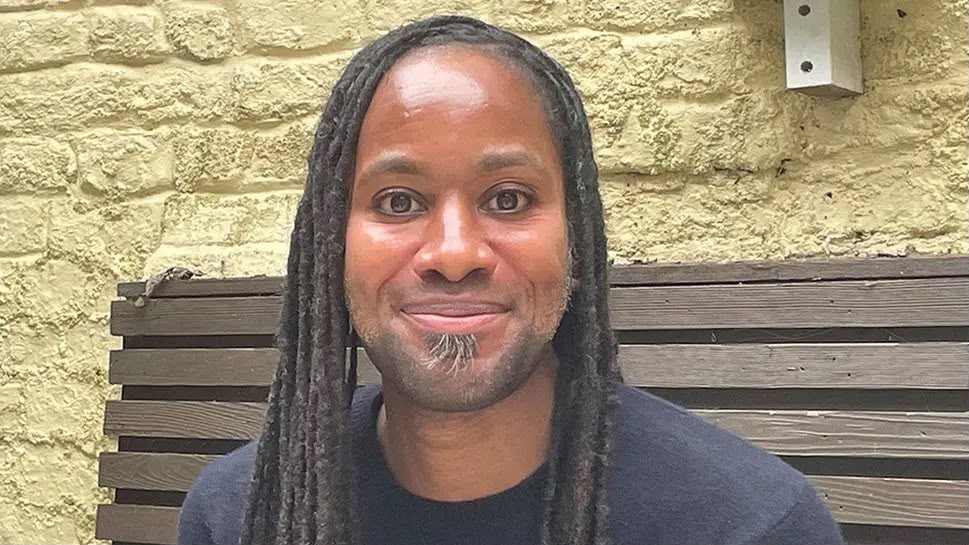
Daniella Maison
Opinion
“The death of Professor Jason Arday at just 41 has brought a devastating new dimension to the intense media scrutiny he faced in the final weeks of his life. As questions continue to surround the circumstances of his death, Daniella Maison reflects on the relentless coverage of his career, childhood, disability and personal history and asks a difficult question: when does legitimate scrutiny become hounding?”
Daniella MaisonEditor of Social Cause Issues
We design A Perfect Fit for Black Women
We’re breaking barriers of one-size-fits-all culture of mainstream fashion to a more customised fit for you.
WHERE HERITAGE HITS HOME
The Cornrow is a homeware curation dedicated to celebrating a modern Black aesthetic.

Two weeks ago, Jason Arday’s name began appearing everywhere.
“The rise and fall of Jason Arday.”
“Plagiarism and a pig’s head: the rise and fall of Jason Arday.”
“I was Jason Arday’s student. He was late to class and spouted nonsense.”
“Was Jason Arday non-verbal? His old schoolmates disagree.”
Day after day, another headline. Another excavation. Another piece of his life dragged into public view.
His academic work was scrutinised. Then his appointment. Then his qualifications. Then his memoir. Then his childhood. His disability. His memories. His former classmates. His former students. Whether he had really been non-verbal. Whether he arrived late to lectures. Whether people who had known him decades earlier remembered his own childhood the same way he did.
And today, the headline is that Jason Arday is dead.
He was 41.
I am writing this through tears.
We do not know the circumstances of Jason’s death. Police have said it is being treated as unexpected but not suspicious. There must be no attempt to invent a causal story where none has been established.
But refusing to speculate about his death does not require us to sanitise what happened before it.
Jason Arday was hounded.
For two weeks, the media pursued him with a relentlessness that went far beyond examining allegations about academic work. It reached into the smallest corners of his life. Former classmates were sought out to interrogate his childhood. Former students were invited to pass judgment on his teaching and intelligence. His disability was questioned. His memories were cross-examined. Even whether he had been late to class became national newspaper copy.
Two weeks ago, I wrote the first mainstream media piece to push back against the direction this coverage was taking. In The Independent, I asked where legitimate scrutiny ends and something more relentless, personal and existential begins. I wrote that scrutiny should establish the truth, not become permission to dismantle an entire human being.
I saw it as a witch-hunt then. I see it as a witch-hunt now.
There were a few of us trying to defend his corner, not by arguing that nobody should ask questions, but by insisting that there had to be a boundary somewhere between scrutiny and the wholesale dismantling of a person.
Because this has been an absolute travesty from start to finish.
Journalism has every right to investigate matters of genuine public interest. But there comes a point when scrutiny stops illuminating anything and simply becomes pursuit. When the professional question has been exhausted and the hunt moves on to childhood memories, disability, personality, former classmates, former students and whether someone once turned up late for work, we should have the courage to call that what it is.
Hounding.
There was a human nervous system underneath every one of those headlines. There was a man waking up each morning to discover which part of his life had been placed before millions of strangers next. There was a family watching his name become shorthand for scandal.
The media published stories asking whether he had really been non-verbal.
The media published stories about whether he was late to class.
The media invited people from decades ago to dispute the account he had given of his own childhood.
And now he is dead.
That sequence should stop us cold.
Because we can look at the spectacle of the past fortnight and ask how a human being came to be pursued with such intensity, and why so few people seemed prepared to say: enough.
Two weeks ago, the media asked who Jason Arday really was, whether he deserved what he had achieved and whether the story he told about himself could be believed.
Today, the headline is that he is dead at 41.
And every one of those other headlines now reads as unbearably inhumane.
Perhaps the question that should remain with us is no longer what else there was to uncover about Jason Arday.
It is why nobody knew when to stop.
Rest in peace, Professor Jason Arday. May the scrutiny finally end, and may you be remembered as a human being rather than a story the media could not stop consuming.
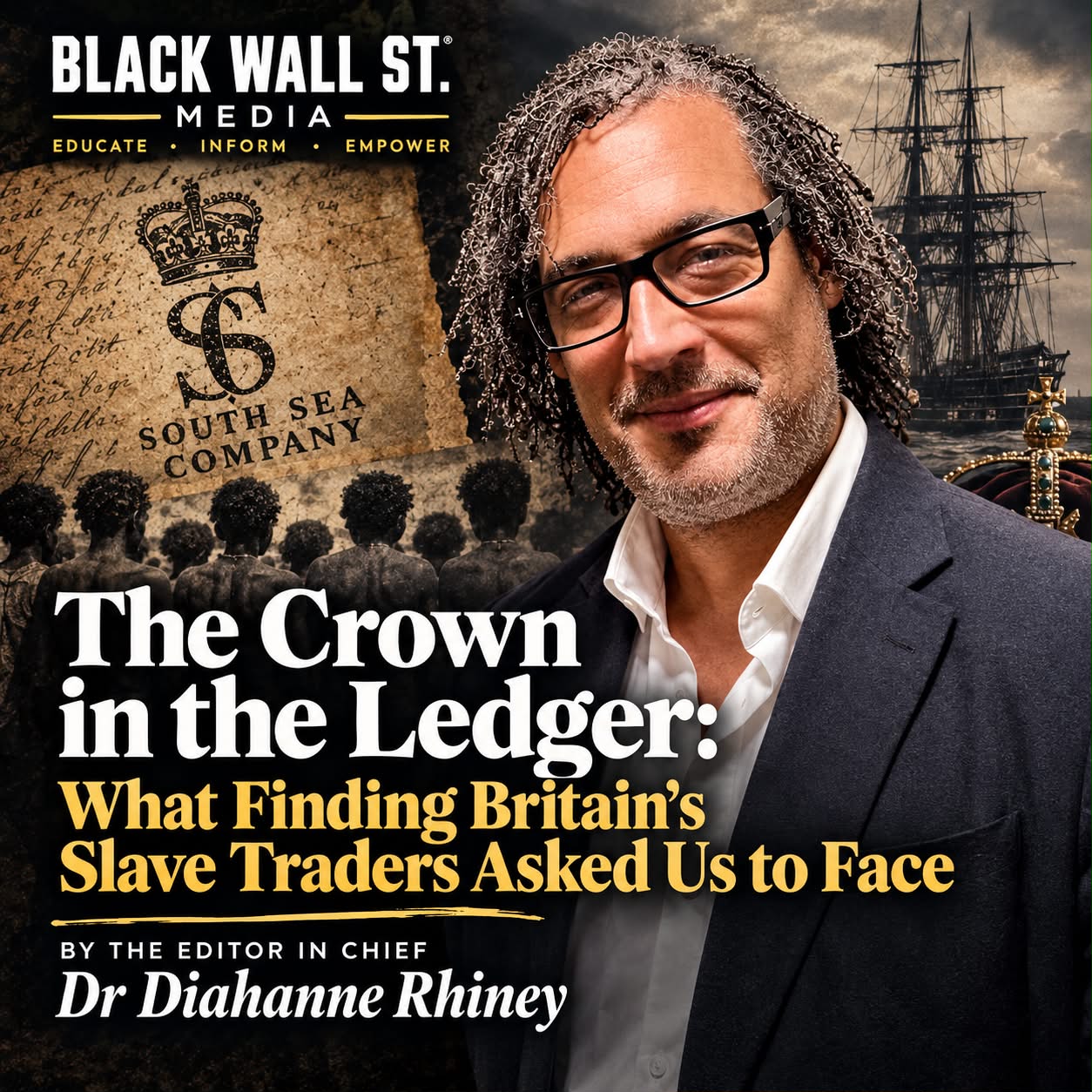
- Why Did Britain Need to See Jane, Christina, and Rebecca as Little Girls?
 Why did Britain need to see Jane, Christina and Rebecca as little girls to recognise their humanity? In this powerful and thought-provoking article, Daniella Maison challenges us to confront how race, media representation and perceptions of Black womanhood shape whose pain we recognise and whose vulnerability we acknowledge. Their childhood photographs may move us, but they should never have been necessary for us to see their humanity. Read Daniella Maison’s compelling article and join the conversation. Why should Black women have to be seen as children to receive the tenderness and compassion they deserve?
 - The Jamaican Who Stood Beside Kenyatta
 How did a boy from Kingston, Jamaica, become one of Britain’s most influential thinkers on race, culture and identity? This Black History Month, discover the story of Stuart Hall, the man who challenged Britain to question its history, its identity and who gets to define what it means to be British. Read his remarkable story and discover why his legacy still matters today.
 - Professor Folarin Shyllon Reclaiming Africa’s History
 Black History Month: Professor Folarin Shyllon — Reclaiming Africa’s History From uncovering the forgotten history of Black people in Britain to championing the return of Africa’s looted cultural treasures, Professor Folarin Shyllon dedicated his life to truth, justice and reclaiming heritage. Discover the remarkable legacy of a pioneering Nigerian legal scholar who challenged historical erasure and championed Africa’s right to its own history. Because reclaiming our history is reclaiming our power. Read the full article with Black Wall St. Media. Black history is world history.
 - ALLISTER VICTOR BAIN: THE MAN, THE ARTIST AND THE HISTORY WE MUST NOT FORGET
 This Black History Month, Black Wall St. Media pays tribute to Allister Victor Bain, the Grenadian-born artist, storyteller and cultural pioneer whose creativity helped shape Caribbean and Black British cultural life. Through the heartfelt memories of his friends, colleagues and family, we celebrate not only his remarkable contribution to the arts, but the man behind the legacy. His story is a powerful reminder that our pioneers deserve more than to be remembered after they are gone, their lives, work and history must be preserved for generations to come. Read the tribute. Discover his legacy. Help keep his story alive.
 - When Your Achievements Are Treated as a Question
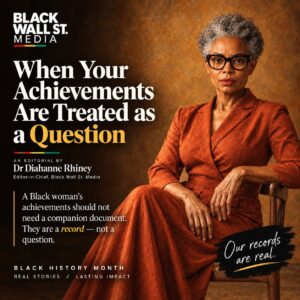 When a Black Woman Has to Prove Her Worth What happens when decades of achievement are met with doubt, and a Black woman finds herself having to justify not just her work, but her right to be in the room? This powerful and deeply personal reflection explores race, credibility, the emotional cost of constant scrutiny, and why being told to “let it go” is not always enough. This Black History Month, it is time to look beyond celebration and confront the realities Black women continue to face in the workplace.




Hair Freedom EXPO 2026
Read More
100 Black Women Campaign
Read More
Black Parenting: Discipline as Protection
Read More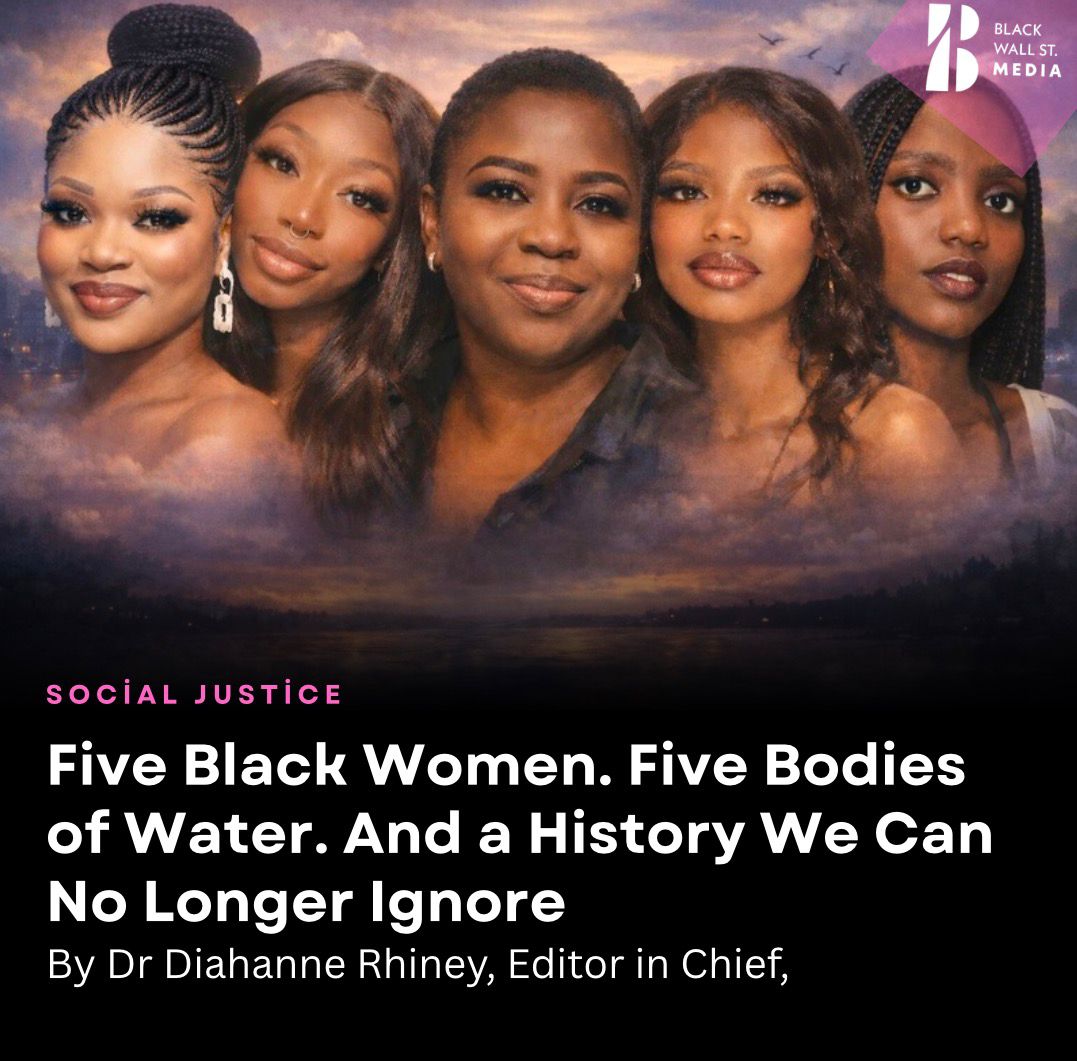
Five Black Women. Five Bodies of Water. And a History We Can No Longer Ignore
Read More
International Women’s Day: The Diaspora Women Who Carry the World on Their Shoulders
Read More
When Inclusion and Impact Collide at the BAFTAs
Read More
When Oversight Falls Silent
Read More
Ras Judah: The Elder Who Stood So We Could Stand
Read More
A Giant Has Fallen. What Jesse Jackson Meant to the Diaspora
Read More



Thank you, Daniella, for that sobering reflection on Jason Arday’s life. The right wing media especially has enjoyed a field day (more like a field month or more) wearing down and hounding a human being. Their piranha like instincts have also attempted to unfairly put DEI and Black professionals on trial. This desperation tells us all we need to know: naked anti-black racism might appear episodic but has been alive and well in the UK for decades. This is not the the time to be docile and complacent.