Arts & Culture
Notting Hill Carnival Was Never Just a Party.
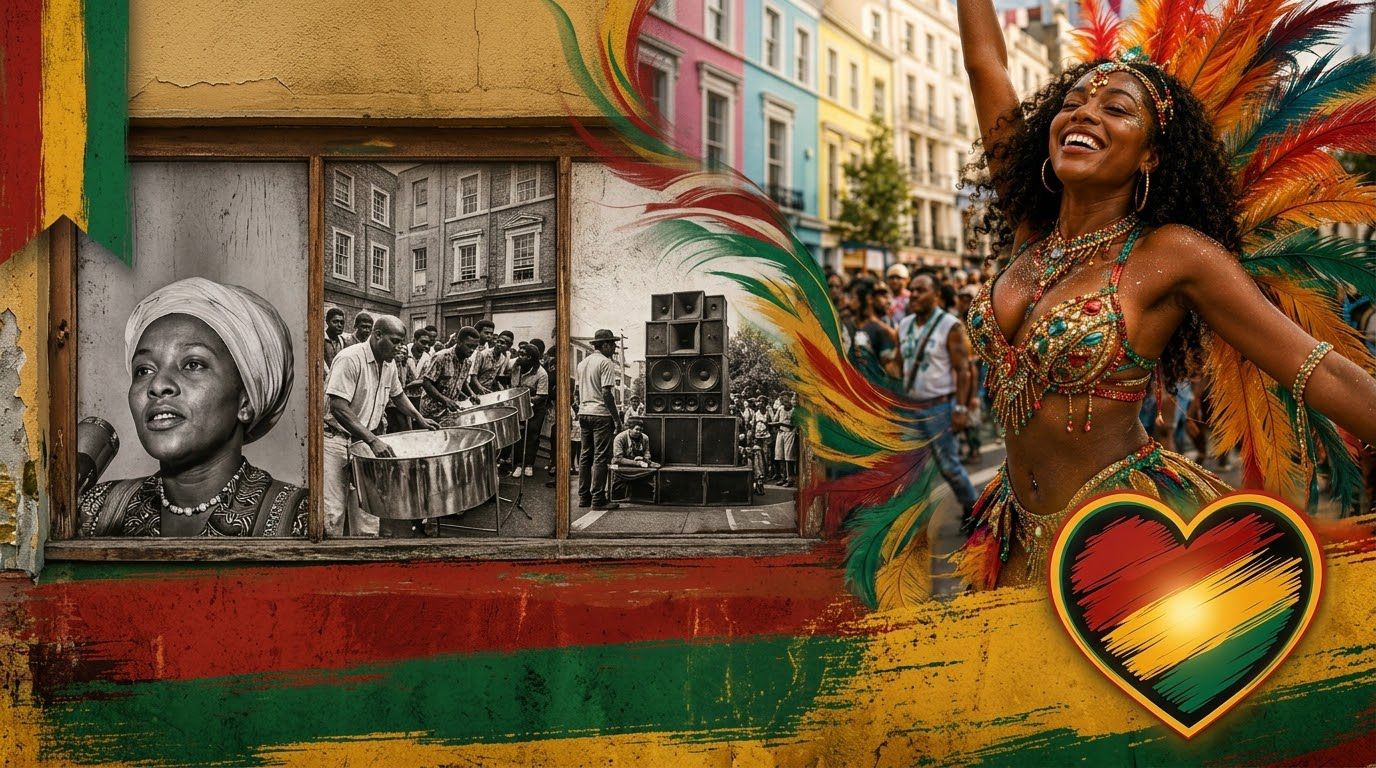
“Notting Hill Carnival was never just a party. It was born from racism, shaped by migration and transformed into one of Britain’s most powerful expressions of Black Caribbean culture. But how old is Carnival really and who helped build it?
From Claudia Jones and the pioneering 1959 Caribbean Carnival to Edric and Pearl Connor’s cultural activism, the 1964 turning point and the emergence of the street Carnival, this is a story of resistance, creativity, identity and belonging.
The Carnival was born more than once. And the people who helped build it deserve to be remembered.”
BWSMContributor
The Carnival Was Born Twice
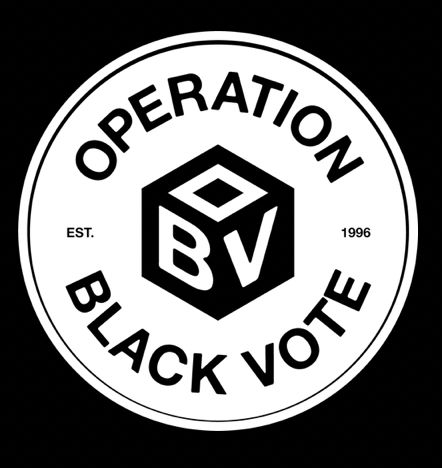
Notting Hill Carnival is more than a celebration. It is a story of migration, resistance, identity and survival and its history has two important beginnings.
There are some histories that refuse to be born only once.
They come into the world in one place, under one set of circumstances, and years later are born again, changed by time, necessity and the people who inherit them.
Notting Hill Carnival is one of those histories.
This is why people argue about how old Carnival really is.
They are both right. And they are both wrong.
Because before feathers, sequins, sound systems and steel pans transformed the streets of West London, there was deprivation, racism, grief and fear and a community determined to answer hatred with culture.
1959: Claudia Jones and the First Beginning
To understand Carnival, we have to go back to North Kensington after the Second World War.
For many Black residents, particularly Caribbean migrants who had come to Britain to work and build new lives, racism was part of everyday life. It existed in housing discrimination, hostility on the streets and attacks by racist groups.
The violence of August and September 1958, remembered as the Notting Hill riots, exposed the hostility facing Caribbean communities.
Forgotten Yet Transformative: The Anniversary of the Notting Hill Racist Riots
After the violence came a question:
What do you do when a place has taught you to be afraid of your neighbour?
Claudia Jones had an answer.
The Trinidad-born journalist, activist and organiser understood that culture could be resistance, memory and a means of reclaiming identity.
In 1959, she helped organise a Caribbean Carnival at St Pancras Town Hall in London.
There was steel pan, Caribbean music, costumes, performances and a beauty contest.
But the event represented something much bigger.
It declared that Caribbean people were not simply workers who had arrived in Britain. They had brought histories, traditions, music, language, colour and creativity with them and they intended to make that culture visible.
“A people’s art is the genesis of their freedom.” — Claudia Jones
The 1959 Carnival became a cultural foundation for what followed, and Jones became known as the Mother of Notting Hill Carnival.
But she was part of a much wider Caribbean cultural movement.
Edric and Pearl Connor: Building the Cultural Foundation
Among the people who deserve greater recognition are Edric and Pearl Connor.
Edric Connor, the Trinidadian singer, actor, folklorist, producer and broadcaster, was a major figure in bringing Caribbean culture to British audiences. Pearl Connor was a cultural organiser and advocate in her own right.
Together, they established the Edric Connor Agency, helping Black performers gain professional opportunities in British theatre, television, radio and entertainment at a time when racism severely restricted access.
Edric also played a leading role in the 1959 Carnival.
Their importance extends beyond a single event. They helped create the cultural networks and infrastructure through which Caribbean artists and traditions could flourish in Britain.
Their contribution belongs firmly within the history of the cultural movement from which Notting Hill Carnival emerged.
1964: The Second Beginning
Claudia Jones died in 1964.
Her death did not end the movement she had helped create.
Caribbean cultural activity continued through music, gatherings and street celebrations, including jam sessions and “jump-ups”.
This is why 1964 matters.
It marks the beginning of a new phase in which the community carried Jones’s cultural vision forward without her.
The Carnival tradition was no longer confined to a hall.
It was becoming part of community life.
Then came 1966.
Community activist Rhaune Laslett organised a multicultural neighbourhood festival in Notting Hill. Andre Shervington was asked to invite people who played the tin pan and brought in Russell Henderson, known for the “Sunday School” jam sessions he organised at the Coleherne Pub in Earls Court.
After performing, Henderson took the steel pans into the streets.
People followed.
The music moved.
The community gathered.
And the street became part of the celebration.
The 1966 festival is therefore widely recognised as a crucial stage in the development of the annual Notting Hill street Carnival but it was built upon a cultural movement that had begun years earlier.
The 1970s: Caribbean Culture Takes the Street
Carnival changed again during the 1970s.
Leslie Palmer and Frank Bynoe are widely credited with helping shape the event into the Carnival we recognise today.
But the transformation involved many others.
Lawrence Noel, his wife Joan and their children contributed to the development of Carnival costume and design, alongside the influence of Trinidadian artist Peter Minshall.
There was also significant work within education. Caribbean culture and costume-making were taught in schools through the Inner London Education Authorities, while Trevor Carter, husband of actress Coreen Skinner-Carter, headed work under the Carnival and Arts Committee.
These developments helped establish Carnival as a collection of artistic disciplines costume, mas, music, steel pan, dance and sound rather than simply an annual street party.
Who Gets Credit?
There is an uncomfortable question within this history.
Why does Caribbean cultural achievement in Britain so often seem to require the presence of a white person before it is recognised as legitimate?
Caribbean people were organisers, musicians, designers, performers, educators and cultural leaders.
They built committees.
They made costumes.
They taught.
They performed.
They organised.
They developed the sound.
They created the culture.
The history of Carnival should therefore not be told as though Caribbean communities simply participated in something created by others.
They were among the people who built it.
Carnival is evidence of Caribbean creativity, organisation and leadership and that contribution deserves to be recognised on its own terms.
Sound, Identity and BASS
As Carnival developed, sound became increasingly important.
Reggae, ska, dub and other Caribbean sounds were becoming part of the identity of a new generation of Black Britons.
They were no longer simply listening to Caribbean music from elsewhere.
They were creating something of their own.
Jamaican.
Trinidadian.
Caribbean.
British.
Londoner.
Sometimes all at once.
By 1984, sound-system culture was being recognised as one of Carnival’s artistic disciplines. It was given the name BASS — British Art Sound System.
The sound system was more than music.
It was a meeting place, a cultural statement and a space through which a generation could express itself.
What Carnival Means Today
Today, Notting Hill Carnival is one of the world’s most recognisable celebrations of Caribbean culture.
The costumes, steel pan, sound systems, food, dance and music are the visible expression.
But beneath the spectacle is a history of migration and resistance.
The streets of West London became a place where Caribbean culture could be publicly expressed by people whose communities had once faced racism and exclusion.
That transformation matters.
Carnival did not simply bring Caribbean culture to Britain.
It helped change what British culture could be.
So, How Old Is Notting Hill Carnival?
There is no single answer.
If we begin with 1959, we recognise Claudia Jones and the Caribbean Carnival at St Pancras Town Hall.
If we begin with 1964, we recognise the continuation of that cultural movement after Jones’s death through community gatherings, music and jump-ups.
If we look to 1966, we see the steel pan moving through the streets of Notting Hill and the development of the annual street celebration.
The 1970s and 1980s brought further transformations through Carnival arts, education, costume and sound systems.
Each generation added something.
Each generation inherited the culture and reshaped it.
So perhaps Carnival’s history cannot be measured by one birthday.
It is better understood as a continuous process of cultural creation.
Britain Has a Memory Problem
Britain has a complicated relationship with its Black history.
It loves the music without always remembering the struggle that produced it.
It loves the food without always remembering the migration that brought it.
It celebrates the spectacle without always asking why the spectacle became necessary.
Carnival asks us to remember.
Claudia Jones.
Edric and Pearl Connor.
Rhaune Laslett.
Russell Henderson.
Leslie Palmer.
Frank Bynoe.
Lawrence and Joan Noel.
Peter Minshall.
Trevor Carter.
And the countless musicians, designers, costume makers, performers, teachers, organisers and community members whose names may never appear in the official histories.
Because Carnival was never the creation of one person.
It was built by generations.
And perhaps that is why it continues.
Every year, when the pan rings out and the bass moves through West London, another generation inherits the story.
They dance.
They sing.
They create.
They remember.
And in doing so, they make Carnival again.
The Carnival was born twice.
First in 1959, through Claudia Jones’s determination to make Caribbean culture visible.
Then from 1964, after her death, through the community that carried her vision forward and helped take it into the streets.
Everything that came afterwards the pan, the mas, the costumes, the sound systems, the artistry and the generations of people who have made Carnival their own grew from that continuing process.
Its history cannot be measured simply in years.
It must be measured in memory, resistance, creativity, community and joy.
And in the extraordinary human insistence that, after everything—
we are still here.
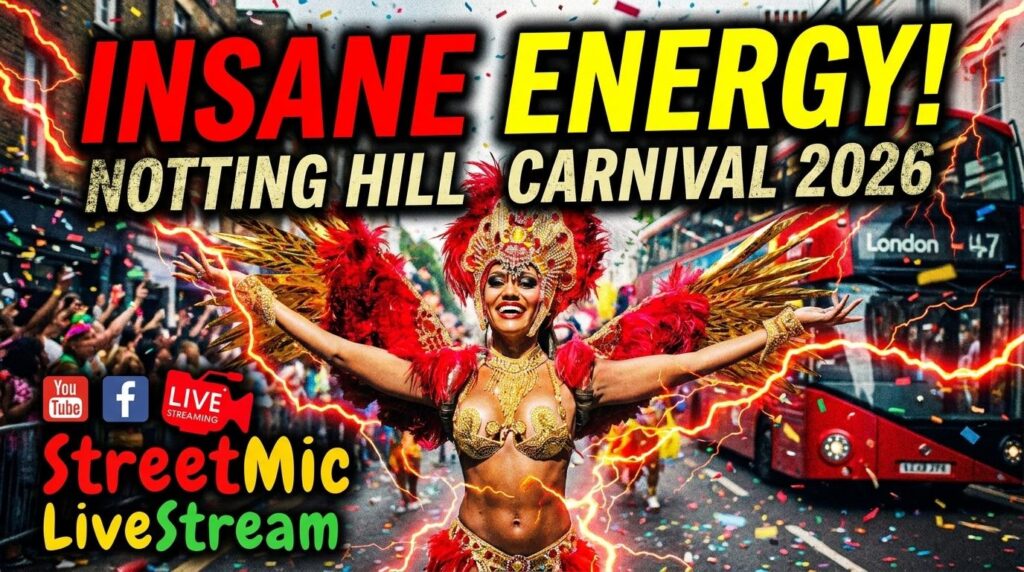
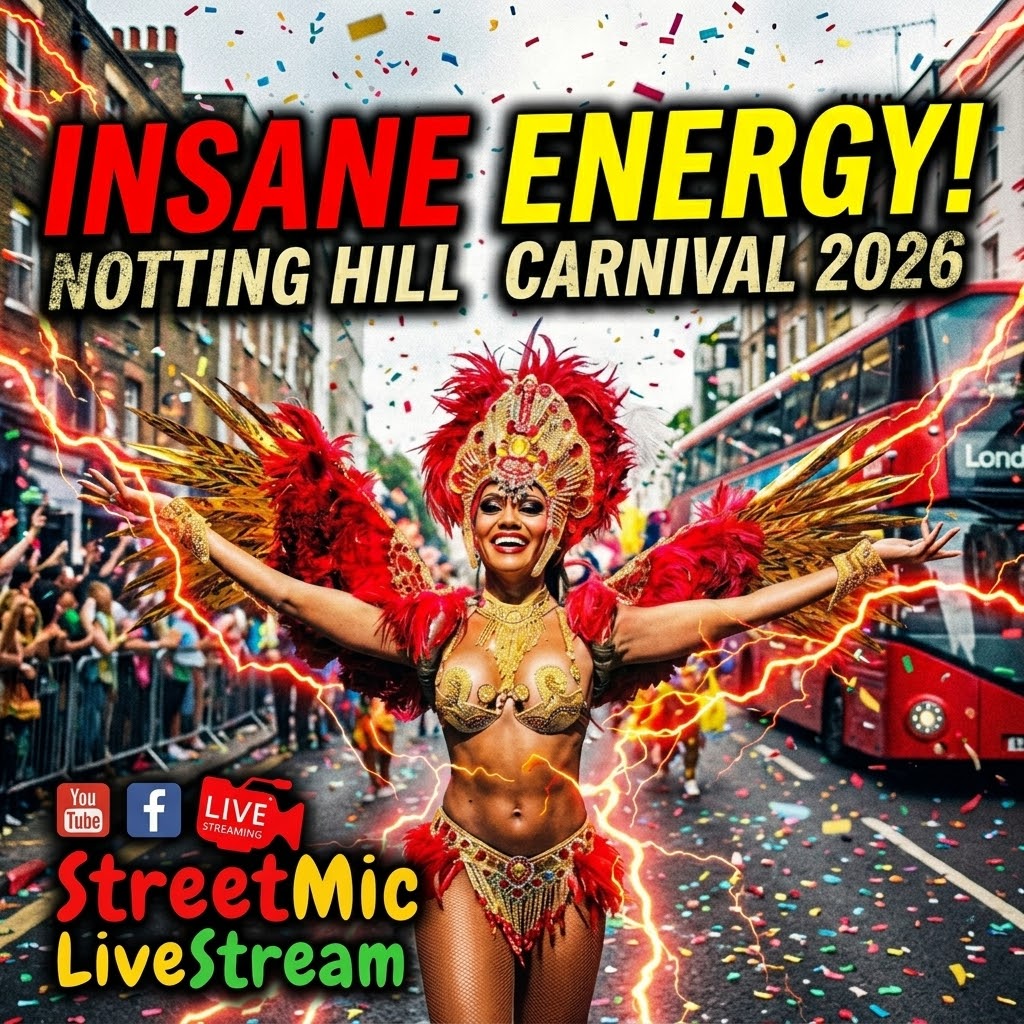
INSANE ENERGY INCOMING! ⚡️🎉
Get ready for the ultimate Notting Hill Carnival 2026 experience! 🚨 Streetmic and Black Wall St Media are bringing you live, uninterrupted coverage straight from the heart of the vibes all weekend long! 🥁🔊💃
Don’t miss a single beat, costume, or moment! 🙌✨
⏰ When: Starting this weekend from 9:00 AM
🌐 Where: Streamed LIVE directly from our website!
Tap the image at 9:00 AM to join the live stream!
- The Jamaican Sculptor Who Carved His Way Into History
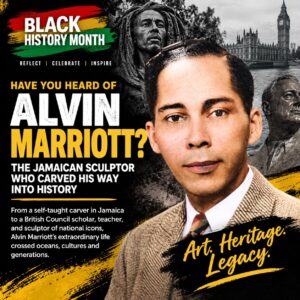 Have you heard of Alvin Marriott? A Jamaican sculptor whose extraordinary talent took him from carving limestone in Jamaica to helping restore the Houses of Parliament in Britain, teaching a new generation of artists and creating a monument to Bob Marley in his eighties. This Black History Month, discover the remarkable story of a man whose hands helped shape history, yet whose name remains unfamiliar to so many. It is time to look again, remember his contribution and give Alvin Marriott the recognition he deserves.
 - Damilola Taylor: The Boy Who Never Made It Home
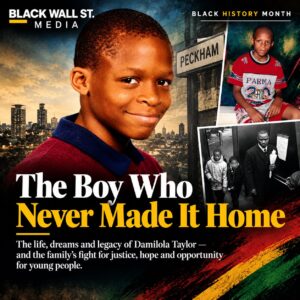 He was just ten years old. He loved football, supported Manchester United and dreamed of becoming a medical researcher so he could help his sister. On 27 November 2000, Damilola Taylor was fatally injured while walking home in Peckham. His death shocked Britain. His family endured years of waiting for justice. But his parents, Richard and Gloria Taylor, refused to let their son’s legacy be defined by the violence that took him. They established the Damilola Taylor Trust to help give other young people hope, opportunities and a better chance of a future. This Black History Month, we remember the child behind the headlines — his dreams, his family and the future he was never given the chance to live. Every child deserves to make it home. Every child deserves a future. Read our Black History Month feature with Black Wall St. Media.
 - Alzheimer’s the Black doctor who helped decode the disease
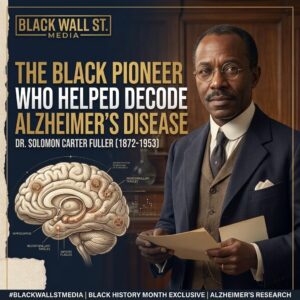 🧠✨ Celebrating an Unsung Hero! Dive into the captivating journey of Dr. Solomon Fuller, a pioneer in Alzheimer's research and a standout figure in Black history. From his roots in Liberia to groundbreaking discoveries, discover the legacy of a medical trailblazer who defied adversity. 🌟
 - The Voice of the Child, Young Person and; Service User
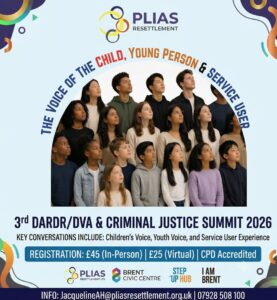 Whose voices are we really hearing? And what happens when we truly listen? The 3rd DARDR/DVA & Criminal Justice Summit 2026 will bring together professionals, practitioners, community organisations, academics and people with lived experience to place children, young people and service users at the heart of the conversation. Under the theme “The Voice of the Child, Young Person & Service User,” this year’s Summit will explore domestic abuse, violence, safeguarding, exploitation, trauma and criminal justice — but most importantly, how listening can move beyond consultation and become meaningful action. 📅 Friday 27 November 2026 📍 Brent Civic Centre, Wembley 💻 Hybrid Event | CPD Accredited Read more about the Summit, the conversations it will explore and how to book your place.
 - The Crown in the Ledger: What Finding Britain’s Slave Traders Asked Us to Face
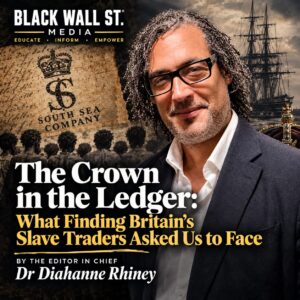 What happens when Britain’s history is no longer told through monuments, wealth and institutions, but through the ledger behind them? Finding Britain’s Slave Traders with David Olusoga brings names, companies, royal connections and fortunes into focus, forcing us to confront how deeply the transatlantic slave trade was embedded in British society. In “The Crown in the Ledger,” we explore what these records reveal about wealth, power, responsibility and the legacy that remains today. Read the full article and ask yourself: who owns what, who benefited, and what does honest accounting look like?



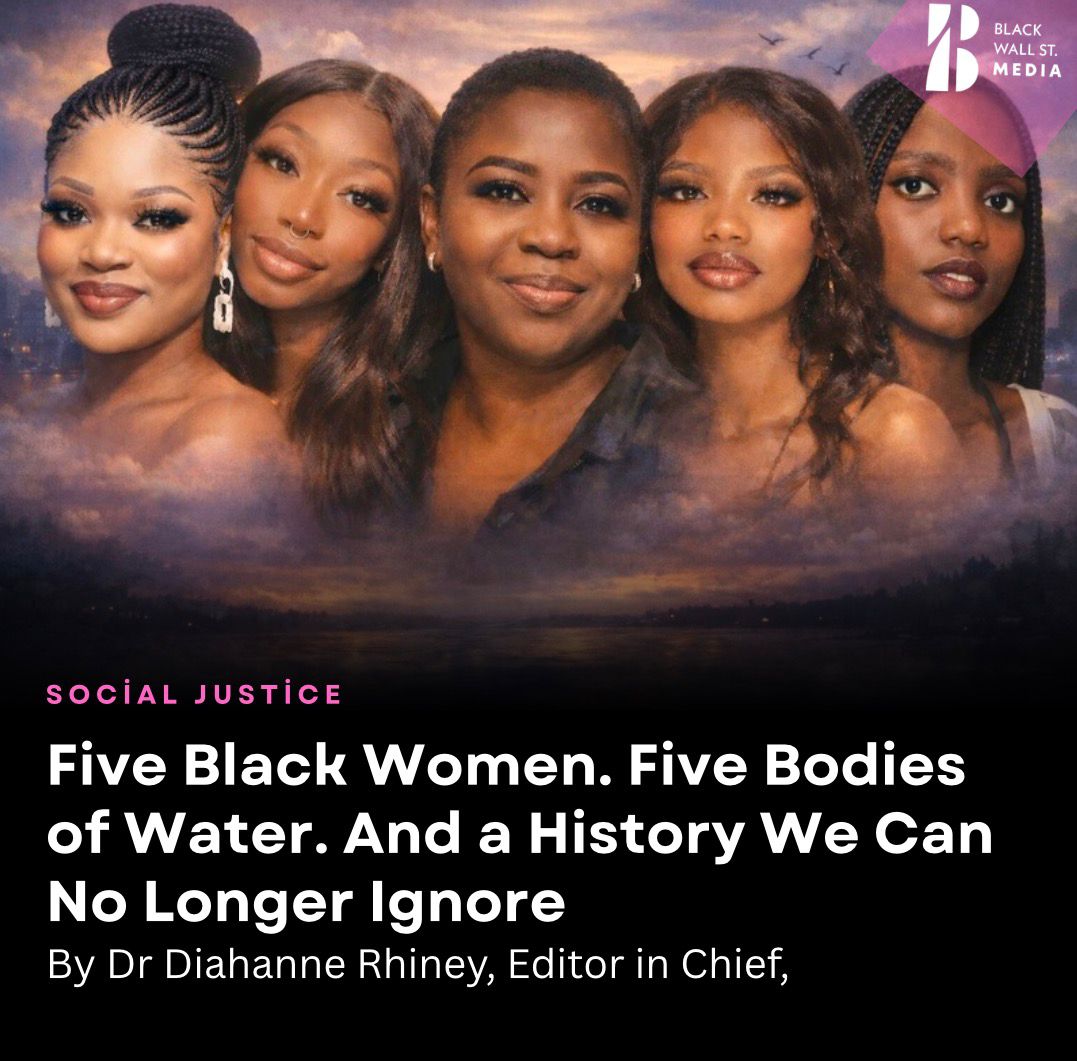
Five Black Women. Five Bodies of Water. And a History We Can No Longer Ignore
Read More
Mother’s Day and the Quiet Legacy of Our Mothers
Read More
Editor’s Letter March 2026
Read More
Locked Out of the Purse Strings
Read More
Editors Letter – January 2026
Read More
Editors Letter – October 2025
Read More
Editors Letter – September 2025
Read More
Editors Letter – August 2025
Read More
Editors Letter – July 2025
Read More