Gender / Women’s Leadership
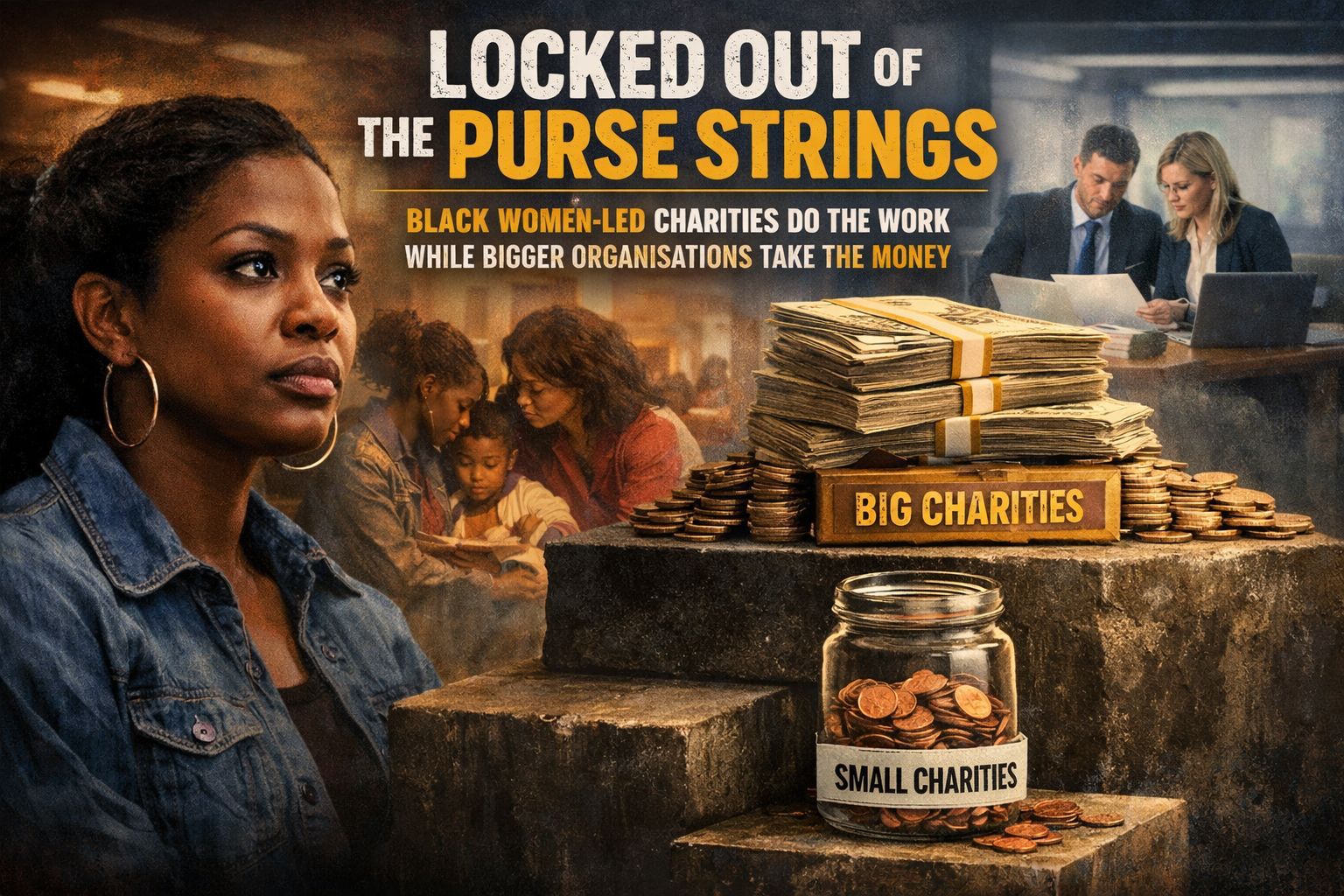
Why Black Women Led Charities Are Doing the Work While Others Take the Money
“Black women across the UK are leading charities on the frontlines of social need—tackling domestic abuse, mental health crises, food poverty, and community violence—often where the state has stepped back. Yet funding rarely reaches them. While large charities control most grants, grassroots organisations led by Black women are expected to do more with less, despite carrying risk, delivering results, and holding deep community trust. The work is being done; now the money must follow.”
Diahanne RhineyEditor in Chief
Across the UK, Black women are founding charities at the sharpest edges of social need.
We are responding to domestic abuse, safeguarding young people, mental health crises, food poverty and community violence often in places the state and mainstream institutions have long retreated from.
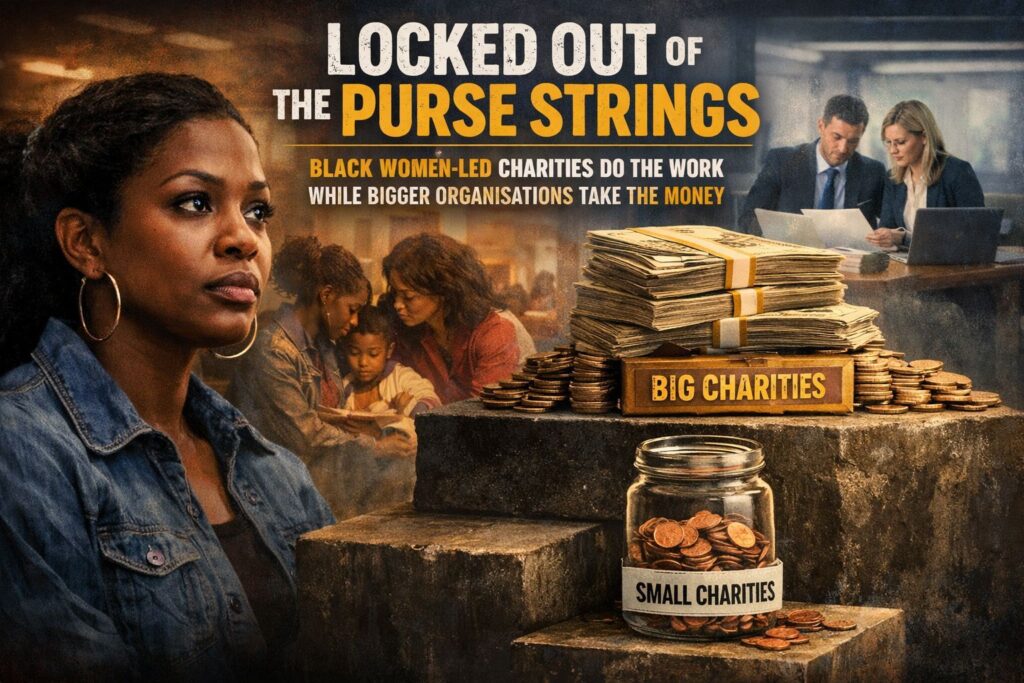
Yet when it comes to funding, Black women led charities remain structurally sidelined, chronically under resourced and routinely asked to do more with less. This is not about a lack of impact. It is about how money flows.
Research commissioned by the Ubele Initiative found that Black and minoritised charities receive a fraction of the UK’s total grant funding.
In some years the figure has been estimated at around 0.2 percent. Let that sink in. While Black communities experience disproportionate levels of poverty, exclusion and state intervention, the organisations rooted in those communities are expected to survive on crumbs.
The picture becomes even starker when Black women are at the helm. Despite the explosion of rhetoric around equity, diversity and inclusion since 2020, very little of that language has translated into meaningful funding for Black female founders. Instead, we see a familiar pattern repeated across sectors.
Large national charities secure multi million pound grants. A significant proportion of that funding is allocated to central administration, management fees and infrastructure costs.
Meanwhile, the smaller grassroots organisations actually delivering the programmes on the ground are subcontracted to deliver outcomes for a fraction of the cost.
This is not partnership. It is extraction. Data from the Charity Commission shows that the UK charity sector is highly concentrated. A small number of large charities control a disproportionate share of income and assets.
These organisations are often better resourced to navigate complex application processes, employ bid writers and meet restrictive compliance requirements. Grassroots charities led by Black women, many operating with one or two paid staff or entirely volunteer led, are effectively locked out before they even begin.
Funders often justify this imbalance by citing risk, governance or capacity. Yet this logic collapses under scrutiny. Black women led charities are already managing risk every day. We are safeguarding vulnerable people, mediating crises and filling gaps left by statutory services.
What we lack is not competence but capital. Even when funding does reach Black women led organisations, it is frequently short term, tightly restricted and project based.
Rarely does it cover core costs. Rarely does it support leadership development, organisational growth or long term sustainability.
According to sector analysis by the National Council for Voluntary Organisations, underinvestment in core funding is one of the primary reasons small charities struggle to scale or sustain their impact.
For Black women led charities, this underinvestment is systemic. The contradiction is glaring. Funders demand collaboration, lived experience and community trust. Black women founders bring all three in abundance.
Yet the financial model rewards distance from the community rather than proximity to it. Those closest to the problems are kept furthest from the purse strings. This funding architecture also distorts accountability.
When large charities hold the grants and smaller ones deliver the work, power flows upwards while risk flows downwards. If a programme struggles, it is the grassroots partner that absorbs the reputational and operational damage, often without the reserves to recover.
This is not sustainable and it is not just. There are solutions. Funders must commit to ringfenced funding for Black women led charities with grants that cover core costs as well as programmes. Application processes must be simplified and assessed with cultural competence.
Due diligence should be proportionate, not punitive. Most importantly, funders must stop using large charities as financial gatekeepers to communities they do not lead and do not represent.
The UK charity sector prides itself on fairness, innovation and social justice. Yet until Black women led charities are funded equitably, those values ring hollow.
We are not asking for charity. We are asking for a redistribution of trust, resources and power. Because the truth is simple. Black women are already doing the work. It is time the funding caught up.
- Alzheimer’s the Black doctor who helped decode the disease
 🧠✨ Celebrating an Unsung Hero! Dive into the captivating journey of Dr. Solomon Fuller, a pioneer in Alzheimer's research and a standout figure in Black history. From his roots in Liberia to groundbreaking discoveries, discover the legacy of a medical trailblazer who defied adversity. 🌟
 - The Voice of the Child, Young Person and; Service User
 Whose voices are we really hearing? And what happens when we truly listen? The 3rd DARDR/DVA & Criminal Justice Summit 2026 will bring together professionals, practitioners, community organisations, academics and people with lived experience to place children, young people and service users at the heart of the conversation. Under the theme “The Voice of the Child, Young Person & Service User,” this year’s Summit will explore domestic abuse, violence, safeguarding, exploitation, trauma and criminal justice — but most importantly, how listening can move beyond consultation and become meaningful action. 📅 Friday 27 November 2026 📍 Brent Civic Centre, Wembley 💻 Hybrid Event | CPD Accredited Read more about the Summit, the conversations it will explore and how to book your place.
 - The Crown in the Ledger: What Finding Britain’s Slave Traders Asked Us to Face
 What happens when Britain’s history is no longer told through monuments, wealth and institutions, but through the ledger behind them? Finding Britain’s Slave Traders with David Olusoga brings names, companies, royal connections and fortunes into focus, forcing us to confront how deeply the transatlantic slave trade was embedded in British society. In “The Crown in the Ledger,” we explore what these records reveal about wealth, power, responsibility and the legacy that remains today. Read the full article and ask yourself: who owns what, who benefited, and what does honest accounting look like?
 - Is ‘Othello’ relevant today?
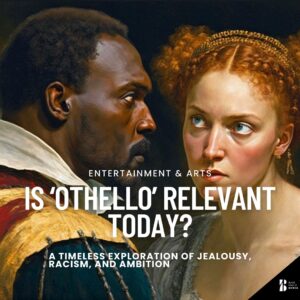 Othello: A Timeless Exploration of Jealousy, Racism, and Ambition
 - A life lived beyond the limits of representation
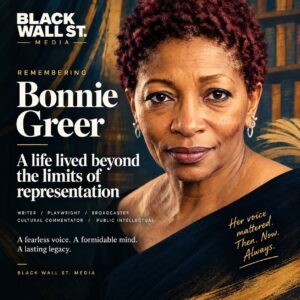 Bonnie Greer was never simply a writer, playwright or broadcaster. She was a cultural force who refused to be confined by the expectations placed on Black women in public life. From Chicago to Britain, from theatre and literature to television and institutional leadership, she built a life defined by intellect, independence and an unapologetic right to occupy space. As Britain remembers her following her death at 77, this article looks beyond the achievements and asks what her life represented: the power of cultural authority, the importance of institutional access, and the freedom to be fully human rather than simply inspirational.



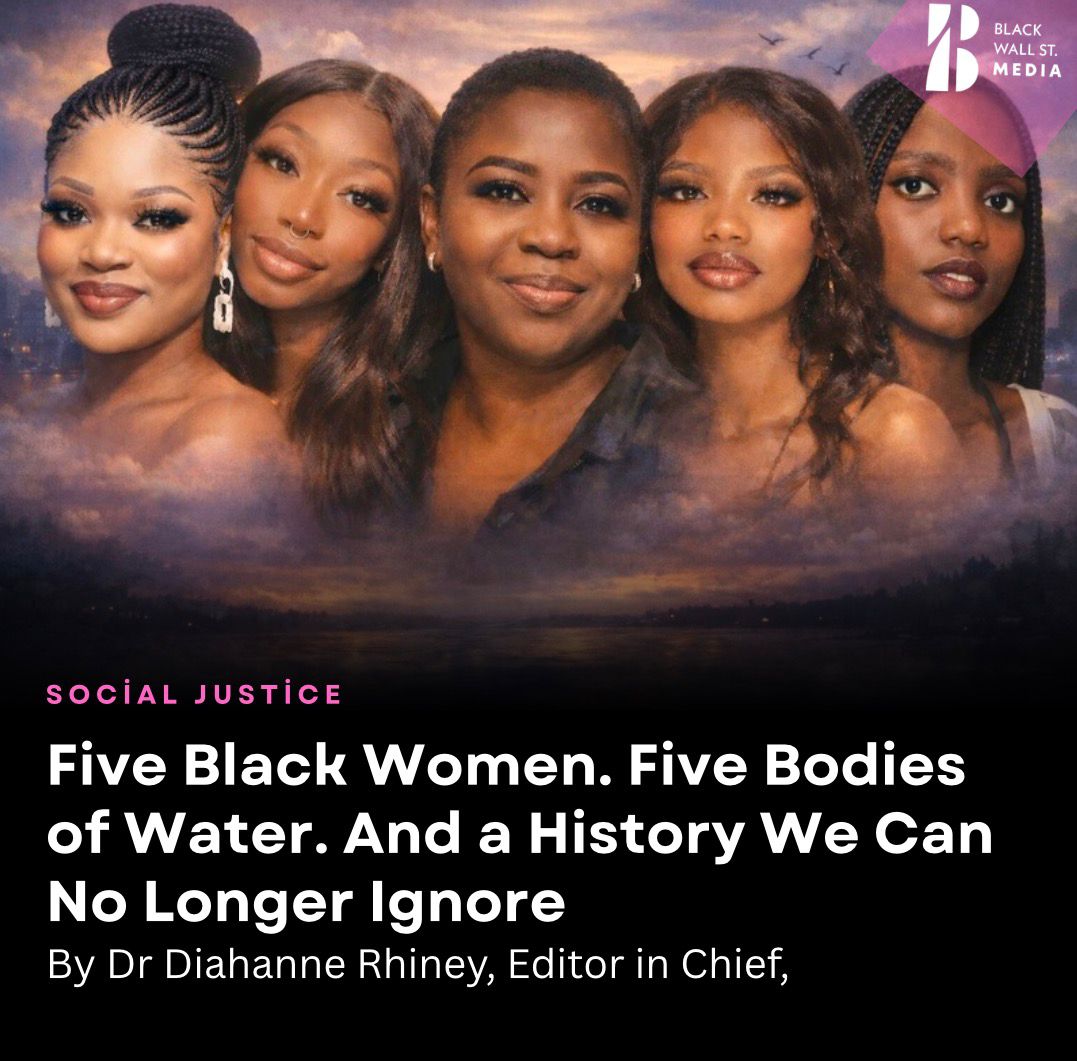
Five Black Women. Five Bodies of Water. And a History We Can No Longer Ignore
Read More
Mother’s Day and the Quiet Legacy of Our Mothers
Read More
Editor’s Letter March 2026
Read More
Locked Out of the Purse Strings
Read More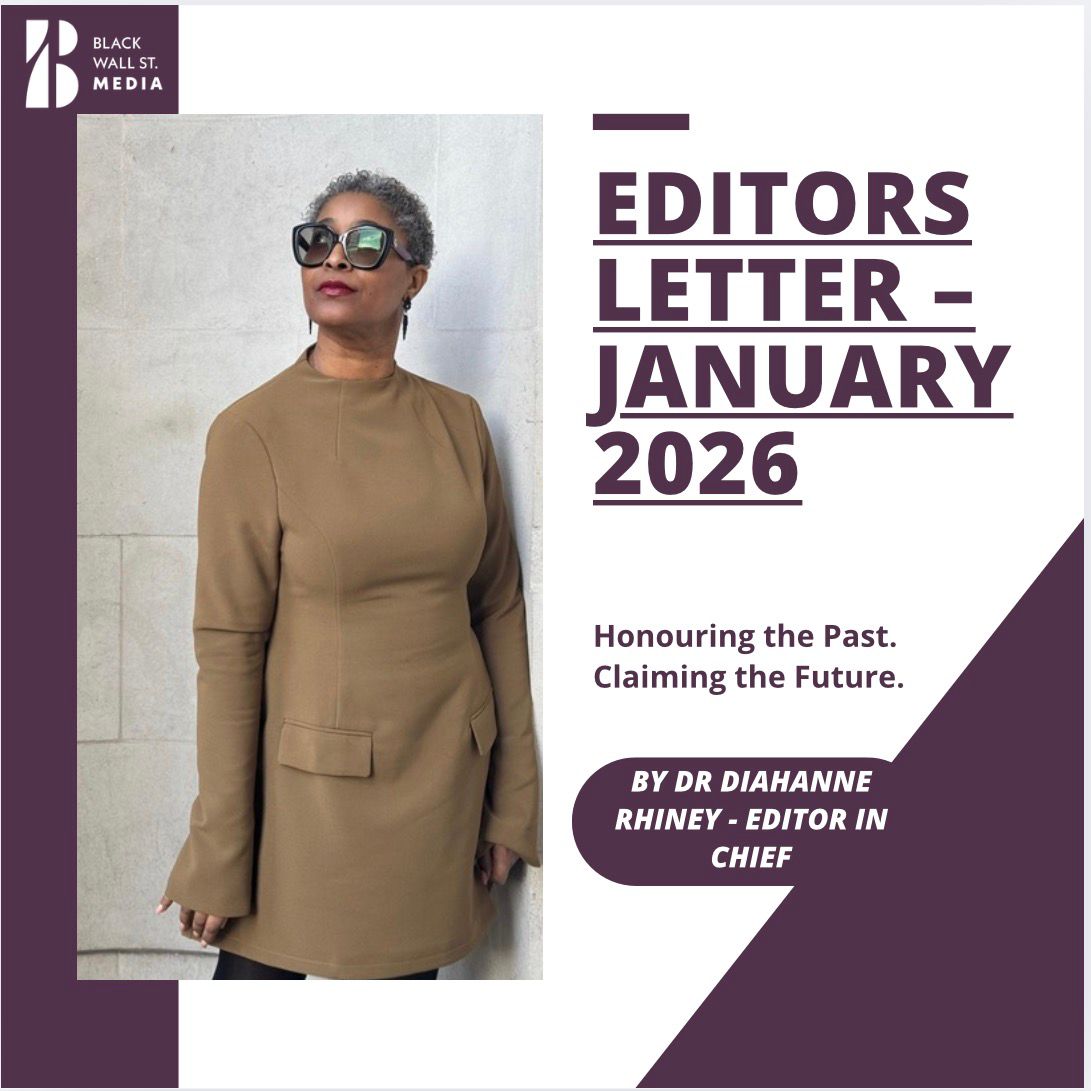
Editors Letter – January 2026
Read More
Editors Letter – October 2025
Read More
Editors Letter – September 2025
Read More
Editors Letter – August 2025
Read More
Editors Letter – July 2025
Read More