

Book Review
Britain, the Asante, and the Politics of Restitution
“Barnaby Phillips’s ‘The African Kingdom of Gold: Britain and the Asante Treasure’ is a timely investigation into empire, cultural loss, and restitution. Combining meticulous research with compelling storytelling, Phillips traces the looting of Asante treasures and their return, examining how this legacy continues to shape recent debates about historical justice today.”
By John StevensonContributor
Barnaby Phillips’s most recent book, The African Kingdom of Gold: Britain and the Asante Treasure (Oneworld), is a meticulously researched account of one of the most consequential cultural encounters between Britain and West Africa.
Phillips’s work stands out for its ability to connect nineteenth-century events to contemporary debates about restitution and historical justice. He has had a long and impactful career as an international journalist and a respected nonfiction author.
As a reporter, he spent more than 25 years with the BBC and Al Jazeera English, covering major global events across Africa, the Middle East, Asia, and Europe. His postings included Mozambique, Angola, Nigeria, South Africa, and Greece, and he reported on crises such as the wars in Liberia and Iraq, the Darfur humanitarian emergency, the Southern African food crisis, the South Asian tsunami, the Greek debt crisis, and Brexit.
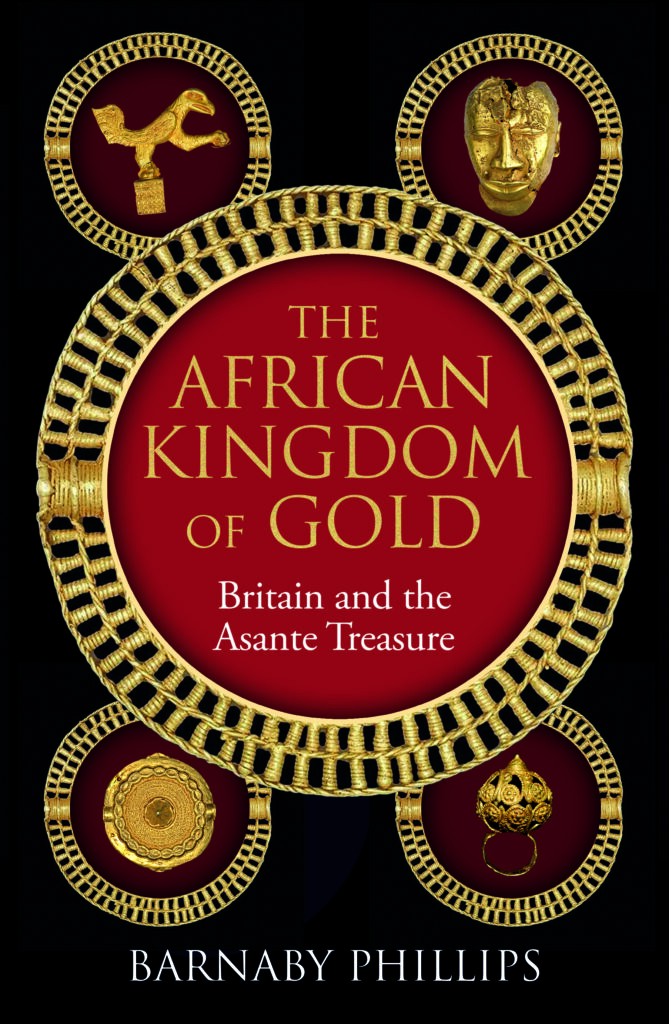
The African Kingdom of Gold book cover.
His other major books, each rooted in deep historical research and his long engagement with specific aspects of African history, are Another Man’s War (2014), the story of Isaac Fadoyebo, a Nigerian soldier in the Second World War, illuminating the overlooked role of African troops in the Burma campaign, and Loot: Britain and the Benin Bronzes (2021), a widely acclaimed account of the 1897 British looting of the Benin Kingdom, the global dispersal of its bronzes, and the modern restitution debate. The latter was shortlisted for the Historical Writers’ Association Crown Award.
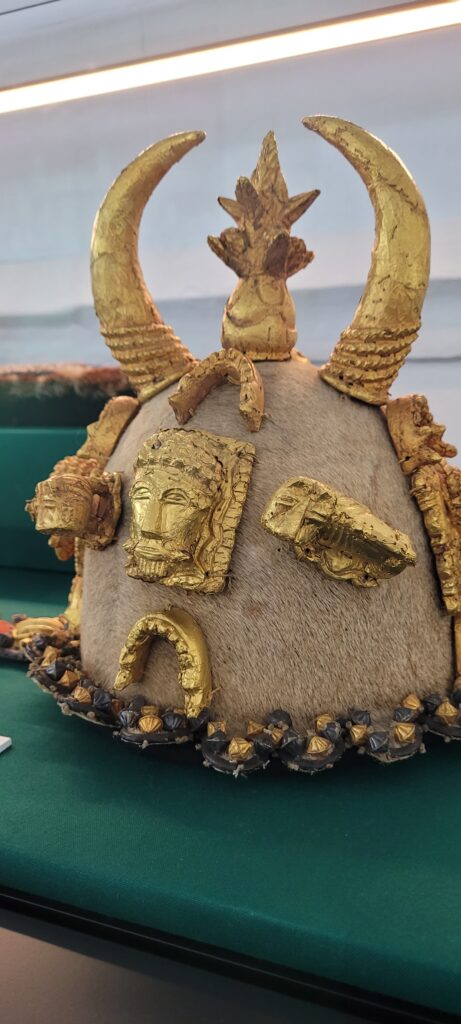
The Denkyemkye helmet, one of the many Asante treasures looted by the British Army during the 1896 invasion and returned to Kumasi in 2024.

Asante royal regalia, including the leopard-skin sheathed Mpomponsuo State Sword and other gold ceremonial objects looted during Britain’s invasions of Asante territory and returned to Kumasi in 2024.
Gold as the embodiment of authority and sacred legitimacy
At the centre of The African Kingdom of Gold is the Asante Empire, a kingdom whose political sophistication, military organisation, and artistic achievement rivalled any European state of its time.
Phillips reconstructs the Asante cosmology with precision, emphasising the centrality of gold not merely as a material resource but as a cultural and spiritual foundation.
The regalia of the Asantehene—the swords, masks, ornaments, and ceremonial objects crafted in gold—were embodiments of authority, continuity, and sacred legitimacy. Among the striking images reproduced in the book are the leopard-skin-sheathed Mpomponsuo (the greatest of the State Swords), the Denkyemkye helmet, and Samori Touré’s ring, a gift from Asante King Prempeh. These were among several objects seized by the British and eventually returned to Kumasi in 2024.
British imperial invasions and theft
Phillips tells the story of escalating tensions between the Asante and the British, culminating in a series of military campaigns that reshaped the political landscape of West Africa.
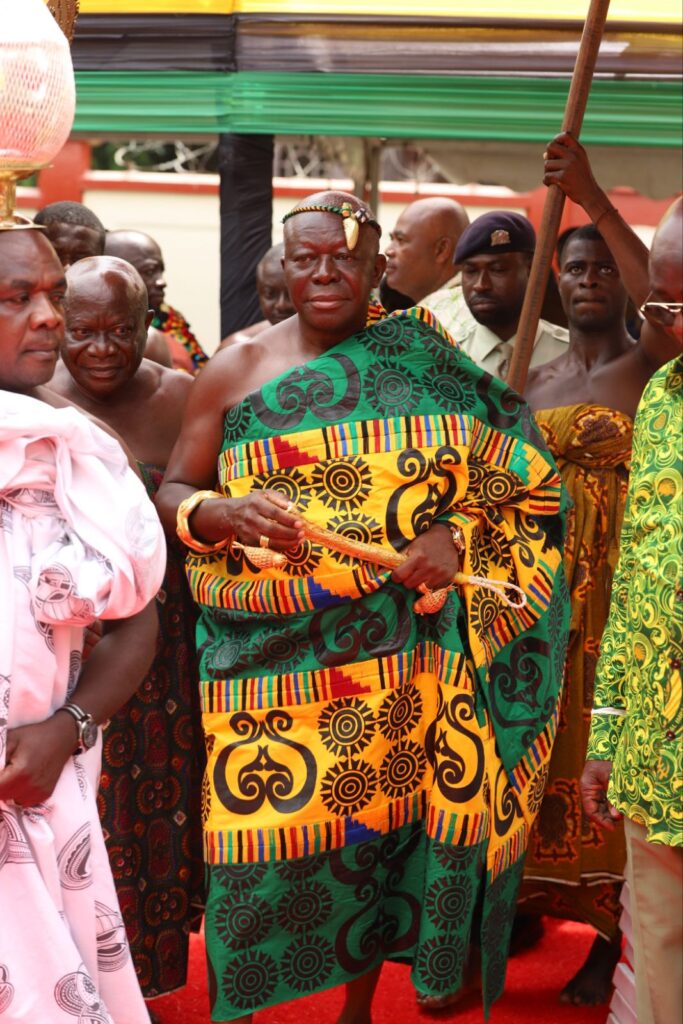
Asantehene Otumfuo Osei Tutu II.
Although he states that he sets out neither to be an African historian nor an ethnographer, he succeeds in presenting the Asante political system as a coherent and sophisticated structure deserving of understanding on its own terms.
The invasions of 1874, led by Sir Garnet Wolseley, and 1896 are described with a journalist’s eye for detail. British forces burned the Asante capital of Kumasi, looted the royal palace, and seized vast quantities of gold regalia. This was a deliberate act of cultural and political domination intended to break the symbolic power of the Asante state and assert British supremacy.
Within this broader imperial machinery, Phillips highlights the roles of individual officers whose actions left lasting marks on Asante cultural heritage. Among them was Robert Baden-Powell, the founder of the Boy Scout Movement.
Sent to the Gold Coast to support the British advance, Baden-Powell helped lead the forward units that cleared jungle routes and entered Kumasi ahead of the main force. Contemporary accounts describe how he personally participated in the seizure of sacred gold regalia from the royal burial grounds at Bantama—the “Stool House”, where ancestral remains and ritual objects were kept.
‘Come and take your pick’
One of the book’s most impressive achievements is Phillips’s ability to follow the trajectories of individual objects across time and space.
Some entered the collections of major museums; others were kept in officers’ messes, private homes, or regimental displays. A particularly revealing photograph reproduced in the book shows Asante treasures on public display in London in 1874, allowing Queen Victoria, aristocrats, and museums to “come and take their pick”. One newspaper of the day even described a “craze for these Ashantee relics”.
Phillips demonstrates how the Asante regalia were stripped of their original meanings and reframed within British narratives of conquest, heroism, and civilisational hierarchy.
His investigative background is evident in the depth of his research. Drawing on military records, museum catalogues, private correspondence, and archival documents, he reconstructs the journeys of the looted objects with remarkable clarity. His method is rigorous yet accessible, allowing readers to understand not only what happened but how historians and journalists piece together fragmented evidence.
This transparency is part of the book’s intellectual appeal and reflects the labour involved in recovering histories obscured by the very institutions that benefited from imperial plunder.
The contemporary politics of restitution
The book inevitably turns to the contemporary politics of restitution.
Phillips examines how Asante objects came to be held by British museums and how these institutions have responded to growing calls for their return. He analyses the legal, ethical, and bureaucratic frameworks that shape museum policy, showing how the language of “universal heritage” and “public trust” has often been used to justify the retention of objects acquired through violence.
More significantly, he explores the return of Asante regalia to the Manhyia Palace Museum in Kumasi. These returns, framed as long-term loans rather than permanent restitutions, reveal both progress and the persistence of asymmetrical power relations.
Phillips threads the saga of Asante gold through the restrictive legal architecture underpinning Britain’s national museums, demonstrating how debates over restitution are constrained less by curatorial preference than by legislation.
As he follows the contemporary contest over the fate of these objects, his narrative intersects with the British Museum Act 1963 and the National Heritage Act 1983, laws that sharply limit the ability of institutions such as the British Museum and the Victoria and Albert Museum to remove items from their collections.
By bringing these legal constraints to the fore, Phillips underscores that recent long-term loans to Ghana are less acts of restitution than pragmatic workarounds shaped by a legislative framework that continues to govern Britain’s stewardship of its imperial acquisitions.
All of that said, Phillips leaves readers of his book in little doubt about the moral imperative at the heart of the matter: the Asante regalia were taken through imperial military force. Their removal has inflicted cultural harm. Their presence in British institutions is not a neutral fact but a legacy of empire that demands critical engagement.
Ultimately, The African Kingdom of Gold stands as an important contribution to the scholarship on empire, cultural heritage, and historical justice. Phillips not only informs but restores vital context to objects forcibly taken from their origins, making a compelling case for confronting the past with clarity, honesty, and rigorous research.

Barnaby Phillips, photo credit Mark Rusher

- Alzheimer’s the Black doctor who helped decode the disease
 🧠✨ Celebrating an Unsung Hero! Dive into the captivating journey of Dr. Solomon Fuller, a pioneer in Alzheimer's research and a standout figure in Black history. From his roots in Liberia to groundbreaking discoveries, discover the legacy of a medical trailblazer who defied adversity. 🌟
 - The Voice of the Child, Young Person and; Service User
 Whose voices are we really hearing? And what happens when we truly listen? The 3rd DARDR/DVA & Criminal Justice Summit 2026 will bring together professionals, practitioners, community organisations, academics and people with lived experience to place children, young people and service users at the heart of the conversation. Under the theme “The Voice of the Child, Young Person & Service User,” this year’s Summit will explore domestic abuse, violence, safeguarding, exploitation, trauma and criminal justice — but most importantly, how listening can move beyond consultation and become meaningful action. 📅 Friday 27 November 2026 📍 Brent Civic Centre, Wembley 💻 Hybrid Event | CPD Accredited Read more about the Summit, the conversations it will explore and how to book your place.
 - The Crown in the Ledger: What Finding Britain’s Slave Traders Asked Us to Face
 What happens when Britain’s history is no longer told through monuments, wealth and institutions, but through the ledger behind them? Finding Britain’s Slave Traders with David Olusoga brings names, companies, royal connections and fortunes into focus, forcing us to confront how deeply the transatlantic slave trade was embedded in British society. In “The Crown in the Ledger,” we explore what these records reveal about wealth, power, responsibility and the legacy that remains today. Read the full article and ask yourself: who owns what, who benefited, and what does honest accounting look like?
 - Is ‘Othello’ relevant today?
 Othello: A Timeless Exploration of Jealousy, Racism, and Ambition
 - A life lived beyond the limits of representation
 Bonnie Greer was never simply a writer, playwright or broadcaster. She was a cultural force who refused to be confined by the expectations placed on Black women in public life. From Chicago to Britain, from theatre and literature to television and institutional leadership, she built a life defined by intellect, independence and an unapologetic right to occupy space. As Britain remembers her following her death at 77, this article looks beyond the achievements and asks what her life represented: the power of cultural authority, the importance of institutional access, and the freedom to be fully human rather than simply inspirational.



A life lived beyond the limits of representation
Read More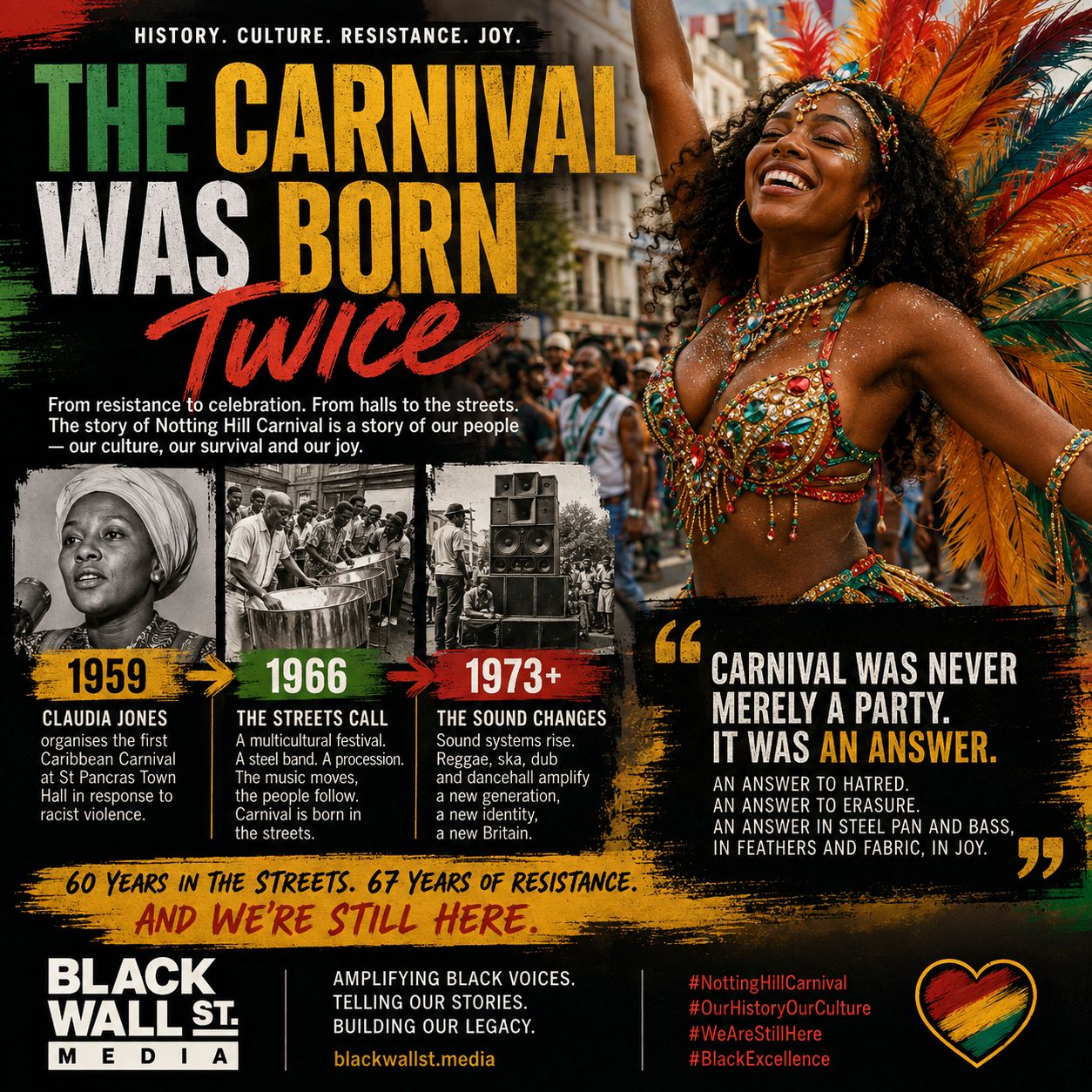
The Carnival Was Born Twice
Read More
Afterlives of Looted Heritage
Read More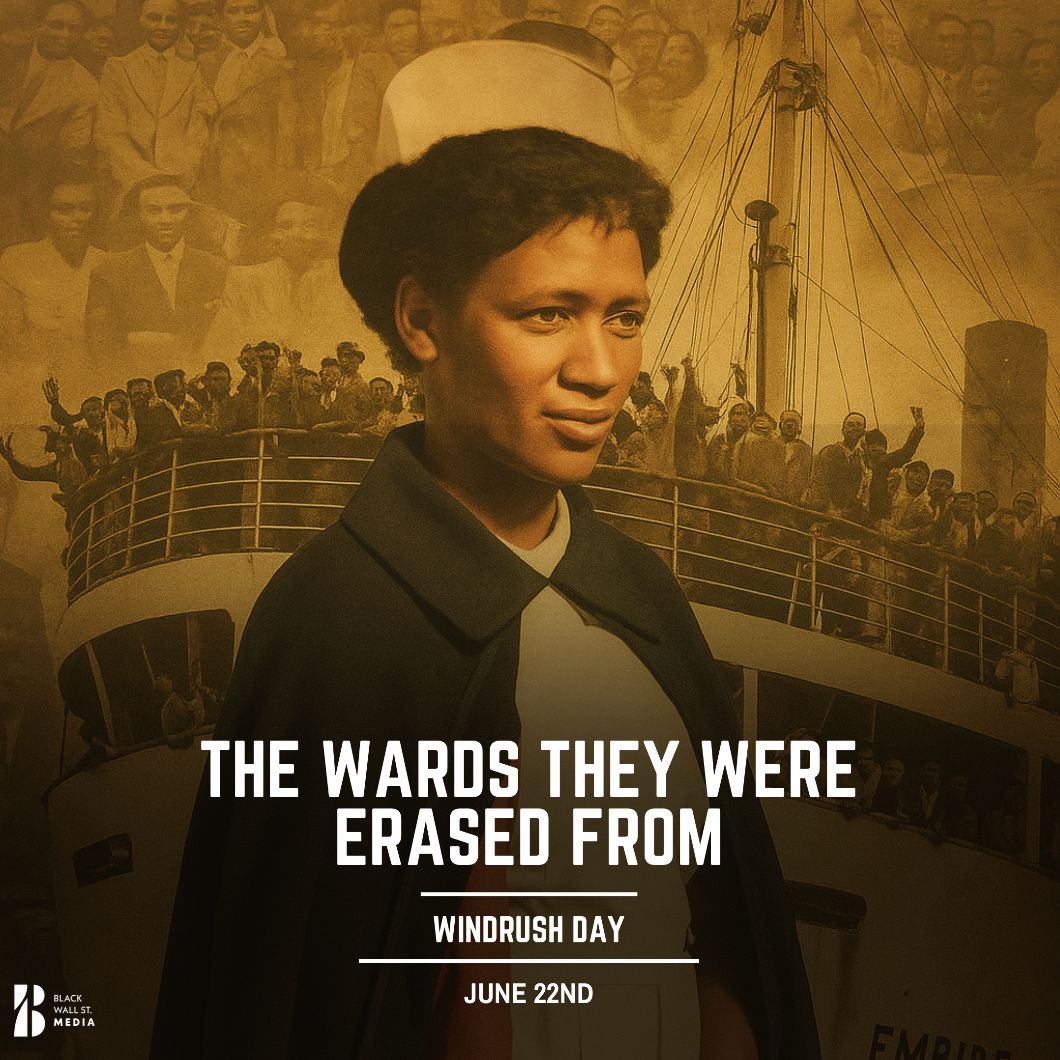
The Wards They Were Erased From
Read More
World’s first Black professional footballer
Read More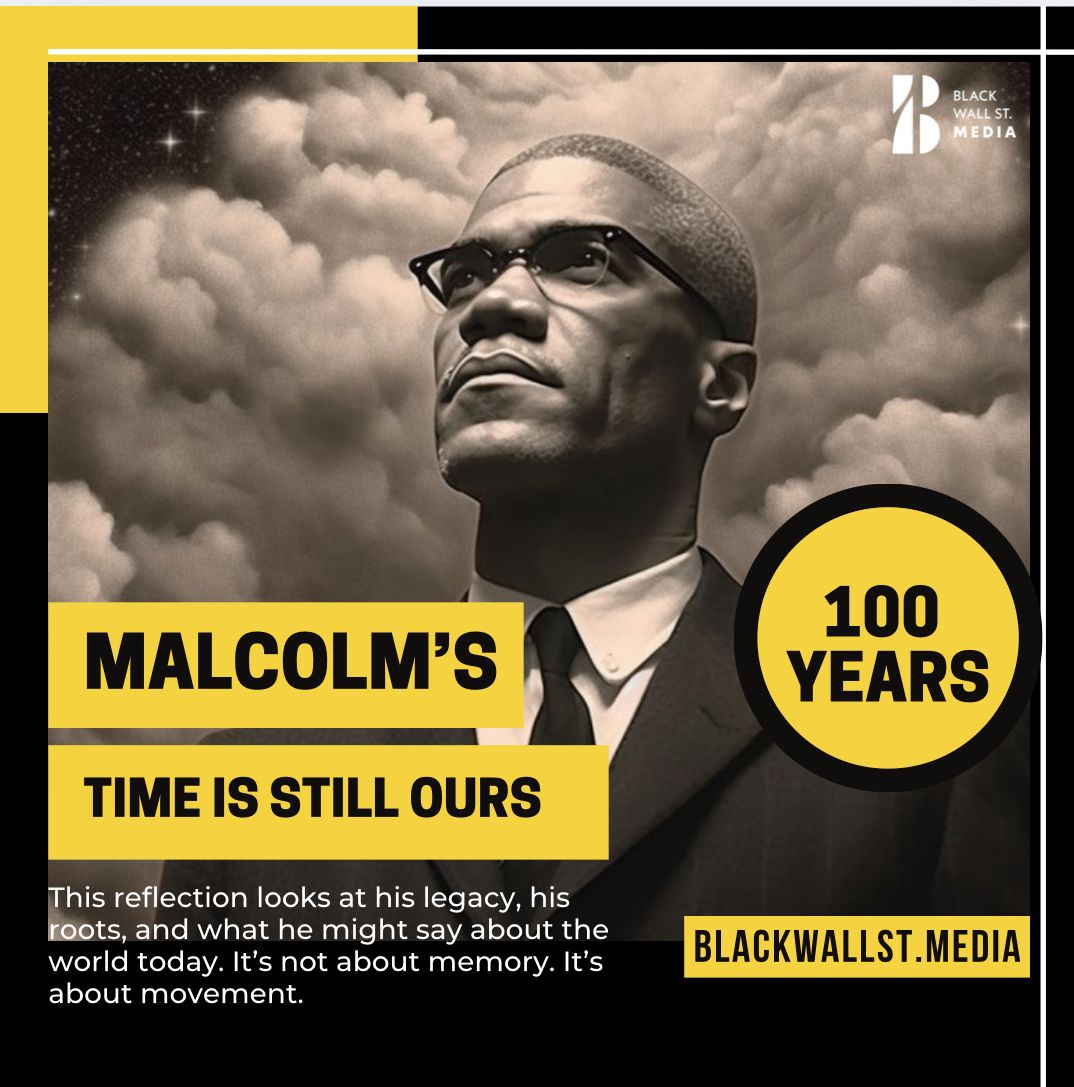
Malcolm’s Time Is Still Ours
Read More
Kelso Cochrane: The Name Britain Tried to Forget
Read More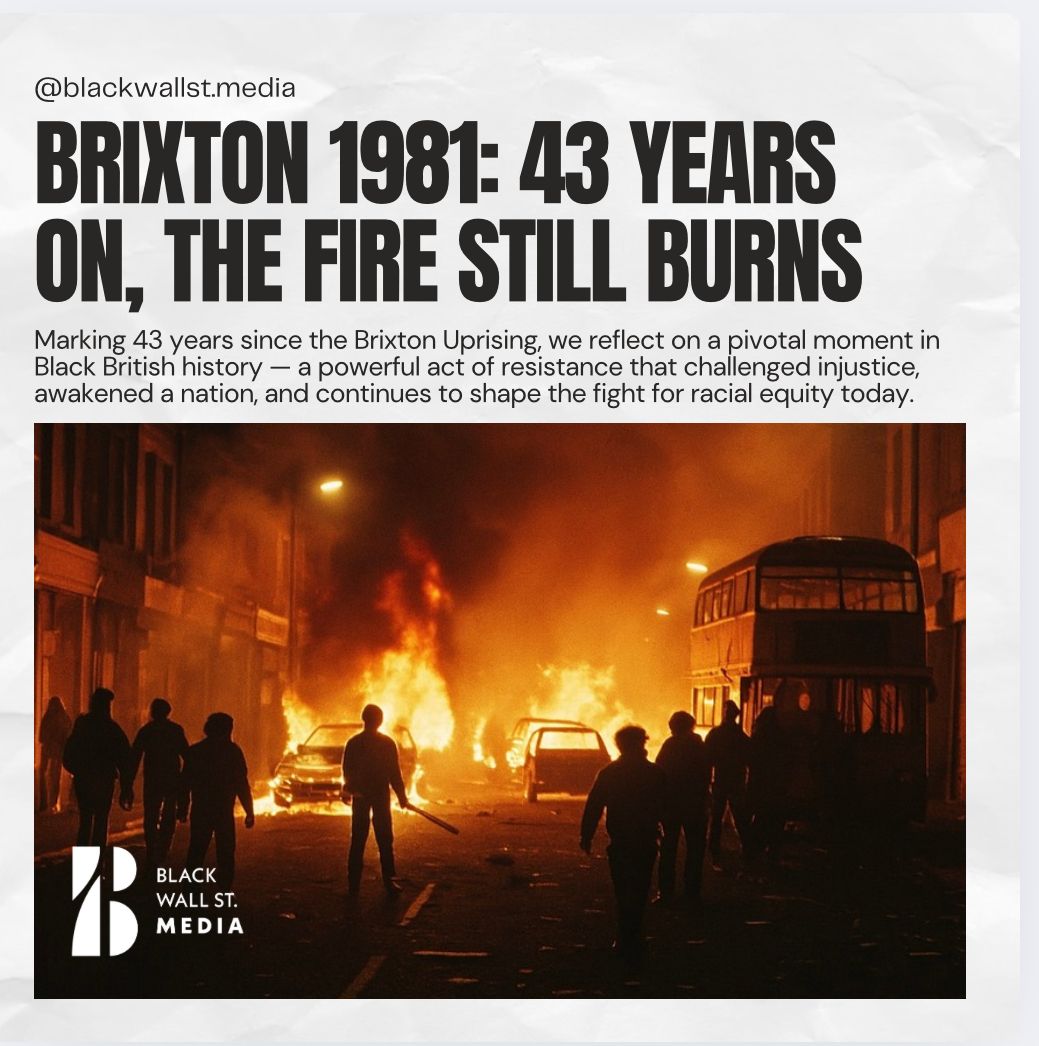
When Brixton Spoke Back
Read More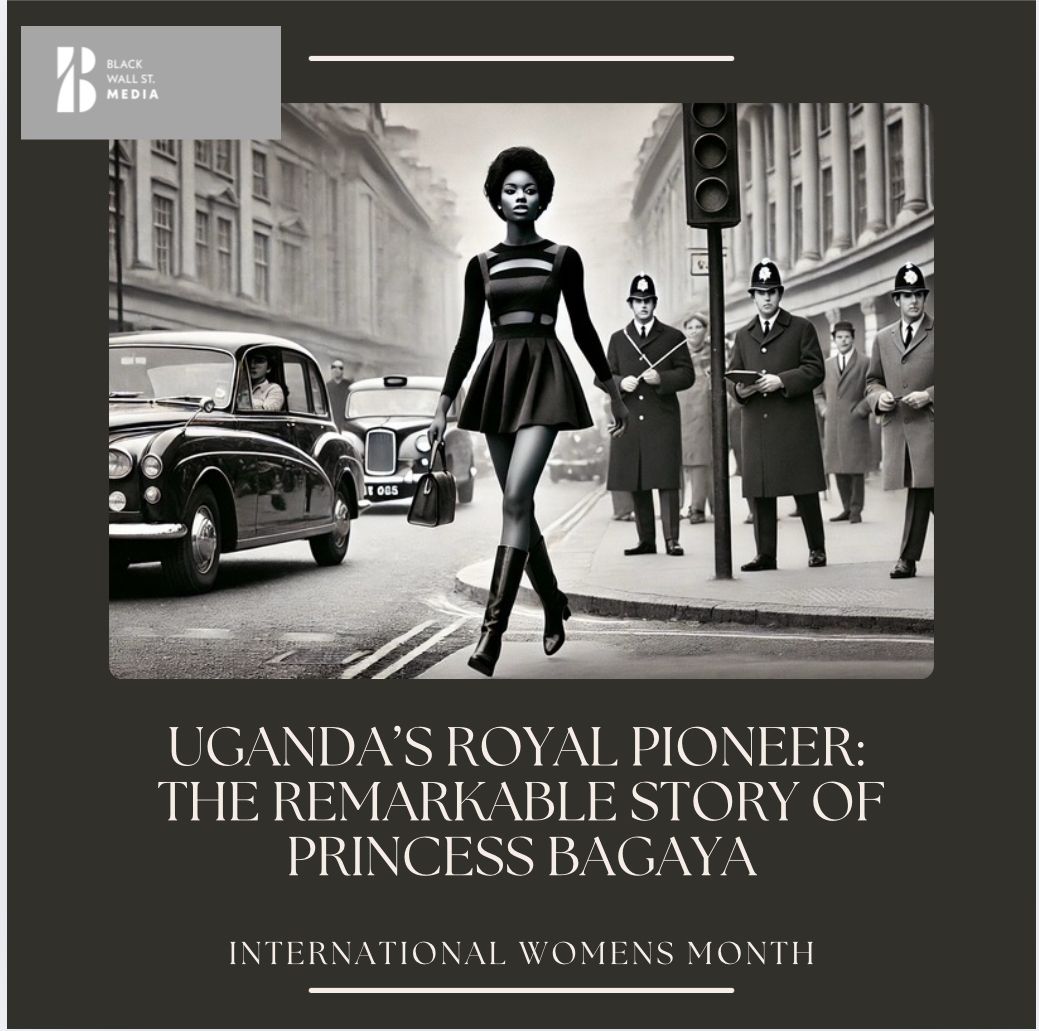
Princess of Power
Read More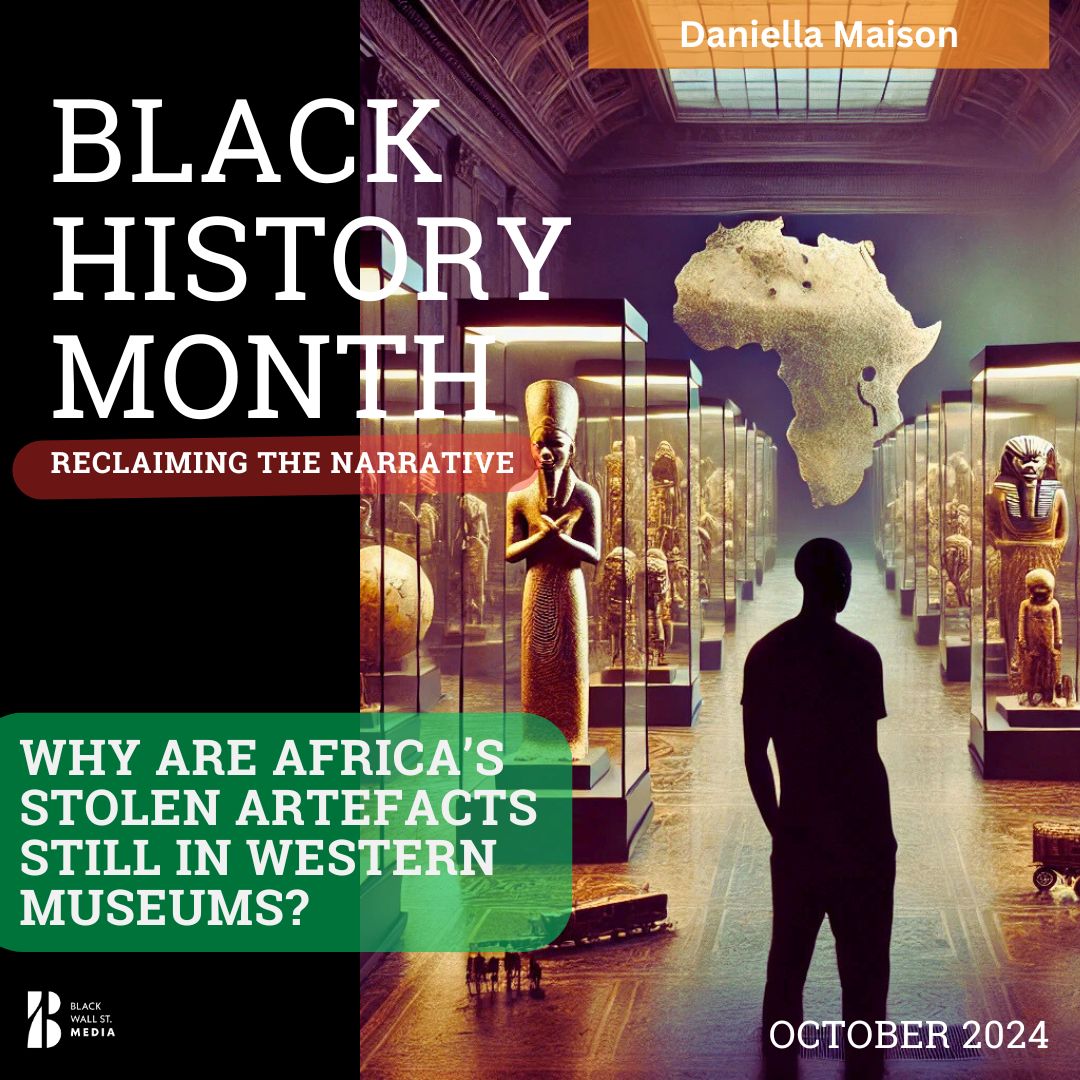
Why are Africa’s Stolen Artefacts still in Western Museums?
Read More
INSANE ENERGY INCOMING!
The Carnival Was Born Twice
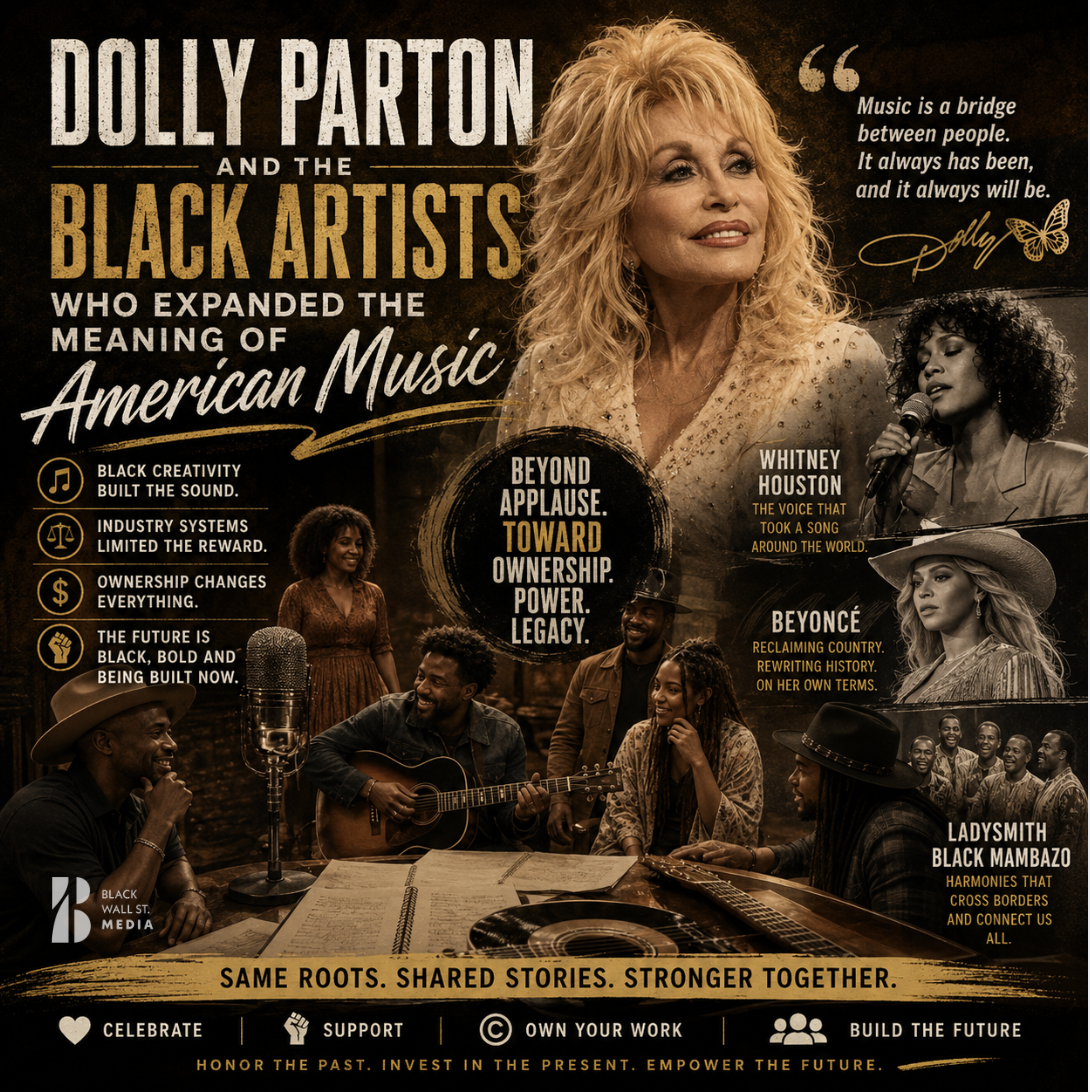
Dolly Parton and the Black Artists Who Expanded the Meaning of American Music

When Black Success Becomes Proof That We Have It Easy
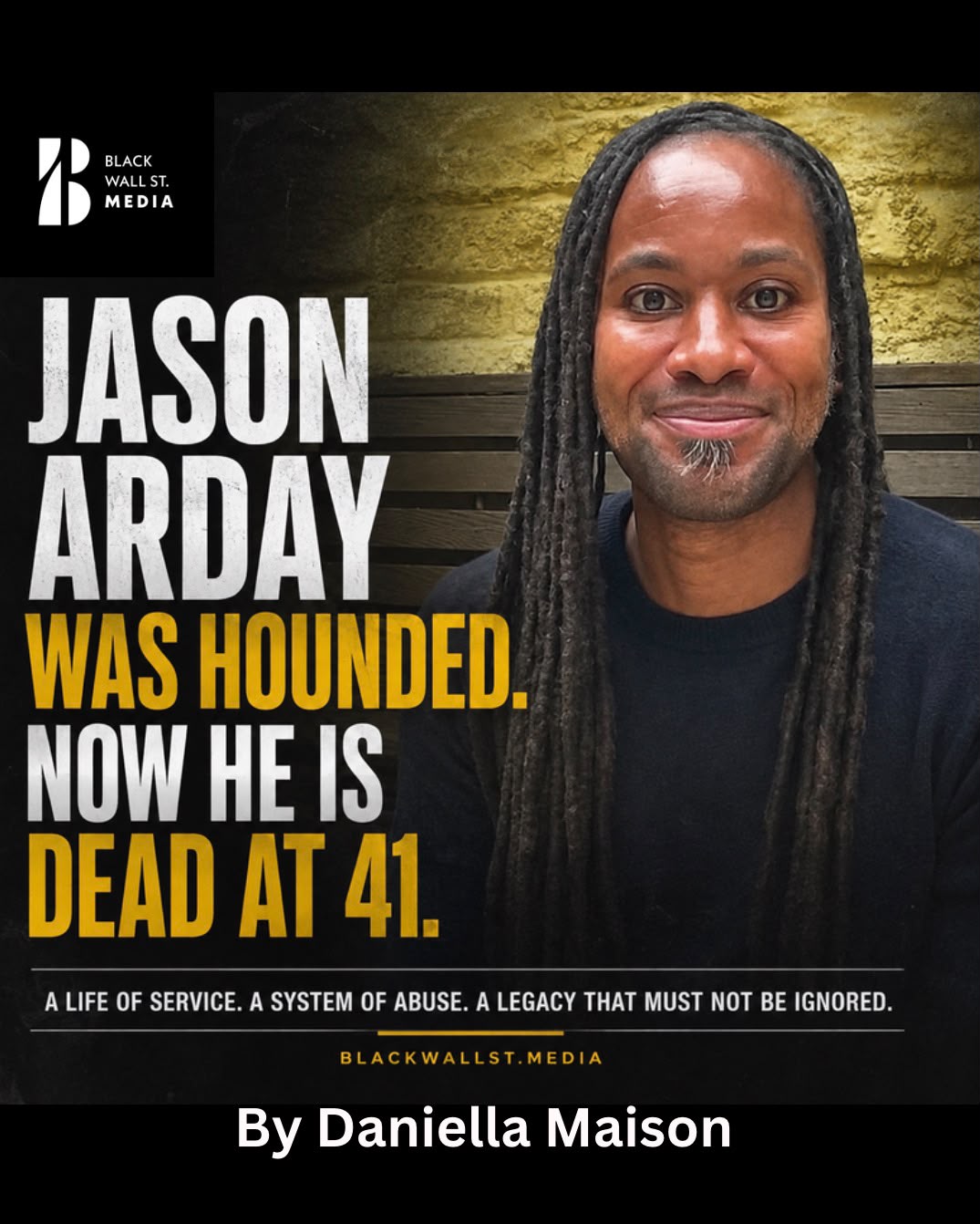
Jason Arday Was Hounded. Now He Is Dead at 41
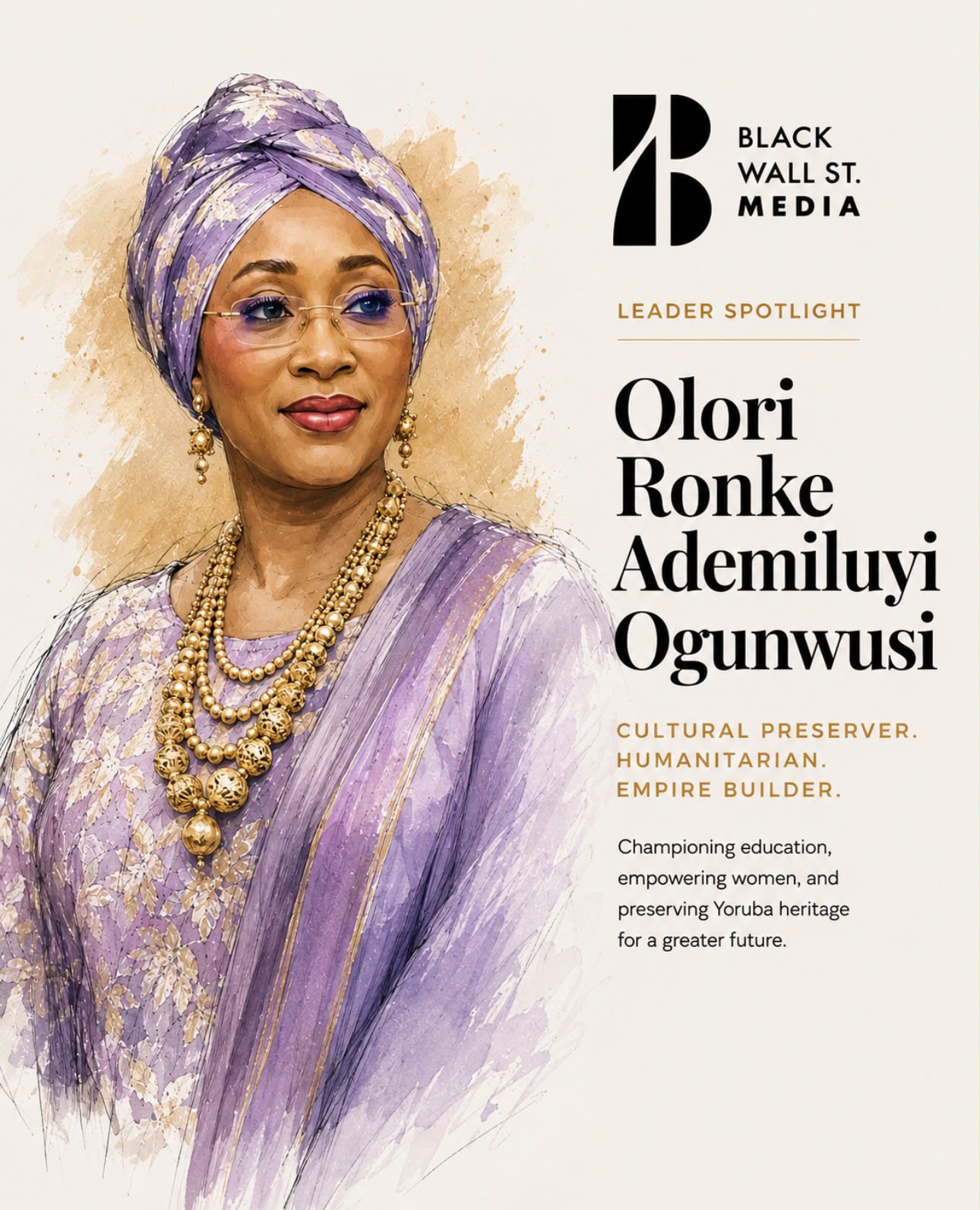
Beyond the Catwalk: How Olori Ronke Ademiluyi Ogunwusi Built an Economic Engine for African Fashion

African Fashion Week London Returns: Where Heritage Meets the Future of Fashion
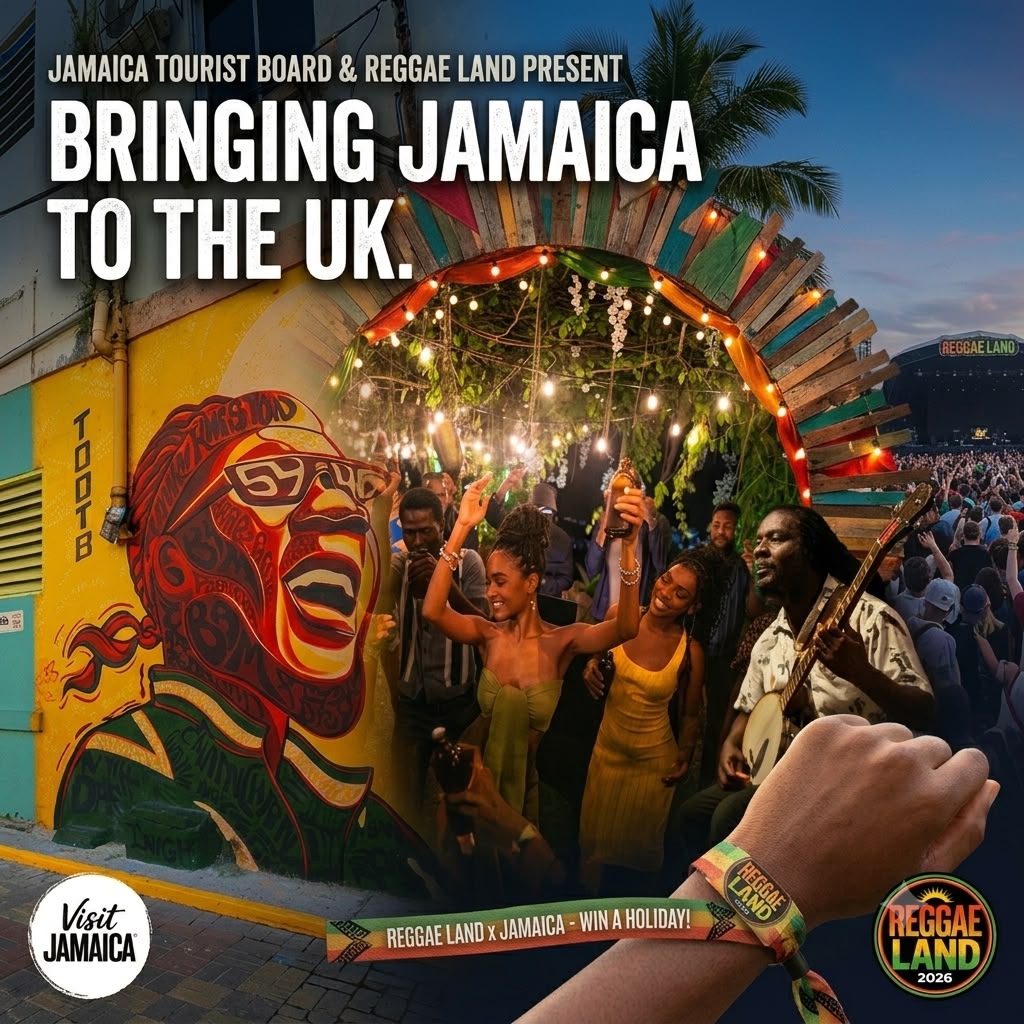
Jamaica Tourist Board Partners with Reggae Land Bringing Jamaica to the UK’s Biggest Reggae Festival
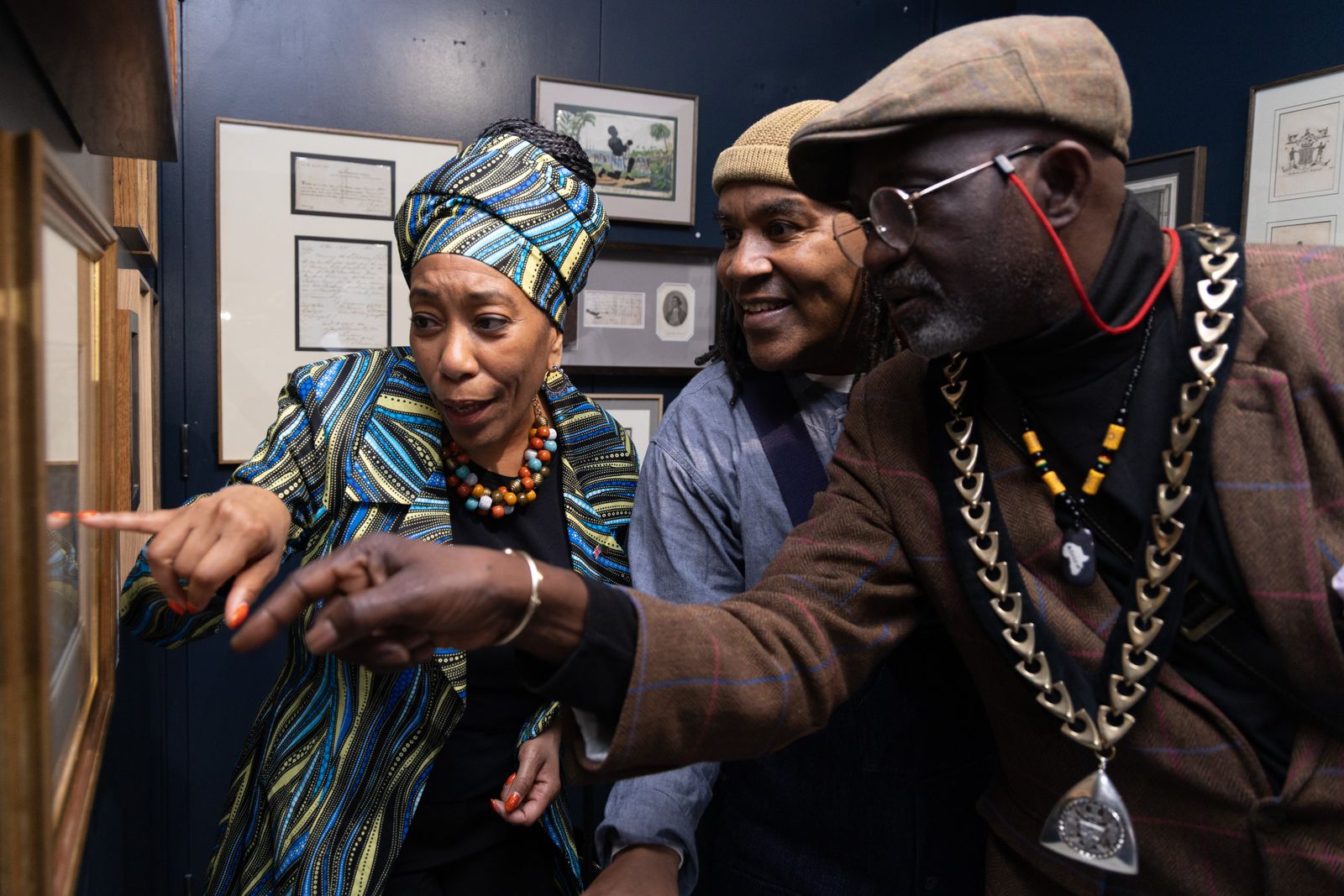
The Africa Centre’s 60th Anniversary Exhibition: a landmark celebration of history, presence and legacy
