Culture & Heritage
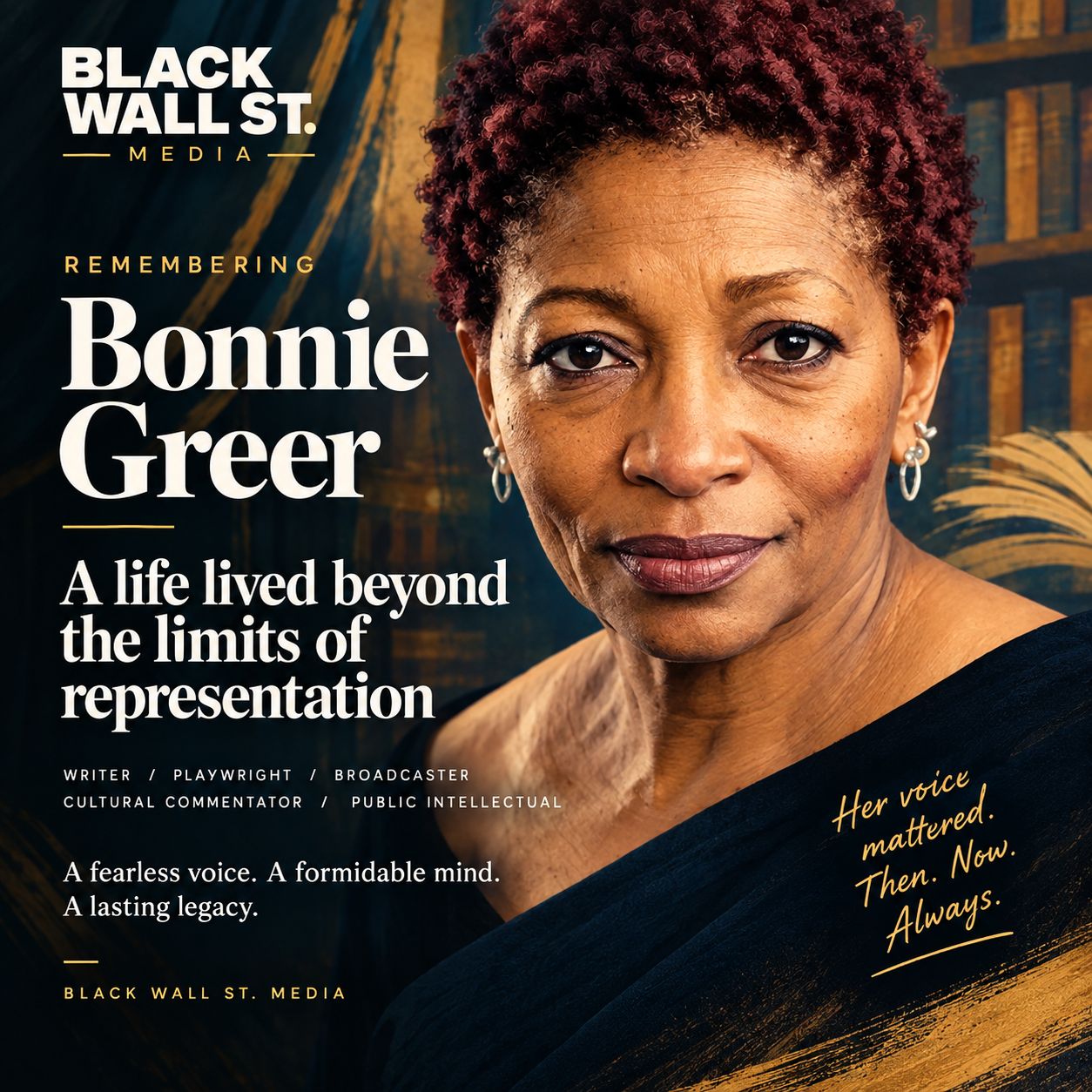
A life lived beyond the limits of representation
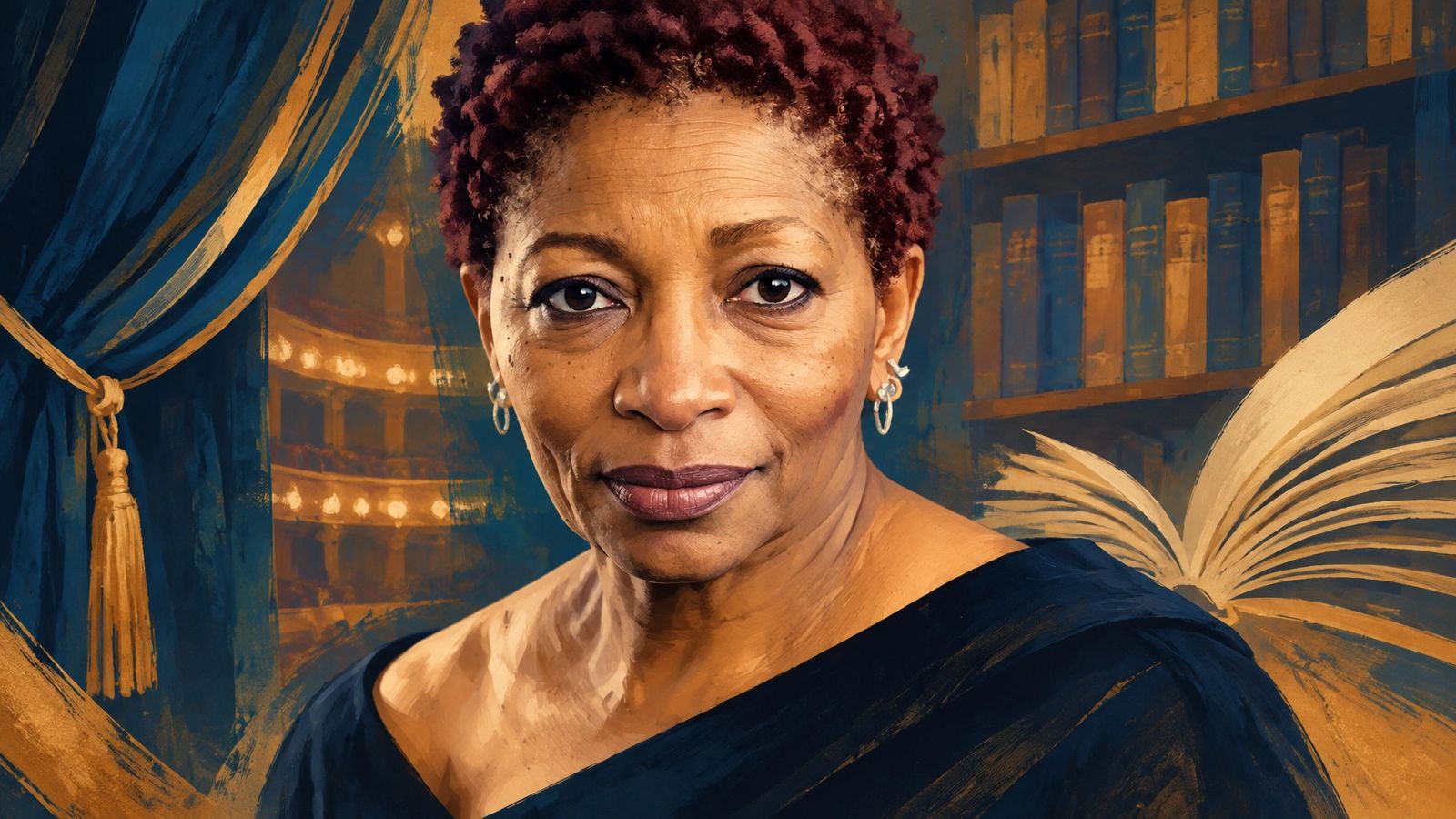
“Bonnie Greer was never simply a writer, playwright or broadcaster. She was a cultural force who refused to be confined by the expectations placed on Black women in public life. From Chicago to Britain, from theatre and literature to television and institutional leadership, she built a life defined by intellect, independence and an unapologetic right to occupy space.
As Britain remembers her following her death at 77, this article looks beyond the achievements and asks what her life represented: the power of cultural authority, the importance of institutional access, and the freedom to be fully human rather than simply inspirational.”
Dr Diahanne RhineyEditor in Chief

The news of Bonnie Greer’s death lands with a particular weight.
She was not simply a writer, playwright, broadcaster or cultural commentator. She was a presence. For decades, she occupied public space with a combination of intelligence, humour, authority and refusal. She spoke as a Black woman but never allowed Blackness to become the limit of what she could discuss. She spoke about race, culture, politics, literature and institutions, while remaining fully entitled to contradiction, curiosity, ambition and complexity.
Bonnie Greer died aged 77 after a brief illness, according to her husband David Hutchins and reporting by the BBC on 16 September 2026. Her passing is a loss to British cultural life, to the Black diaspora and to every reader, viewer, student, artist and thinker who recognised in her an example of what it means to claim one’s voice without asking permission first.
Culture is a form of power. It tells us who is remembered, who is trusted, whose work is preserved and whose intelligence is treated as authoritative. Greer’s life belongs within that conversation. To understand her contribution is to understand not only what she created, but also the significance of her presence in rooms where Black women had too often been invited to appear without being given the authority to shape the discussion.
From Chicago to Britain
Born in Chicago in 1948, Bonnie Greer’s early relationship with theatre and literature shaped a career that would eventually cross continents and disciplines. She studied theatre in Chicago and later attended the Actors Studio in New York, before going on to write plays that established her as a serious dramatist.
She moved to the United Kingdom in 1986. That move did not represent a simple change of address. It began a long and influential relationship with British cultural life, one in which Greer became both participant and critic. She entered a country whose institutions were still struggling to acknowledge the full breadth of Black British experience, while also bringing with her an American intellectual tradition shaped by Black artistic, political and literary movements.
Her perspective was never easily contained. She had an instinct for the gaps between official narratives and lived realities. She understood that institutions often speak about inclusion before they are prepared to share power. She also understood that public culture needs more than symbolic visibility. It needs people with the confidence and range to challenge its assumptions from within.
That combination made Greer important. She did not only ask whether Black people were present. She asked who was making decisions, who was defining excellence and who had been allowed to become complicated in public.
A career that refused one category
Greer worked across theatre, novels, memoir, criticism and public commentary. Her writing included works such as Munda Negra, A Parallel Life, Hanging by Her Teeth, Entropy and Obama Music. These works should not be treated as a catalogue of achievements, because their deeper importance lies in what they reveal about her intellectual range.
Greer moved between forms because no single form was large enough to contain her. Theatre gave her the immediacy of voice and performance. Fiction allowed her to explore interior lives and social tensions. Memoir opened a space for personal history, memory and self-examination. Criticism allowed her to examine the stories that institutions choose to value. Broadcasting placed her thinking in direct conversation with a national audience.
Her visibility grew through programmes including Newsnight Review and Question Time. On screen, she was not reduced to the role of cultural translator. She was not present merely to explain Black life to a presumed mainstream audience. She arrived as a thinker with her own questions, judgements and standards.
That distinction matters. Black women in public life are often expected to perform representation. They are asked to stand for a community, a political position, a generation or an entire history. Greer resisted that burden. She could speak about Black identity without pretending that Black people think alike. She could speak about Britain without presenting herself as grateful for entry. She could discuss institutions while remaining alert to their exclusions.
Her public statements about refusing to apologise for herself carried that wider significance. The point was not arrogance. It was self-possession. It was the insistence that a Black woman does not need to shrink her intellect, soften her argument or become more acceptable todeserve a place in the conversation.
The importance of institutional access
Greer’s work beyond the page and screen was equally significant. She served on the board of the British Museum alongside board roles at the Royal Opera House and the London Film School. She also served as Chancellor of Kingston University. In 2010, she received an OBE for services to the arts. In 2022, she became a Fellow of the Royal Society of Literature.
These positions were not decorative additions to her biography. They represented access to the machinery through which culture is funded, preserved, taught and legitimised. The question of who sits on a board is a question about who is trusted with the future. It is a question about whose judgement can influence collections, education, programming, recruitment and public purpose.
Greer’s institutional participation mattered because she brought the experience of a working artist and writer into spaces that can become distant from the people whose creativity sustains them. She understood the value of tradition without confusing tradition with authority. She could respect cultural institutions while asking them to account for their histories and their responsibilities.
This question sits at the centre of any serious conversation about Black wealth, creativity and self-determination. It is not limited to financial capital. Cultural knowledge is wealth. Publishing is wealth. Intellectual property is wealth. A place on a board, a voice in a classroom and the power to shape a national conversation are forms of wealth, too.
Greer showed what can happen when Black cultural workers are not confined to the margins of institutions but are able to participate in governance and decision-making. She did not single-handedly transform British culture. No serious account should make that claim. Her importance lies elsewhere. She expanded the field of possibility. She made it easier to imagine a Black woman as a playwright, novelist, critic, broadcaster, trustee, chancellor and public intellectual without treating those roles as exceptional contradictions.
Beyond the demand to be inspirational
There is a tendency to remember Black women only through the language of inspiration. It is a generous language, but it can also be limiting. Inspiration can flatten a life. It can make struggle look tidy and turn a person into a lesson for others.
Bonnie Greer deserves more than that.
She was valuable because she was intellectually alive. She could be warm and forthright, generous and challenging, serious and funny. She did not have to become universally agreeable to become influential. Her work encouraged audiences to think rather than simply applaud. Her presence created room for disagreement, and disagreement is one of the conditions of a healthy public culture.
For Black artists, writers and thinkers, that example remains essential. We need more than invitations to panels and heritage celebrations. We need ownership of narrative. We need editorial control, publishing opportunities, fair compensation, teaching positions, collecting policies and institutional leadership. We need the right to make work that is not immediately translated into a lesson about race.
Greer understood that a Black artist must be allowed to create from the full territory of human experience. Desire, ambition, disappointment, humour, grief, absurdity and intellectual restlessness all belong there. Black women should not have to perform resilience every time they enter public view. They should be allowed to be difficult, tender, ambitious, uncertain, brilliant and unfinished.
That is one of the most enduring lessons of her life.
A legacy still in motion
To honour Bonnie Greer properly is not to place her in a museum of completed achievements. It is to recognise that her work remains active in the people who saw what was possible because she had done it first, and in those who are now pushing further.
Her legacy belongs to the playwright writing a difficult first play, the novelist refusing a marketable stereotype, the critic insisting that popular culture deserves serious attention, the teacher making literature feel like a living inheritance and the cultural worker asking an institution to become more honest about whom it serves.
It belongs to women who have been told they are too outspoken, too political, too American, too Black, too complicated or simply too much. Greer’s life offered a different instruction. Do not make yourself smaller to fit the room. Change the terms of the room. Build another one, if necessary.
The task now is not only to praise her memory. It is to support the living artists and thinkers continuing the work. Institutions must fund Black creativity before it becomes fashionable. Publishers must take risks on voices that do not arrive pre softened. Universities and cultural organisations must share authority rather than merely displaying diversity. Media platforms must recognise that Black intelligence is not a niche interest and that Black audiences deserve depth, disagreement and ambition.
Bonnie Greer understood that a voice becomes powerful when it is used fully. Hers carried across theatre, literature, television, public life and institutional leadership. It was distinctive because it did not apologise for its range.
A serious engagement with her legacy means continuing to examine how history, education, creativity and cultural value are shaped, who gets to shape them, and who is allowed to benefit from them.
- Alzheimer’s the Black doctor who helped decode the disease
 🧠✨ Celebrating an Unsung Hero! Dive into the captivating journey of Dr. Solomon Fuller, a pioneer in Alzheimer's research and a standout figure in Black history. From his roots in Liberia to groundbreaking discoveries, discover the legacy of a medical trailblazer who defied adversity. 🌟
 - The Voice of the Child, Young Person and; Service User
 Whose voices are we really hearing? And what happens when we truly listen? The 3rd DARDR/DVA & Criminal Justice Summit 2026 will bring together professionals, practitioners, community organisations, academics and people with lived experience to place children, young people and service users at the heart of the conversation. Under the theme “The Voice of the Child, Young Person & Service User,” this year’s Summit will explore domestic abuse, violence, safeguarding, exploitation, trauma and criminal justice — but most importantly, how listening can move beyond consultation and become meaningful action. 📅 Friday 27 November 2026 📍 Brent Civic Centre, Wembley 💻 Hybrid Event | CPD Accredited Read more about the Summit, the conversations it will explore and how to book your place.
 - The Crown in the Ledger: What Finding Britain’s Slave Traders Asked Us to Face
 What happens when Britain’s history is no longer told through monuments, wealth and institutions, but through the ledger behind them? Finding Britain’s Slave Traders with David Olusoga brings names, companies, royal connections and fortunes into focus, forcing us to confront how deeply the transatlantic slave trade was embedded in British society. In “The Crown in the Ledger,” we explore what these records reveal about wealth, power, responsibility and the legacy that remains today. Read the full article and ask yourself: who owns what, who benefited, and what does honest accounting look like?
 - Is ‘Othello’ relevant today?
 Othello: A Timeless Exploration of Jealousy, Racism, and Ambition
 - A life lived beyond the limits of representation
 Bonnie Greer was never simply a writer, playwright or broadcaster. She was a cultural force who refused to be confined by the expectations placed on Black women in public life. From Chicago to Britain, from theatre and literature to television and institutional leadership, she built a life defined by intellect, independence and an unapologetic right to occupy space. As Britain remembers her following her death at 77, this article looks beyond the achievements and asks what her life represented: the power of cultural authority, the importance of institutional access, and the freedom to be fully human rather than simply inspirational.




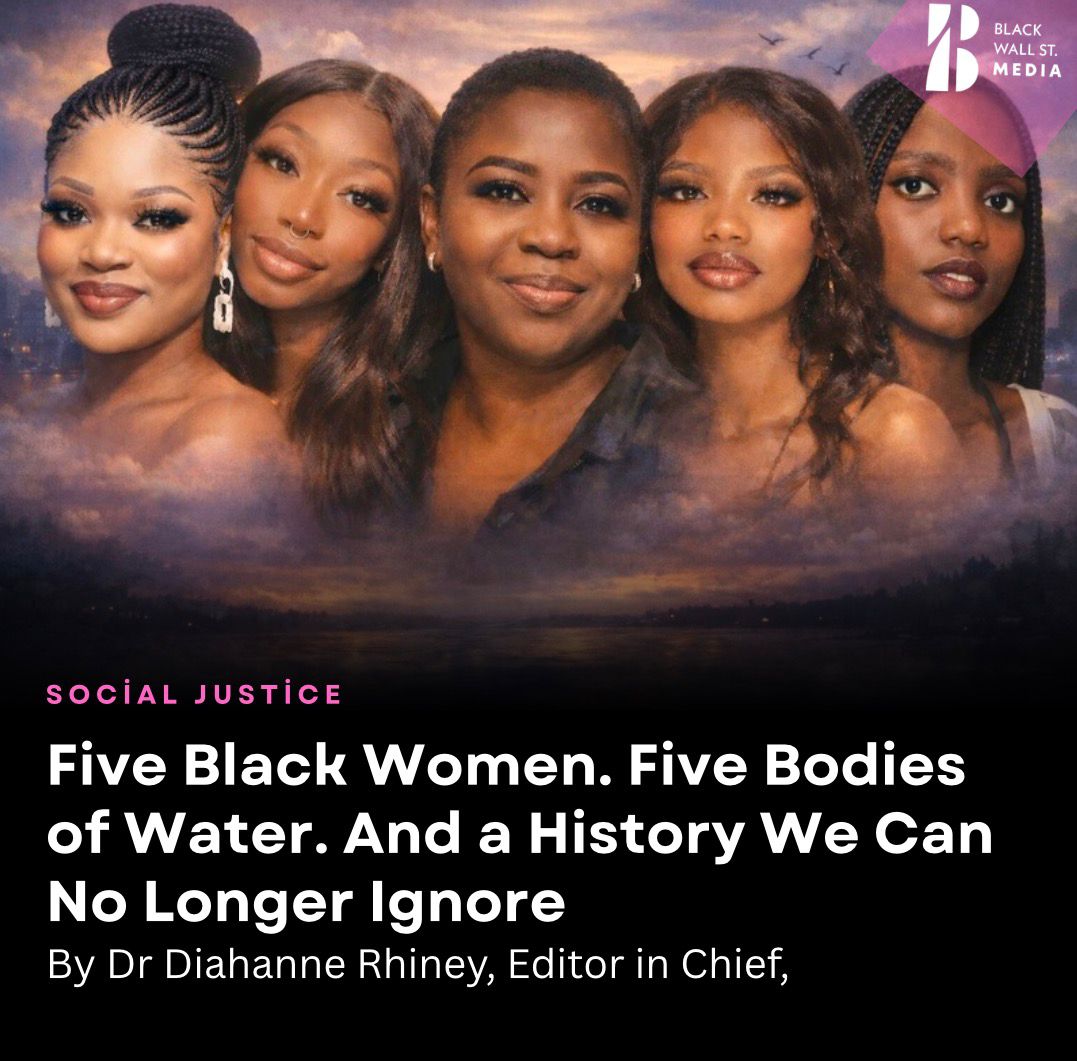
Five Black Women. Five Bodies of Water. And a History We Can No Longer Ignore
Read More
Mother’s Day and the Quiet Legacy of Our Mothers
Read More
Editor’s Letter March 2026
Read More
Locked Out of the Purse Strings
Read More
Editors Letter – January 2026
Read More
Editors Letter – October 2025
Read More
Editors Letter – September 2025
Read More
Editors Letter – August 2025
Read More
Editors Letter – July 2025
Read More