History
Black History Month
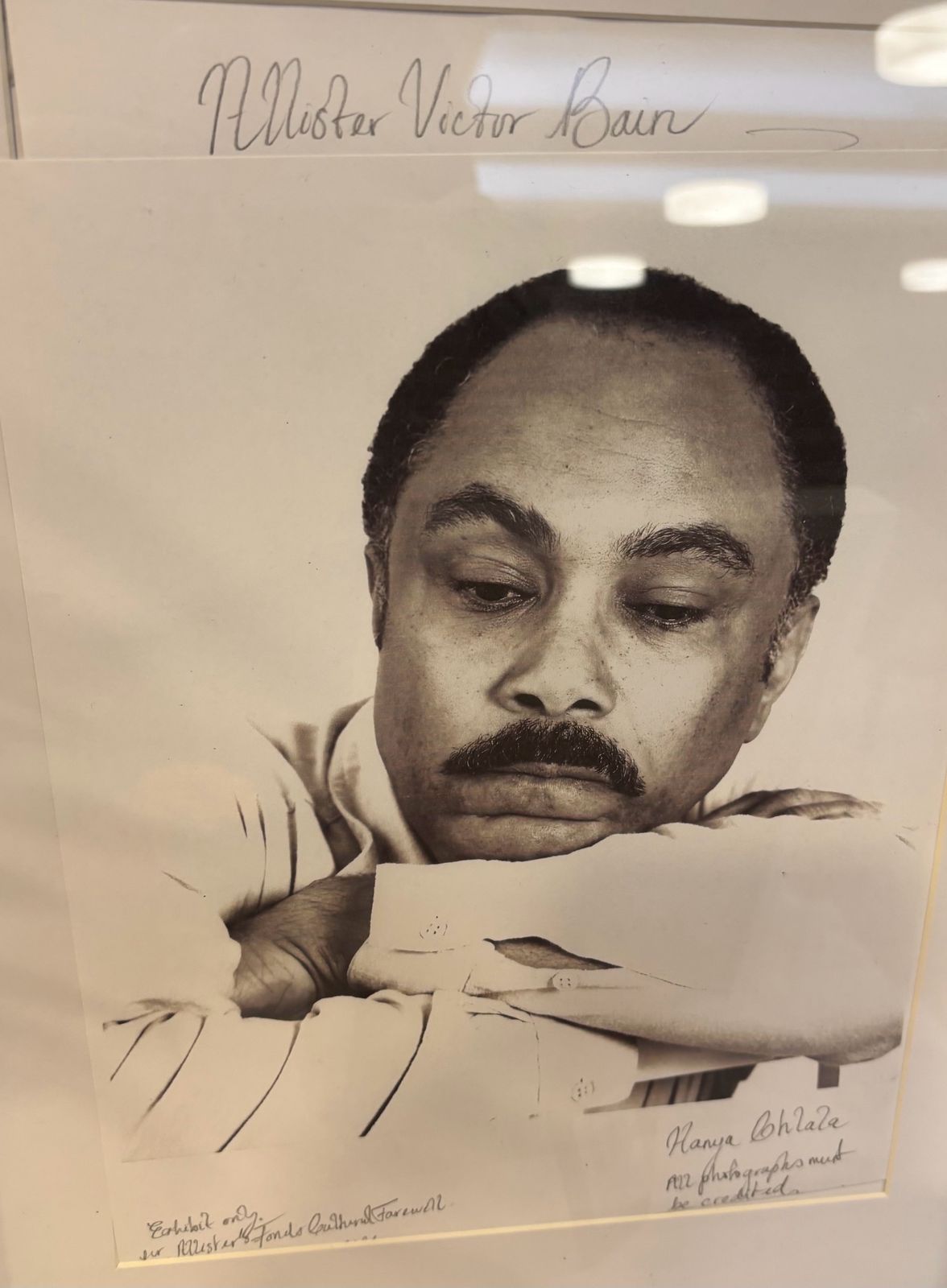
“This Black History Month, Black Wall St. Media pays tribute to Allister Victor Bain, the Grenadian-born artist, storyteller and cultural pioneer whose creativity helped shape Caribbean and Black British cultural life. Through the heartfelt memories of his friends, colleagues and family, we celebrate not only his remarkable contribution to the arts, but the man behind the legacy. His story is a powerful reminder that our pioneers deserve more than to be remembered after they are gone — their lives, work and history must be preserved for generations to come. Read the tribute. Discover his legacy. Help keep his story alive.”
BWSMContributor

There are people whose lives cannot be measured simply by the years they have spent on this earth.
Their true measure is found in the lives they have touched, the doors they have opened, the stories they have preserved and the memories they leave behind in the hearts of those who knew them.
Allister Victor Bain was one such man.

He was an artist, a storyteller, a performer, a cultural pioneer and, to those fortunate enough to have known him, a friend whose presence could fill a room. He belonged to a generation of Caribbean men and women who crossed oceans carrying far more than suitcases.
They carried the rhythms of home, the language of their ancestors, the memories of childhood, the weight of history and the conviction that Black people had stories worthy of being told.
Allister carried Grenada with him.
He carried it into theatres, rehearsal rooms, television studios, kitchens and conversations. He expressed it through dance, drama, music, humour and the written word. He brought it into a Britain that was still struggling to recognise the people whose labour, creativity and courage were helping shape its modern identity.
His life reminds us that history is not made only by those whose names are engraved on monuments or whose portraits hang in institutions. Sometimes history is made by those who teach a dancer to move, help a young performer discover their confidence, gather friends around a dinner table or insist that a story deserves to be told even when the world is not yet ready to listen.
During Black History Month, we remember Allister not merely because he has died, but because the life he lived demands to be remembered. His story belongs to Grenada, the Caribbean, the African diaspora and the cultural history of Britain.
But before he became part of that history, he was a boy.
THE BOY WHO CARRIED GRENADA WITH HIM
Allister Victor Bain was born on 13 January 1932 in St Andrew’s, Grenada, to Thorance and Beatrice Bain.
His early life was marked by loss. Following the deaths of his parents, grandmother and aunt, he eventually went to live with another aunt in St George’s. Childhood, which should have offered the security of familiar faces and an unbroken sense of belonging, had already taught him something about absence.
Yet there are people who, even in difficult circumstances, discover a world within themselves that hardship cannot entirely extinguish.
For Allister, that world was the world of the imagination.
Drama classes offered a place where words could become lives, movement could become meaning and ordinary experiences could be transformed into something extraordinary. Writing and dance gave him ways to interpret the world around him, while storytelling allowed him to preserve the experiences, humour and complexities of the people among whom he had grown up.
He did not simply want to observe life. He wanted to give it expression.
His love of dance developed into the establishment of Bee Wee Ballet, through which he performed across the Caribbean. He understood movement as a language in its own right: a way of communicating feeling, identity and cultural memory without requiring every truth to be spoken aloud.
That instinct remained with him throughout his life.
His journey eventually brought him to Britain, where opportunities in acting and writing offered new possibilities. But leaving one’s homeland is never simply a matter of changing an address. For those who make a new life far from the Caribbean, the journey often carries a quiet contradiction: the search for opportunity exists alongside a lasting connection to the place that first gave them a sense of identity and belonging.
Allister made that space between home and a new beginning his own.
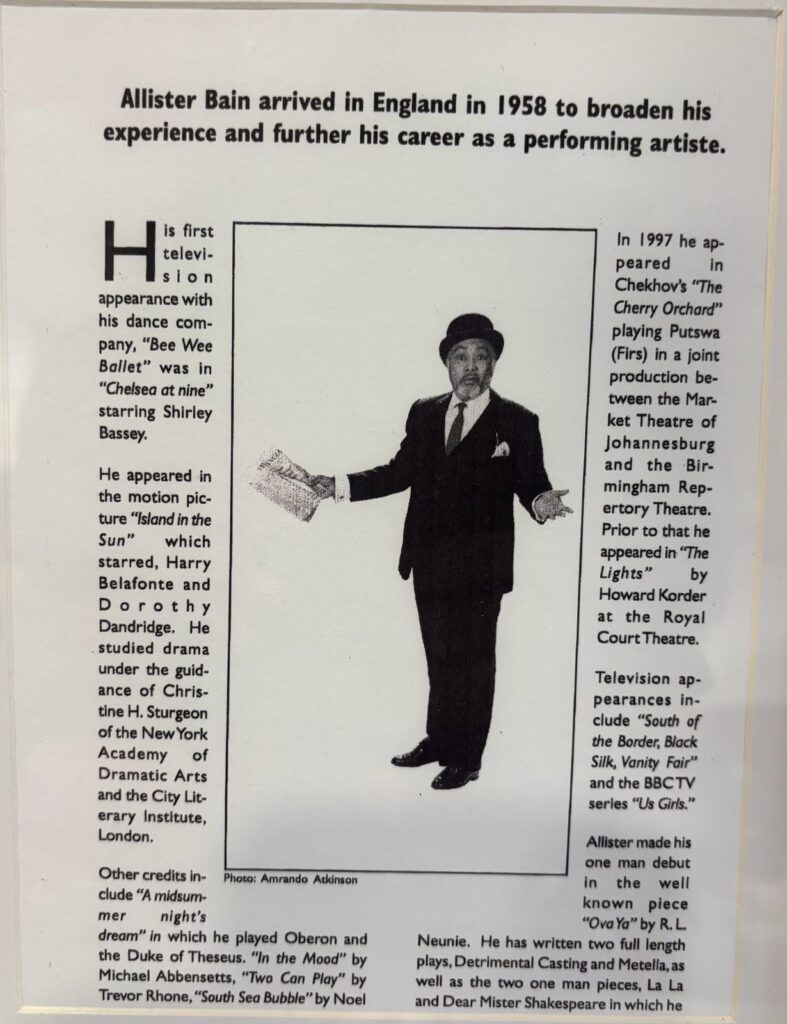
He worked across theatre, television, film, dance and writing, building a creative life that resisted the boundaries others might have placed around a Caribbean artist. His journey included work associated with Island in the Sun, the film released in 1957, alongside television productions and theatrical performances that helped bring Black Caribbean experiences into British cultural life.
His talents were not confined to one discipline. He could move between performance and choreography, the spoken word and the written page, the public stage and the private intimacy of a shared meal.
He understood that culture does not live in only one place. It lives in the body, the voice, the kitchen, the language passed between generations and the stories a family refuses to allow the world to forget.
ALEX PASCALL OBE: A FRIENDSHIP THAT TIME COULD NOT ERASE
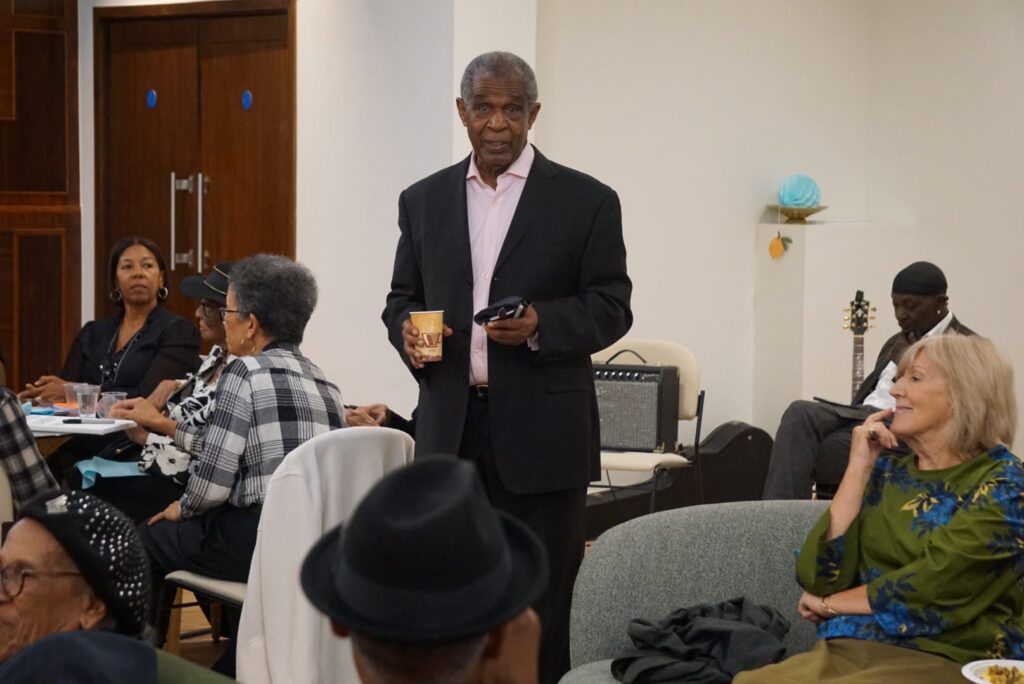
Some friendships begin in adulthood. Others are formed in childhood, when life is still unfolding and the future has not yet revealed the distances it will place between people.
The friendship between Allister Bain and Alex Pascall OBE belonged to the latter kind.
Their story reached back to Grenada and their days at Grenada Boys’ Secondary School. Before Britain, before the cultural institutions and professional achievements, there was the island, the school and the beginnings of a bond that would survive the passing of decades.
Alex left Grenada in 1959 and came to Britain, where his brother Allister was already living. Like so many Caribbean people who made that journey, he entered a country where possibility and prejudice existed side by side. There was work to be found and a future to be built, but there were also barriers that became apparent only when one encountered them.
In such circumstances, friendship was more than companionship. It was a bridge between the life one had left and the life one was trying to establish.
Alex’s recollections evoke the wider Caribbean world from which they came: the connections between the islands, the cultural life of the region and the shared history of people whose identities were never limited by the narrow boundaries of colonial geography.
Within those memories sits a particularly important part of their story.
Allister helped Joyce Pascall with her ticket to Britain. Joyce would later become Alex Pascall OBE’s wife.
There is something deeply human in this recollection. History is often recorded through public achievements and celebrated milestones, but the foundations of a life together can rest on small acts of assistance, generosity and connection. A ticket, a journey, an introduction or a helping hand may appear insignificant when measured against the grand sweep of history. Yet such moments can alter the course of a life.
When Joyce arrived, Alex recalled seeing her one Sunday and asking Allister to arrange breakfast. The memory carries the warmth of a friendship in which people were involved in one another’s lives, where affection was expressed through practical help, shared food and the ordinary rituals of companionship.
Their friendship continued across different parts of London, including Highgate, Finsbury Park and Finchley. The years moved on. Families grew. Life acquired its responsibilities and complications. Yet the bond between them remained.
There was humour, too. Alex remembered the children teasing Allister about smoking, a small domestic detail that brings the man closer to us than any formal list of achievements could. We begin to see not a distant cultural figure, but someone whose habits, mannerisms and personality were woven into the everyday lives of those around him.
Alex and Allister also worked together through Alister’s Singers, with Allister contributing choreography, music and costumes. Their collaboration reflected the cultural life they were helping to create: a life in which Caribbean talent was not merely displayed as entertainment, but recognised as a contribution to the artistic and social fabric of Britain.
Yet friendship is never without its complexities. Alex spoke affectionately about Allister’s ability to be difficult, a recollection that invites a smile precisely because it is so recognisable. Love does not require us to turn the dead into flawless figures. It allows us to remember their sharp edges, stubbornness and contradictions alongside their generosity.
That is how we honour a life honestly.
Alex also recalled receiving a telephone call while travelling on the Underground, informing him that Allister had fallen. He went to visit his friend. In that moment, the long history between them was no longer simply a story of schooldays, journeys and shared creative work. It became the immediate concern of one human being for another.
As Allister’s life drew towards its final chapter, that concern became part of the story.
But Alex’s tribute extended beyond personal memory. He appealed to Caribbean governments and high commissions to take greater responsibility for preserving and teaching the history of the diaspora.
His words point towards a question that remains urgent: what happens when the people who carry our history are allowed to disappear without their experiences being properly recorded?
How many artists, organisers, performers, writers and community builders have passed through our lives without their work being sufficiently documented? How many young people have grown up unaware of those who helped create the cultural foundations on which they now stand?
A community that fails to preserve its history leaves future generations to inherit fragments.
Alex understood that Allister’s story was not his alone. It belonged to a wider Caribbean inheritance that needed to be preserved and passed on.
He spoke, too, of Allister’s ashes returning to Grenada and expressed the hope that his friend’s spirit might somehow awaken the Caribbean to the importance of remembering its own.
It was a fitting thought for a man who had spent his life carrying Grenada within him. The body may return to the island, but the deeper homecoming must take place through memory, education, art and a determination to ensure that the next generation knows who came before them.
Alex’s closing humour, including his reference to Calabash, reminds us that grief among old friends is rarely made of solemnity alone. There is laughter in it, too: private jokes and familiar expressions that may mean little to strangers but everything to those who shared the years.
Perhaps that is one of the greatest privileges of friendship: to know both the public figure and the private man, and to carry both memories when the final farewell comes.
THE ARTIST AND THE COUNTRY THAT NEEDED HIS TALENT

To understand Allister Bain’s contribution, we must understand something about the Britain in which he worked.
Black Caribbean artists did not enter an empty cultural landscape. They entered a society in which the experiences of some were treated as universal, while those of others were pushed to the margins. Certain stories were welcomed on stage and screen; others were expected to remain unheard.
The barriers were not always announced. Sometimes they appeared in the roles offered, the opportunities withheld, the assumptions made about an actor’s range or the limited space afforded to Black lives beyond familiar stereotypes.
Artists such as Allister had to do more than perform. They helped challenge the boundaries of what British audiences were invited to see and understand.
His career brought him into contact with a broad creative world, including theatre, television, dance and film. His work connected him with Caribbean and Black British cultural traditions and with writers and performers whose stories helped widen the national conversation.
His association with Island in the Sun is among the notable elements of his film background. He was also remembered for helping Dorothy Dandridge with limbo and contributing to the choreography of a carnival sequence.
Such work demonstrates a particular kind of artistic intelligence: the ability to understand how a body moves, how a cultural tradition carries meaning and how a performance can communicate a history that words alone might struggle to express.
Dance is never merely movement. It carries the memory of places, communities and generations. It can hold joy and resistance together, preserving a cultural inheritance even when the language surrounding it has been forgotten or dismissed.
Allister understood that the Caribbean was not a footnote to somebody else’s history. It was a world of its own, rich in invention, contradiction, music, humour, struggle and beauty.
His theatrical and television work formed part of a wider history of Black artists creating space for themselves and those who would follow. His involvement in productions associated with writers such as Michael Abbensetts reflected a cultural moment in which Black British and Caribbean voices were making increasingly important claims upon the stage and screen.
These artists were not simply asking to be included in someone else’s story. They were asserting their right to tell their own.
That distinction matters.
Representation is not merely the presence of a Black face in a production. It is the opportunity to be complex, flawed, funny and vulnerable; to possess a history and inhabit a life that cannot be reduced to a single stereotype.
Allister’s generation helped make that possibility more visible, even when the institutions around them were slow to recognise the significance of their work.
And then there was the writing.
His stories, including Caribbean Christmas and Sugar Cane N Spice, and his book The French Cashew Tree, reflected the imaginative world he had carried from Grenada. His play Effie May was a source of particular pride, while works including 2001 People and Catalysta formed part of his wider creative output.
These titles are more than entries in a catalogue. They are evidence of a mind that continued to create, observe and interpret.
The writer’s task is not simply to record what happened. It is to discover what an experience means, what it reveals about human nature and what it allows us to understand about ourselves.
Allister’s love of storytelling was rooted in the belief that ordinary people possess extraordinary lives. Their experiences deserve attention. Their speech, humour, struggles and dreams are worthy of preservation.
There is a particular responsibility attached to Caribbean storytelling because so much of the region’s history has been filtered through the perspectives of outsiders. To write from within that inheritance is to reclaim the right to describe the world in one’s own terms.
Allister did that through the arts he loved.
His legacy should therefore be understood not only through the roles he played or the productions in which he appeared, but through the larger cultural space he helped make possible.
The question we must ask is whether the country that benefited from artists such as Allister has done enough to preserve their contributions.
A society cannot claim to value diversity while allowing the people who helped create its cultural richness to vanish from public memory. It cannot celebrate Black History Month while neglecting the archives, recordings, programmes, photographs and oral histories through which that history might be understood.
Commemoration without preservation is incomplete.
Remembrance without action risks becoming a ceremony that comforts the living while doing little to protect the truth.
DONNA CROLL: THE TORCH PASSED FROM ONE GENERATION TO THE NEXT
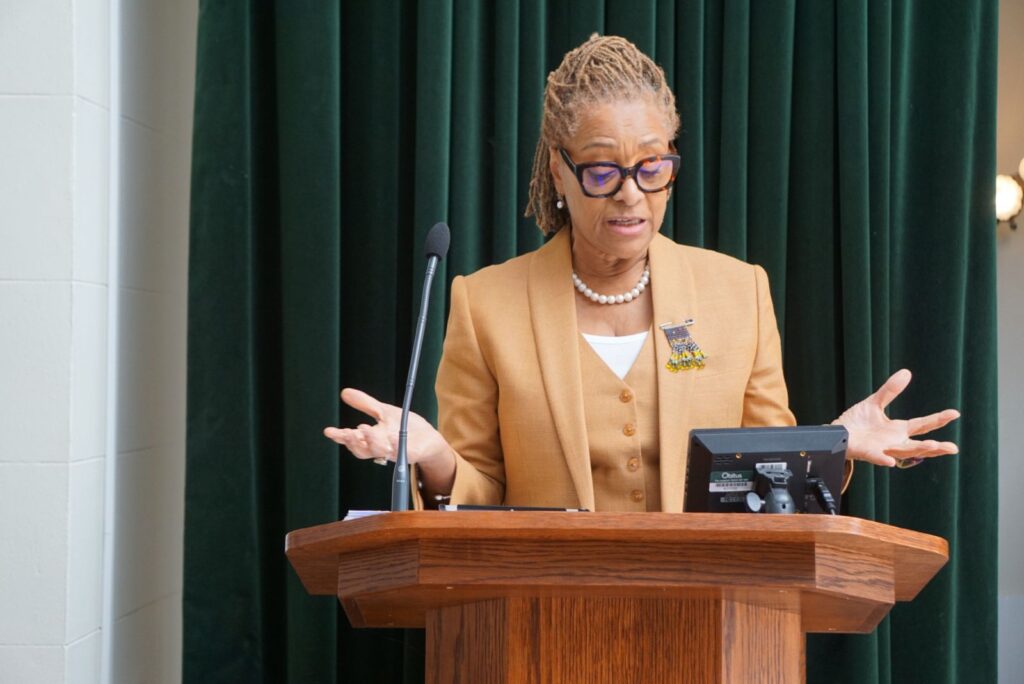
For actor Donna Croll, remembering Allister Bain is also a way of remembering the people who helped shape the profession she entered.
Her tribute is rooted in experience. She worked with Allister in theatre, including through Talawa and Anton Phillips’s Black Theatre Season at the Arts Theatre. Their professional lives intersected across productions and venues, including the Forge, the Cockpit and the Lyric Hammersmith.
She recalled work associated with Michael Abbensetts, including El Dorado, In the Mood and Sweet Talk, as well as Trevor Rhone’s Two Can Play and Jimmy Garrett’s Say Hallelujah. She also remembered their television work, including productions connected with Abbensetts such as Empire Road and Black Silk.
These recollections open a window onto a period of Black theatre and television that deserves to be better understood. The work was created by artists who were not simply pursuing individual careers; they were helping to build a tradition, often without the institutional support or lasting recognition their contributions merited.
Donna remembered Allister as a pioneer, but her description went beyond the title.
He was generous with his time. He shared his experience and offered advice. He did not treat knowledge as a possession to be guarded or professional success as a prize that could belong to only one generation.
Instead, he passed things on.
Donna reflected on how the older generation had helped her generation find its way, and how she now sees her own generation passing the torch to those coming behind them.
There is something profoundly moving in that recognition. A career does not unfold in isolation. It is shaped by those who offer guidance, make introductions, share hard-won lessons and help others see possibilities that might otherwise remain out of reach.
The torch is not passed in a single moment. It is passed through years of work, encouragement, patience and example.
Sometimes it is passed in a rehearsal room, where a more experienced performer offers a quiet word. Sometimes it happens through a conversation after a show or through the willingness to share what one has learned from disappointment as well as success.
Sometimes the person doing the teaching does not even realise how much they have given.
In Donna’s recollection, Allister understood the importance of making room for those who followed him. He was not bitter about opportunities opening up for younger performers. He could recognise their success without treating it as a diminishment of his own.
That is no small thing.
In professions where opportunities can be scarce, recognition uneven and generations misunderstood by one another, generosity becomes a form of leadership. It takes confidence to celebrate another person’s achievements without feeling that one’s own life has been made smaller.
Donna remembered that Allister possessed this generosity, helping him remain connected to the people who came after him.
Her tribute also takes us away from the public stage and into the warmth of his private life.
She remembered a sparkling host, a man whose dinners were legendary and whose cooking was part of the pleasure of knowing him. He created occasions where people could gather, eat, talk, laugh and feel welcome. He even taught Donna a recipe, although she has no intention of revealing it.
That final detail feels wonderfully true to the man she describes. Even in a tribute to his life and work, there is room for mischief, affection and the protection of a small secret.
It reminds us that cultural history is not made only in theatres and studios. It is also made around tables, through friendships, in kitchens filled with conversation, in the exchange of recipes and in the generosity of a person who wants others to enjoy what he has created.
A good host understands that food is not simply nourishment. It is an invitation. It says: come in, sit down, you belong here.
For people who have built lives far from their birthplace, gathering can carry particular significance. The table becomes a place where home is recreated, where accents and memories mingle, and where people can be themselves without explanation.
Allister’s hospitality was another expression of the cultural life he carried.
Donna’s tribute also invites us to consider the responsibility of the living. If a generation has received knowledge, support and encouragement from those who came before, it must decide what to do with that inheritance.
Will it keep the door open? Will it tell the stories? Will it make room for those whose talents are still waiting to be recognised?
The passing of the torch must be more than a beautiful metaphor. It must become a practice.
It requires the preservation of work, the acknowledgement of influence and a willingness to ensure that younger artists do not have to rediscover everything their predecessors learned through struggle.
It means giving credit where credit is due.
And it means remembering that the artists who came before us were not simply pioneers because they arrived first. They were pioneers because they helped make it possible for others to arrive at all.
Donna ended her tribute with words that carry the simplicity and finality of a personal farewell:
“Dear Allister, thank you for everything.”
There is no need to improve upon that.
Sometimes gratitude is the most complete form of remembrance.
THE STORYTELLER WHO CARRIED MANY WORLDS
Allister Bain’s life invites us to consider the many forms an artist can take.
He was the performer who understood the power of the body, the writer who trusted the power of a story, the collaborator who knew that art is often a collective act and the host who understood that creativity could continue long after the curtain had fallen.
He was also a man whose life crossed borders, generations and cultural traditions.
To move from Grenada to Britain was to enter a society in which Caribbean identity could be celebrated in one moment and diminished in the next. A person might be welcomed for their talent while the history that had formed that talent remained largely unknown.
Allister’s work challenged that separation.
He brought the Caribbean into the spaces where he worked, not as decoration but as a living inheritance. Its rhythms, stories, characters and sensibilities formed part of the world through which he understood human experience.
His creative life was not an escape from reality. It was a way of engaging with it.
And yet we should resist the temptation to remember him only as a symbol. He was a man, not an emblem. He had his own temperament, private concerns, friendships and disappointments. He could be difficult, funny, generous, proud and affectionate. He had a life beyond the language of cultural contribution.
To honour him fully is to allow him that humanity.
There is a danger in the way we remember pioneering figures. We can make their lives so grand that we lose sight of the person inside them. We turn them into monuments, and monuments do not cook dinner, tease their friends, give advice, argue over small matters or laugh at an old joke.
But the people who knew Allister remember those things.
They remember the man who worked, created, entertained and encouraged. They remember his company, wit and distinctive presence. They remember someone whose life was made meaningful not only by the public record, but by the countless private moments that may never find their way into an archive.
That is why oral testimony matters.
When Alex speaks about their friendship, and Donna speaks about the generations of performers who supported one another, they are doing more than sharing fond memories. They are preserving a form of history that formal institutions often overlook.
Their recollections give texture to the record. They show how cultural communities were built, how knowledge was shared and how people sustained one another in environments that did not always recognise their value.
A photograph can tell us what a person looked like. A programme can tell us where they performed. A television credit can establish that they were there.
But a friend can tell us what it felt like to be in the room with them.
A colleague can tell us what they gave to the people around them.
A family member can tell us what remains when the public performance is over.
These are different forms of evidence, and each has its place in preserving a life.
If we are serious about Black history, we must take all of them seriously.
We must preserve the programmes, posters, photographs, scripts, recordings, manuscripts and personal papers. We must record the testimony of those who worked alongside artists such as Allister while that testimony remains available. We must ensure that their work can be encountered by students, researchers, young performers and members of the public who might otherwise never know their names.
We should not wait until every witness has gone before recognising the urgency of listening.
History does not always announce the moment when it is about to become inaccessible. Sometimes it simply grows quieter, one voice at a time.
THE FAMILY, THE FINAL CURTAIN AND THE JOURNEY HOME

Beyond the productions, public appearances and professional achievements, there was a family who knew Allister in a different way.
They knew the brother, the uncle and the friend. They knew the person whose life could not be reduced to a biography, however carefully written, or a list of credits, however impressive.
Their eulogy reminds us that the man remembered by the cultural world was also someone whose life was held within the intimate circle of family and friendship.
They speak of his humour, sensitivity, energy and free spirit. They remember a man who loved storytelling and carried a distinctive sense of himself through the changing circumstances of his life.
Their memories return us to Grenada, to the family who shaped his early years and to the experiences that formed the foundations of his character. They also remind us that his journey to Britain was part of a much longer story: one shaped by opportunity, ambition, loss, belonging and the search for a place where his talents could flourish.
For all his achievements, Allister’s life remained rooted in relationships.
Family gives us a history that precedes our own understanding of ourselves. Friends give us a history we create together. Colleagues remember what we contributed to a shared endeavour. Each holds a different part of the truth.
When these accounts come together, a life begins to emerge in its fullness.
His family remembered the pride he took in his writing, particularly Effie May, and the importance of his storytelling. They recalled the creative force that animated him, the humour that made him memorable and the sensitivity that existed alongside his energetic, free-spirited nature.
Such recollections matter because they refuse to separate the artist from the person.
It is tempting, when celebrating someone who has contributed to the arts, to concentrate on achievements that can be listed and verified. But the family knows that a person is always more than their accomplishments.
They know the absences left behind. They know the stories that will continue to be told at family gatherings, the phrases that will return unexpectedly and the small memories that can make a person feel present even when their chair is empty.
Grief is not simply the knowledge that someone has died. It is the gradual discovery of all the ordinary moments in which they will no longer be physically present.
And yet love has its own way of resisting disappearance.
The family offered a farewell that captures the mixture of sorrow, affection and celebration that accompanies the death of someone whose life has meant so much:
“To a dear brother, uncle, and friend, this may be your final curtain call, but our love and memories will always give you a standing ovation.”
It is a beautiful tribute because it recognises the finality of death without surrendering to the idea that death has the final word.
The curtain falls. The performer leaves the stage. But the effect of the performance continues in those who witnessed it.
For Allister, the metaphor is especially fitting. So much of his life was devoted to the arts, where a moment of performance can disappear as soon as it has been experienced. The audience leaves the theatre, the lights come up, the set is dismantled and the actors move on to their next work.
What remains is memory.
Sometimes there is a recording, a photograph or a written text. Sometimes there is only the testimony of someone who was there. But the work has happened. The experience has changed those who encountered it, and its meaning may continue to grow long after the performance itself has ended.
The same is true of a life.
Allister’s final curtain call does not erase the work that came before it. Nor does it diminish the affection of those who loved him. The standing ovation offered by his family is an expression of enduring love and a reminder that the living have a responsibility to carry his story forward.
His ashes returning to Grenada brings another layer of meaning to the farewell.
The island of his birth becomes the place to which his remains return, even after a lifetime that took him across the Caribbean and into Britain. There is something deeply moving in that circular journey: the boy who left home, the man who made a life elsewhere and the final return to the soil from which his story began.
But a homecoming should be more than a destination.
It should be an act of recognition.
May Grenada remember him not only as a son who travelled far, but as an artist who carried its spirit into the wider world. May the Caribbean recognise the importance of preserving the work of those who helped shape its cultural identity. And may Britain acknowledge the artists whose labour and imagination helped create the cultural life it now celebrates.
The return of his ashes can mark the end of a physical journey. The return of his story to public memory must be the beginning of another.
WHAT WE OWE THE DEAD
There is a question that accompanies every tribute to a pioneering artist: what are we going to do with the life we have just praised?
It is easy to celebrate someone after their death. The urgency of the moment gathers people together. Memories are shared. Photographs emerge. Words of gratitude are spoken. The value of a life that may have been insufficiently recognised becomes suddenly apparent.
But what happens when the funeral is over?
What happens when the last tribute has been published, conversations grow quieter and the people who knew the artist begin to return to their daily lives?
Does the story remain accessible? Can a young actor discover the work? Can a student learn about the artist’s contribution? Can a researcher find the relevant records? Can the next generation understand how the cultural world it inhabits was built?
These questions are not an attempt to diminish the value of a funeral or a eulogy. They are an insistence that remembrance must continue beyond the moment of farewell.
Allister Bain’s life belongs to a wider history of Caribbean people who came to Britain and helped transform its cultural landscape. Their contributions were made in theatre, television, film, dance, music, writing, education and community life. Some became widely celebrated. Others remained known mainly to colleagues, family members and audiences who encountered their work.
Too many stories remain scattered across personal collections, fading programmes, old recordings and the memories of people whose own time is passing.
That is a cultural loss, but it is also a failure of responsibility.
Black history cannot be preserved solely through annual celebrations. It requires sustained work throughout the year: collecting oral histories, cataloguing archives, restoring recordings, publishing research and teaching the stories of artists whose work helped shape the societies in which we live.
It requires institutions to ask whose stories have been left out and why.
It requires public bodies and cultural organisations to treat the preservation of Black heritage as an essential part of their work, rather than a seasonal gesture.
It also requires us, as individuals and communities, to listen while the voices are still here.
Alex Pascall’s appeal to Caribbean governments and high commissions speaks directly to this responsibility. The history of the diaspora should not be left to chance. It should be gathered, preserved, taught and made available to future generations.
Donna Croll’s memories remind us that the transfer of knowledge must continue. The torch cannot be passed if the history of those who carried it first is forgotten.
And the family’s farewell reminds us that behind every public figure there are people whose love and memories form part of the truth.
Together, their testimonies offer a powerful lesson: history is not only about who achieved something. It is also about who helped, who encouraged, who opened a door, who shared their knowledge and who made it possible for others to believe that they, too, had a place in the world.
Allister did those things in ways that his friends, colleagues and family continue to remember.
The task now is to ensure that those memories become part of a lasting record.
A STANDING OVATION THAT DOES NOT END
During Black History Month, we often speak of pioneers, trailblazers and cultural giants. The words are deserved, but they can become empty if they are not accompanied by a willingness to understand the lives behind them.
Allister Victor Bain deserves more than a passing mention.
He deserves to be remembered as a Grenadian artist who brought his creativity to the Caribbean and Britain; as a performer and storyteller whose work crossed artistic boundaries; as a friend whose life was woven into the memories of Alex Pascall OBE; as a colleague whose generosity helped sustain the next generation, as Donna Croll recalls; and as a beloved brother, uncle and friend whose family will continue to carry him in their hearts.
His story is not only about the past. It is about what the present chooses to preserve.
It asks us to look again at the people whose work helped build the cultural world we inhabit. It asks us to acknowledge that many of those who enriched British life did so without receiving the recognition, institutional support or lasting documentation their contributions deserved.
And it asks us to remember that a person’s legacy is not secured simply because someone writes a tribute. It is secured when the work is preserved, the history is taught, the testimony is recorded and the next generation is given the opportunity to learn.
Allister spent his life telling stories.
Now we must tell his.
We must tell the story of the boy from Grenada who discovered the possibilities of drama and dance. We must tell the story of the artist who crossed oceans and worked across theatre, television, film and literature. We must tell the story of the friend who helped others, the colleague who shared his knowledge, the host who gathered people around his table and the family man whose absence is felt by those who loved him.
We must tell it with honesty, preserving not only his achievements but his humanity: the humour, the generosity, the contradictions, the difficult moments and the warmth.
And we must tell it before more of the voices that can illuminate his life fall silent.
For Allister Victor Bain, the final curtain has fallen. But the story has not ended.
It continues in the people he loved, the artists he encouraged, the performances that remain in memory, the words he put on the page and the cultural history to which he contributed.
It continues in Grenada, throughout the Caribbean diaspora and in every young artist who discovers that someone came before them and helped make the way a little clearer.
The family has promised him a standing ovation through love and memory. His friends and colleagues have added their voices. Now the wider community must decide whether it will let that applause fade or give it the permanence of recognition.
Let us choose remembrance.
Let us preserve the work.
Let us teach the history.
Let us honour the people who carried our stories when the world was not always prepared to hear them.
And let us make sure that Allister Victor Bain is not remembered only because he has gone, but because of everything he gave while he was here.
Dear Allister, thank you for everything.
Rest peacefully, and may your journey home to Grenada be filled with the love of the people and the place you carried with you throughout your life.
Peace.
Black Wall St. Media
Our stories. Our voices. Our history. Never forgotten.

- ALLISTER VICTOR BAIN: THE MAN, THE ARTIST AND THE HISTORY WE MUST NOT FORGET
 This Black History Month, Black Wall St. Media pays tribute to Allister Victor Bain, the Grenadian-born artist, storyteller and cultural pioneer whose creativity helped shape Caribbean and Black British cultural life. Through the heartfelt memories of his friends, colleagues and family, we celebrate not only his remarkable contribution to the arts, but the man behind the legacy. His story is a powerful reminder that our pioneers deserve more than to be remembered after they are gone, their lives, work and history must be preserved for generations to come. Read the tribute. Discover his legacy. Help keep his story alive.
 - When Your Achievements Are Treated as a Question
 When a Black Woman Has to Prove Her Worth What happens when decades of achievement are met with doubt, and a Black woman finds herself having to justify not just her work, but her right to be in the room? This powerful and deeply personal reflection explores race, credibility, the emotional cost of constant scrutiny, and why being told to “let it go” is not always enough. This Black History Month, it is time to look beyond celebration and confront the realities Black women continue to face in the workplace.
 - The Jamaican Sculptor Who Carved His Way Into History
 Have you heard of Alvin Marriott? A Jamaican sculptor whose extraordinary talent took him from carving limestone in Jamaica to helping restore the Houses of Parliament in Britain, teaching a new generation of artists and creating a monument to Bob Marley in his eighties. This Black History Month, discover the remarkable story of a man whose hands helped shape history, yet whose name remains unfamiliar to so many. It is time to look again, remember his contribution and give Alvin Marriott the recognition he deserves.
 - Damilola Taylor: The Boy Who Never Made It Home
 He was just ten years old. He loved football, supported Manchester United and dreamed of becoming a medical researcher so he could help his sister. On 27 November 2000, Damilola Taylor was fatally injured while walking home in Peckham. His death shocked Britain. His family endured years of waiting for justice. But his parents, Richard and Gloria Taylor, refused to let their son’s legacy be defined by the violence that took him. They established the Damilola Taylor Trust to help give other young people hope, opportunities and a better chance of a future. This Black History Month, we remember the child behind the headlines — his dreams, his family and the future he was never given the chance to live. Every child deserves to make it home. Every child deserves a future. Read our Black History Month feature with Black Wall St. Media.
 - Alzheimer’s the Black doctor who helped decode the disease
 🧠✨ Celebrating an Unsung Hero! Dive into the captivating journey of Dr. Solomon Fuller, a pioneer in Alzheimer's research and a standout figure in Black history. From his roots in Liberia to groundbreaking discoveries, discover the legacy of a medical trailblazer who defied adversity. 🌟





Damilola Taylor: The Boy Who Never Made It Home
Read More
Alzheimer’s the Black doctor who helped decode the disease
Read More
The Crown in the Ledger: What Finding Britain’s Slave Traders Asked Us to Face
Read More
A life lived beyond the limits of representation
Read More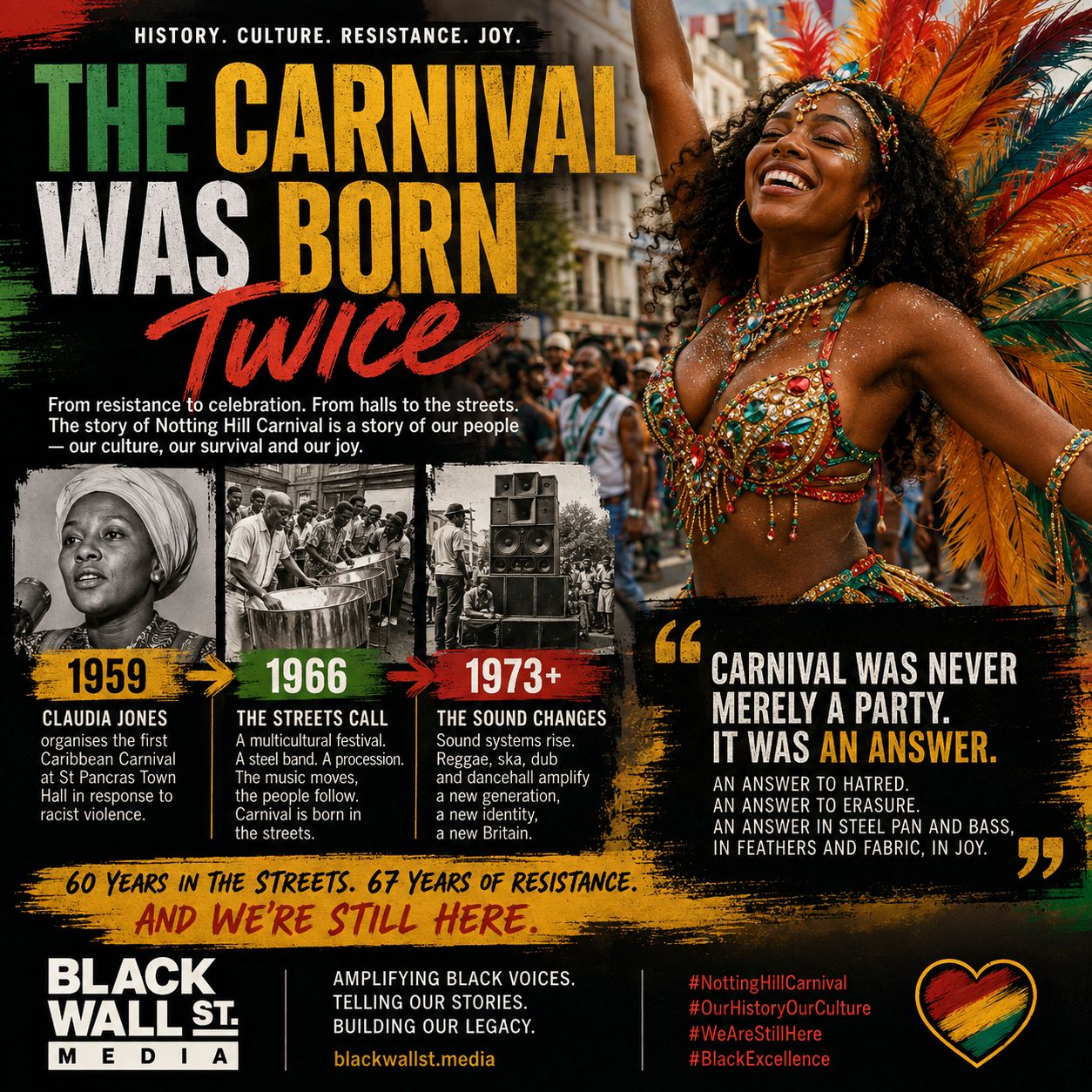
The Carnival Was Born Twice
Read More
Afterlives of Looted Heritage
Read More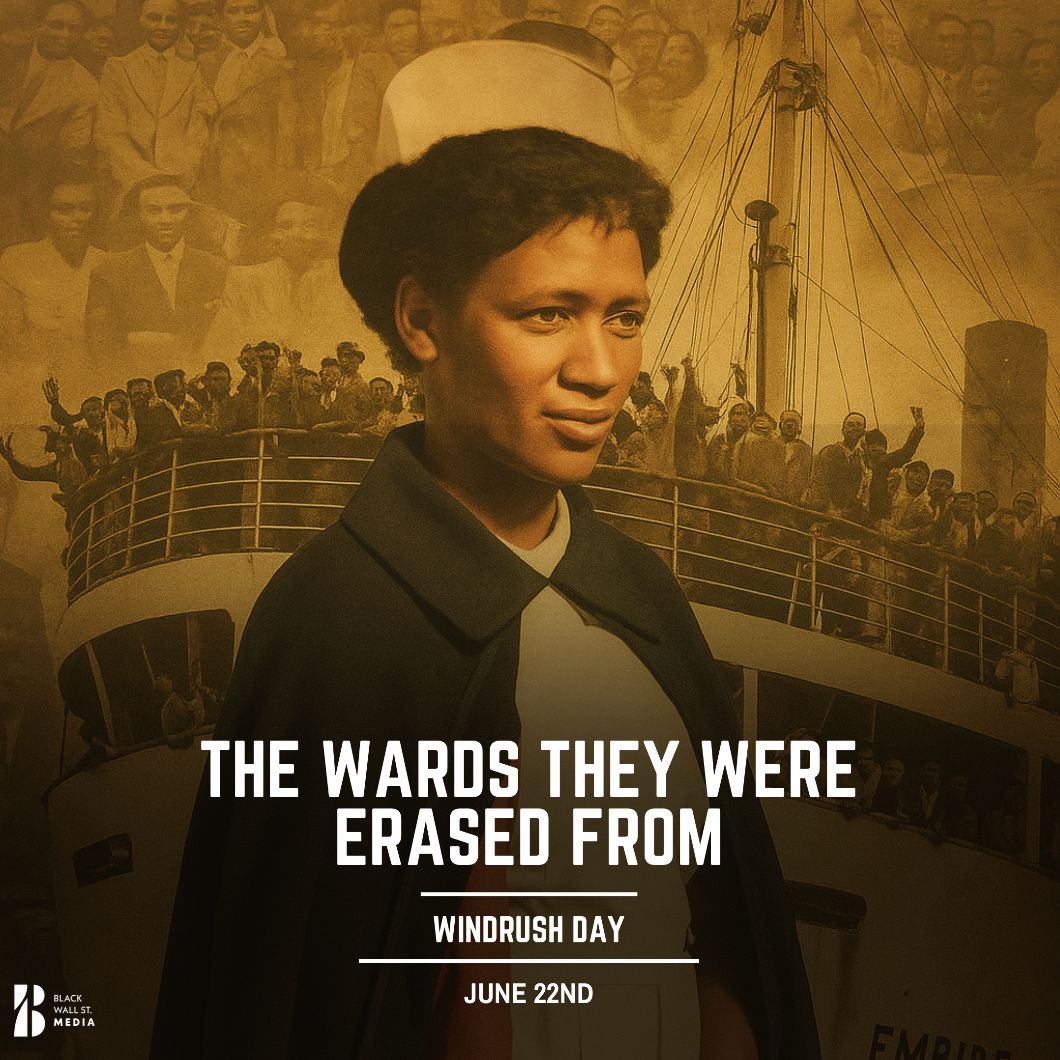
The Wards They Were Erased From
Read More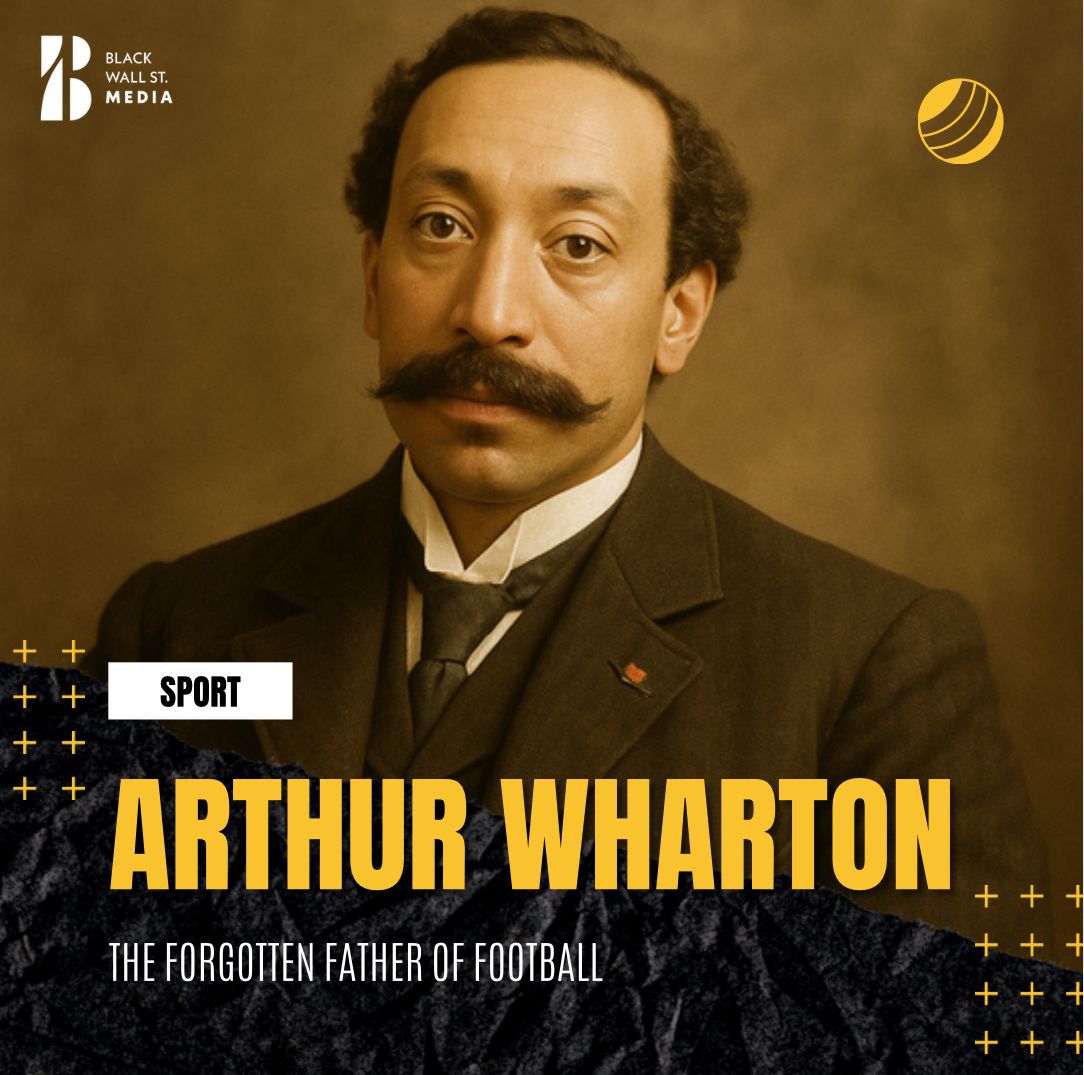
World’s first Black professional footballer
Read More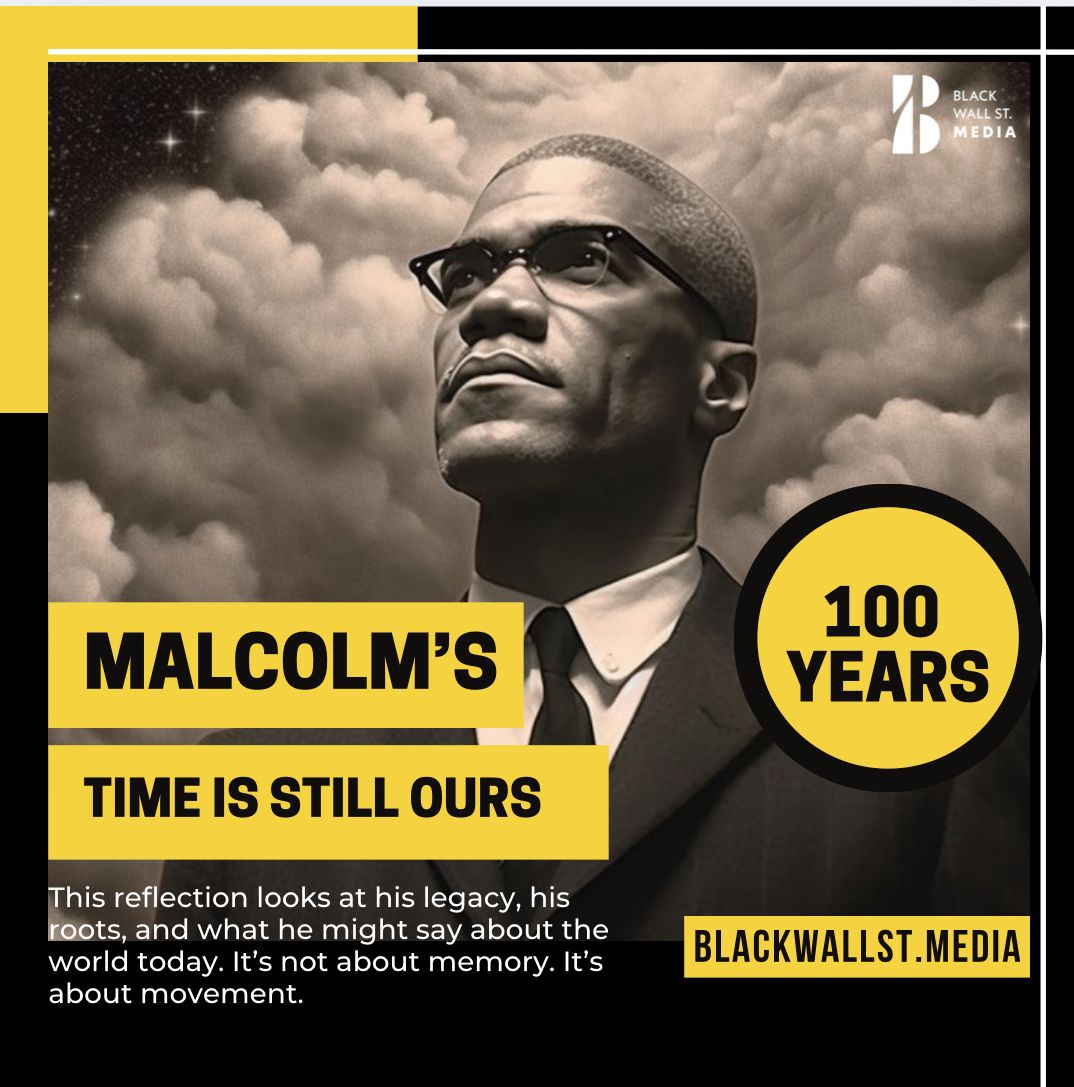
Malcolm’s Time Is Still Ours
Read More