History
Black History Month
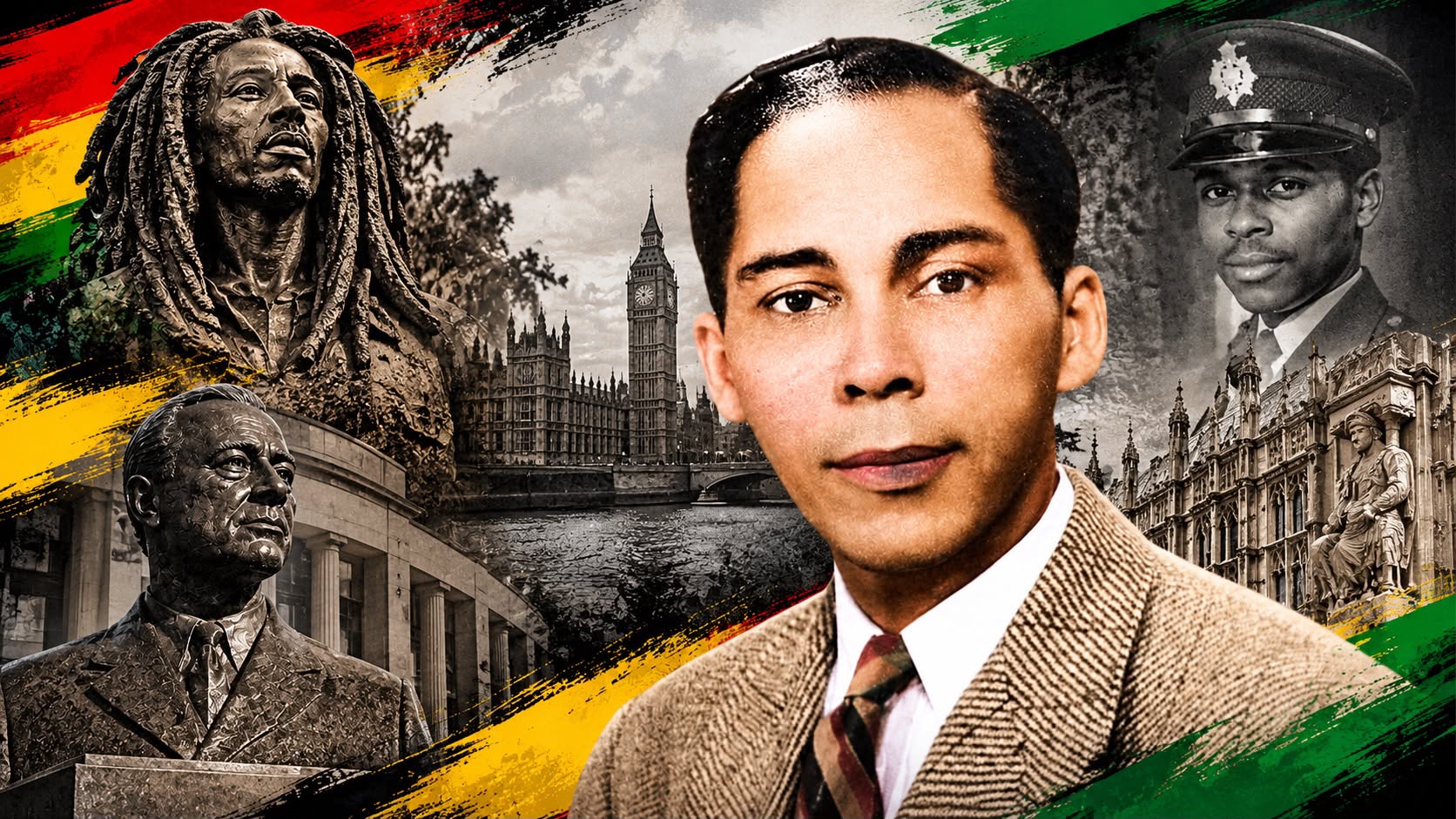
“Have you heard of Alvin Marriott, the Jamaican sculptor whose remarkable talent left its mark on both Britain and Jamaica? From helping restore the Houses of Parliament to creating monuments celebrating Jamaican identity and sculpting a statue of Bob Marley in his eighties, Marriott’s extraordinary story deserves to be remembered. This Black History Month, discover the artist whose hands helped shape history, yet whose name remains unfamiliar to so many.”
BWSMContributor

 There are names history remembers because history has decided they must be remembered. And then there are the names that history has somehow misplaced.
They are not necessarily the names of people who did less. Sometimes, they are the names of people who did extraordinary things, people whose hands helped build the world we now inhabit, people whose work remains standing long after their names have faded from conversation. Every so often, we have to go looking for them. Not because they have disappeared, but because we have stopped looking. So let us begin with a question: Have you heard of Alvin Marriott?
If you have not, you should. Because the story of Alvin Tolman Marriott is not merely the story of a Jamaican sculptor. It is the story of a Black Caribbean man who crossed oceans in a century that had not yet learned how to see men like him clearly. A man who travelled as a worker and became an artist. A man who entered Britain not as a master but as a student, and left his mark upon its institutions. A man who returned home and helped a newly independent Jamaica imagine itself in stone and bronze. And perhaps most remarkably, when he was already an old man, when his body was beginning to betray him, he crossed the Atlantic once again to sculpt the face of Bob Marley. That is not a small life. That is a life history ought to have trouble forgetting.
It Began With His Hands
Alvin Marriott was born in St Andrew, Jamaica, in 1902. He did not begin with privilege. He did not emerge from some celebrated academy, surrounded by the machinery of the established art world. He began with his hands.
After his family moved to Port Antonio, Marriott discovered the limestone around him and began to carve. The material was there, beneath his hands, waiting to become something else. First came a doll’s head. Then a lion. Small beginnings, perhaps, but talent has a way of announcing itself before the world is ready to listen.
According to the National Library of Jamaica, Marriott’s ability as a carver developed rapidly. By the 1920s and 1930s, he was earning a living through carving and furniture design, producing busts of prominent figures, including King George V. There is something worth dwelling upon here: a young Jamaican man, working with stone and wood, making faces appear where before there had been only material. Learning, perhaps, that the world could be changed by the pressure of a hand. Learning that a piece of stone could remember a face. And perhaps, without yet knowing it, learning that he too would have to fight against the tendency of history to look past him.
Jamaica Was Not the End of the Journey
In 1944, Marriott travelled to the United States as a farm worker. It is an extraordinary sentence: a sculptor travelled to America as a farm worker. But perhaps there is something in that contradiction that tells us more about the world Marriott inhabited than any list of awards ever could. The world did not necessarily recognise the artist before it recognised the labourer. But Marriott carried his gift with him.
While in America, his artistic ability attracted attention. He produced a bust of Franklin D. Roosevelt, then President of the United States. The National Library of Jamaica records that the bust was presented to Roosevelt, while the Ben Uri Research Unit records Marriott as having presented the work to the White House.
Consider the journey contained in that moment. A Jamaican-born Black man, born in 1902, crosses the Caribbean and arrives in America as a worker. And somehow, through the power of his hands, he finds himself making the likeness of the President. This is what migration can conceal. We speak about people crossing borders as though they carry only luggage. But people carry memory. They carry skill. They carry imagination. They carry the possibility of another world. Marriott carried all of that.
The Student Becomes the Teacher
When Marriott returned to Jamaica, recognition was no longer enough. He wanted to learn. He wanted formal training. And in 1947, the British Council awarded him a scholarship to study at the Camberwell School of Arts and Crafts in London. The National Archives records the scholarship under BW 84/54 (1947).
So Marriott came to Britain. Post-war Britain. A country still carrying the scars of war, still rebuilding its cities, still attempting to rebuild itself. And here was a Jamaican sculptor, arriving from the Caribbean to learn. But there is a beautiful irony in what happened next. He did not remain merely the student.
He impressed his teachers so profoundly that his period of study was extended. According to the National Library of Jamaica, he was subsequently employed as a lecturer to diploma and intermediate classes. The student became the teacher. The man who had begun carving Jamaican limestone was now teaching sculpture in London. There is something deeply human in that transformation, because education is often described as something that is given. But sometimes the person who comes to learn ends up teaching everyone else what they did not know they needed to see.
He Helped Rebuild Britain
Marriott’s story in Britain did not end in a classroom. He became involved in the restoration of the Houses of Parliament, producing carvings to replace architectural elements damaged during the Second World War.
Think about what that means. Britain had been bombed. Its buildings carried the wounds of war. And a Jamaican artist was among those whose hands helped restore one of the most powerful symbols of the British state.
History has a strange way of doing this. The empire creates the conditions for people to cross oceans. Then those people arrive in the imperial capital and begin leaving their fingerprints upon it. Marriott was not simply passing through Britain. He was contributing to its inheritance.
He also worked within the British furniture industry as a master carver for established designers and companies. He had entered Britain as a Jamaican artist seeking education. He left his mark upon the country’s artistic and architectural life. That distinction matters, because too often the history of Black people in Britain is told through the language of arrival, as though we came merely to occupy space, as though we contributed nothing. Marriott’s life tells another story. He came. He learned. He taught. He built. He carved. He left something behind.
And Then He Came Home
Marriott returned to Jamaica in the early 1950s. But he did not return as the same man who had left. He brought Britain back with him. He brought knowledge. He brought experience. He brought the confidence of a man who had entered institutions that had not been built with men like him in mind and had nevertheless found a place within them.
He worked on important commissions, including carvings for the University of the West Indies, and later became a teacher at the Jamaica School of Arts and Crafts. Between 1955 and 1961, he helped educate another generation of Jamaican artists.
This, too, is part of his legacy. Not only what he made, but whom he helped make. Because an artist’s legacy is not always the thing that bears his name. Sometimes it is the hand of a student he taught. Sometimes it is the confidence he gave another young artist. Sometimes it is the knowledge that passes quietly from one generation to another.
Marriott created portraits and monumental sculptures of some of the great figures of Jamaican history, among them Marcus Garvey, Norman Manley and Sir Alexander Bustamante. Jamaica was changing. Independence was approaching. And the country was beginning to ask the most difficult question a nation can ask: Who are we? Marriott helped answer that question in stone.
The Athlete
In 1962, Marriott created The Athlete, a sculpture celebrating Jamaican sporting achievement. It was unveiled by Princess Margaret during the 9th Central American and Caribbean Games and became associated with Jamaica’s National Stadium.
The year matters. 1962. Independence. A country stepping into its own name. And there, in public space, was the body of a Jamaican athlete. Not hidden. Not diminished. Not merely represented through somebody else’s imagination. But standing. Visible. Strong. Public.
There is a politics to public art, even when the artist does not call it politics. A statue tells a society what it considers worthy of being placed before the eyes of its children. It tells us whose face deserves bronze, whose body deserves stone, whose story deserves permanence. Marriott understood this, perhaps because he had spent much of his own life knowing what it meant to be visible and invisible at the same time.
Then Came Bob Marley
And then, decades later, came Bob Marley.
By the time the Jamaican Government commissioned Marriott in 1984 to create a statue of Marley, Marriott was already in his eighties. He was also living with Parkinson’s disease. The world might reasonably have expected an old man to step aside. But Marriott did not. He travelled to London again.
He returned to the city where he had once been a student, where he had taught, where he had helped restore the Houses of Parliament. Now he returned as a master. The commission was to create a monument to a man who had become one of the most recognisable Jamaican figures in the world.
Bob Marley had died in 1981. Marriott had never met him. But an artist does not always need to have known a person to understand what that person means. Working from photographs and recordings, and speaking with Marley’s friend Neville Garrick, Marriott spent months working in a studio in Vauxhall, south London. He studied the man he had never met. He listened. He looked. He remembered. And then he carved.
Perhaps that is one of the strange gifts of sculpture: the attempt to give permanence to something that was always moving. Marley had been music, movement, voice and spirit. Marriott gave him form.
The finished bronze stood approximately 2.4 metres high and was intended for Celebrity Park near Jamaica’s National Stadium. It was unveiled in 1985. An old Jamaican sculptor, working in London, had created a monument to a young Jamaican musician whose voice had travelled across the same oceans Marriott had spent his life crossing.
There is something almost circular about it. The traveller had returned. The sculptor had returned. And Jamaica’s history had, once again, found itself in bronze.
What Do We Do With the Names We Have Forgotten?
Alvin Marriott died in 1992. But death is not always the end of a person’s work. Sometimes the real question is what remains after the person is gone.
His sculptures remain. His work remains in the architectural history of Britain. His teaching remains in the artists he influenced. His portraits remain. His public monuments remain. His name remains in archives.
He received significant recognition during his lifetime, including the Gold Musgrave Medal and the Jamaica Badge of Honour for his contribution to the arts. And yet, for many people, the name Alvin Marriott means nothing.
That should trouble us. Not because every person who lived an extraordinary life must become famous. Fame is a poor measure of human worth. But because forgetting has consequences. When we forget the people who built, created, taught and imagined, we inherit an incomplete picture of ourselves.
We begin to believe that history was made only by presidents, only by politicians, only by revolutionaries, only by the names that survived in textbooks. But nations are also built by artists, by teachers, by craftsmen, by women and men whose hands transform raw material into memory.
Alvin Marriott was one of those people.
He carved presidents. He carved national heroes. He helped restore Britain’s Parliament. He taught young Jamaican artists. He created public monuments. And in his eighties, he crossed the Atlantic once more to create a monument to Bob Marley.
That is not merely a career. It is a testament.
Perhaps That Is What Black History Is Really Asking of Us
Black History Month is often presented as a month of remembrance. But remembrance is not passive. To remember someone is to bring them back into the room. To say: you were here; you mattered; you made something; you left something behind.
And perhaps that is why Alvin Marriott deserves to be remembered. Not because his story fits neatly into the familiar story of Black history. It does not. His story is more complicated. It crosses Jamaica, America and Britain. It crosses labour and art. It crosses colonialism and independence. It crosses youth and old age. It crosses the distance between student and teacher, between worker and artist, between the man holding the chisel and the monument standing before the public.
His life reminds us that Black history is not only the history of resistance. It is also the history of creation. The history of imagination. The history of people who looked at stone and saw a face. Who looked at a piece of wood and saw possibility. Who looked at a country becoming independent and understood that its people would need to see themselves reflected in the places they called home.
Marriott helped them see themselves.
And perhaps that is why we should look again.
Because sometimes the people history forgets are not really lost. They are simply waiting for us to become curious enough to find them.
So, this Black History Month, ask the question again: Have you heard of Alvin Marriott?
If the answer is no, now you have.
But perhaps the more difficult question is the one that follows: How many other Alvin Marriotts are still waiting to be remembered?
Because history does not always disappear. Sometimes it remains standing. In stone. In bronze. In buildings. In classrooms. In the hands of students who became artists because somebody once believed they could. And sometimes, if we are willing to stop long enough to look, we can still see the fingerprints of the people who came before us.
Alvin Marriott left his fingerprints across two countries. He carved his way through a century that was not always prepared to see him. And he left behind something more durable than fame. He left evidence. Evidence that he was here. Evidence that he created. Evidence that he taught. Evidence that he crossed oceans and boundaries and expectations. Evidence that a Jamaican boy with a gift for carving could become an artist whose hands helped shape the memory of a nation.
So perhaps we should not ask only: Have you heard of Alvin Marriott?
Perhaps we should also ask: Why did it take us so long to hear his name?
Sources and Further Reading
The National Archives records Marriott’s British Council scholarship in BW 84/54 (1947), within its collection documenting British Council scholars. The National Library of Jamaica holds extensive biographical material and contemporary newspaper records relating to Marriott’s life, artistic career and commissions. The Ben Uri Research Unit also documents Marriott’s contribution to British visual culture and his work in post-war Britain.
Black Wall St Media — Black History Month
Because history is not only found in textbooks. Sometimes it is carved in stone, cast in bronze, built into buildings and waiting for us to look again.
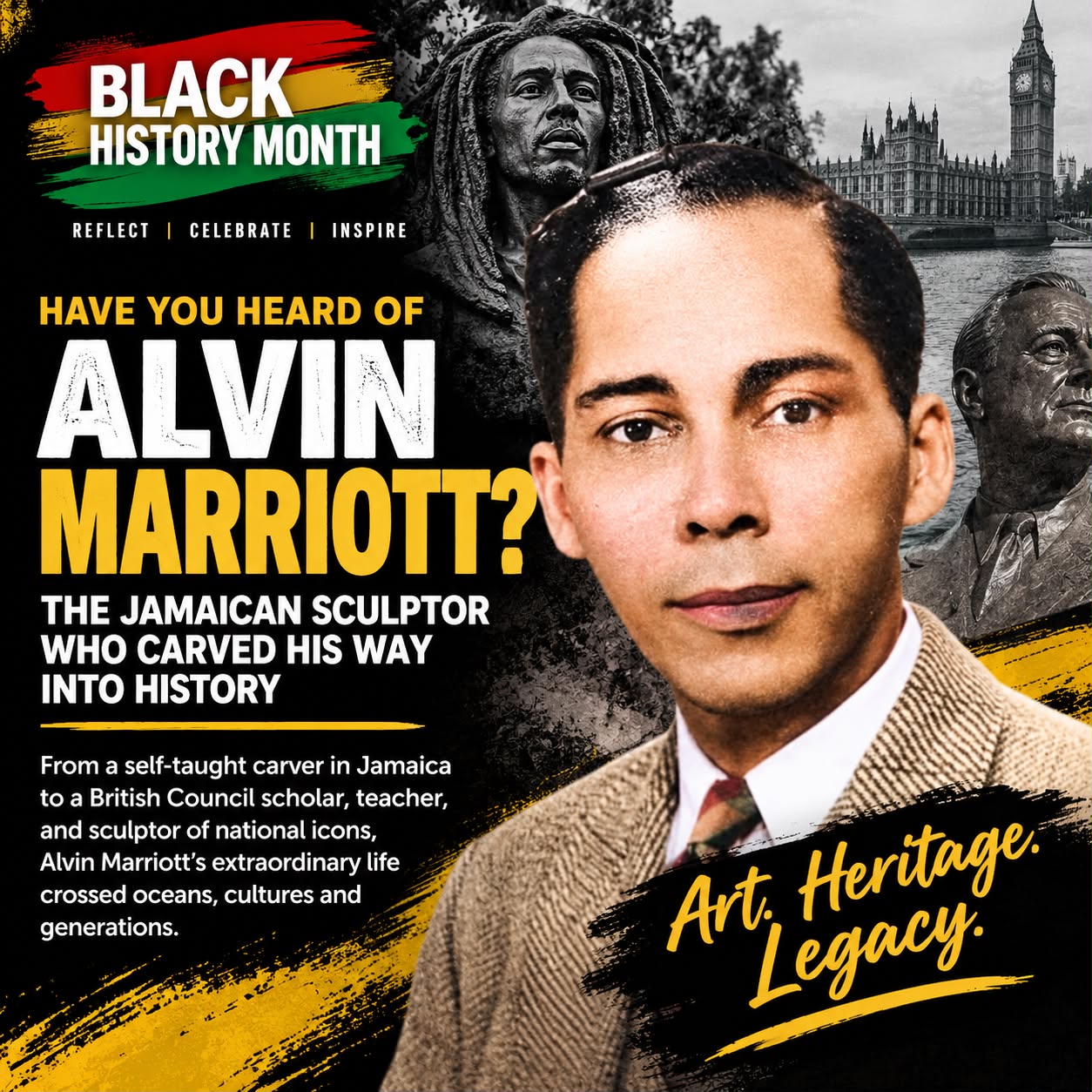
- The Jamaican Sculptor Who Carved His Way Into History
 Have you heard of Alvin Marriott? A Jamaican sculptor whose extraordinary talent took him from carving limestone in Jamaica to helping restore the Houses of Parliament in Britain, teaching a new generation of artists and creating a monument to Bob Marley in his eighties. This Black History Month, discover the remarkable story of a man whose hands helped shape history, yet whose name remains unfamiliar to so many. It is time to look again, remember his contribution and give Alvin Marriott the recognition he deserves.
 - Damilola Taylor: The Boy Who Never Made It Home
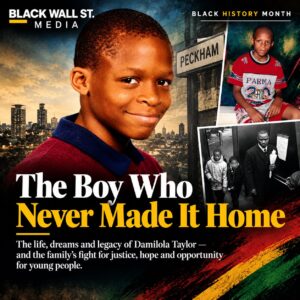 He was just ten years old. He loved football, supported Manchester United and dreamed of becoming a medical researcher so he could help his sister. On 27 November 2000, Damilola Taylor was fatally injured while walking home in Peckham. His death shocked Britain. His family endured years of waiting for justice. But his parents, Richard and Gloria Taylor, refused to let their son’s legacy be defined by the violence that took him. They established the Damilola Taylor Trust to help give other young people hope, opportunities and a better chance of a future. This Black History Month, we remember the child behind the headlines — his dreams, his family and the future he was never given the chance to live. Every child deserves to make it home. Every child deserves a future. Read our Black History Month feature with Black Wall St. Media.
 - Alzheimer’s the Black doctor who helped decode the disease
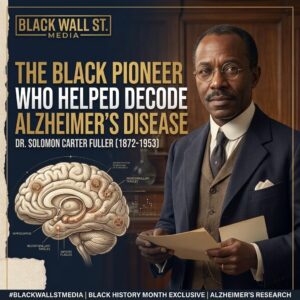 🧠✨ Celebrating an Unsung Hero! Dive into the captivating journey of Dr. Solomon Fuller, a pioneer in Alzheimer's research and a standout figure in Black history. From his roots in Liberia to groundbreaking discoveries, discover the legacy of a medical trailblazer who defied adversity. 🌟
 - The Voice of the Child, Young Person and; Service User
 Whose voices are we really hearing? And what happens when we truly listen? The 3rd DARDR/DVA & Criminal Justice Summit 2026 will bring together professionals, practitioners, community organisations, academics and people with lived experience to place children, young people and service users at the heart of the conversation. Under the theme “The Voice of the Child, Young Person & Service User,” this year’s Summit will explore domestic abuse, violence, safeguarding, exploitation, trauma and criminal justice — but most importantly, how listening can move beyond consultation and become meaningful action. 📅 Friday 27 November 2026 📍 Brent Civic Centre, Wembley 💻 Hybrid Event | CPD Accredited Read more about the Summit, the conversations it will explore and how to book your place.
 - The Crown in the Ledger: What Finding Britain’s Slave Traders Asked Us to Face
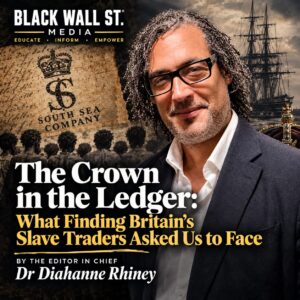 What happens when Britain’s history is no longer told through monuments, wealth and institutions, but through the ledger behind them? Finding Britain’s Slave Traders with David Olusoga brings names, companies, royal connections and fortunes into focus, forcing us to confront how deeply the transatlantic slave trade was embedded in British society. In “The Crown in the Ledger,” we explore what these records reveal about wealth, power, responsibility and the legacy that remains today. Read the full article and ask yourself: who owns what, who benefited, and what does honest accounting look like?




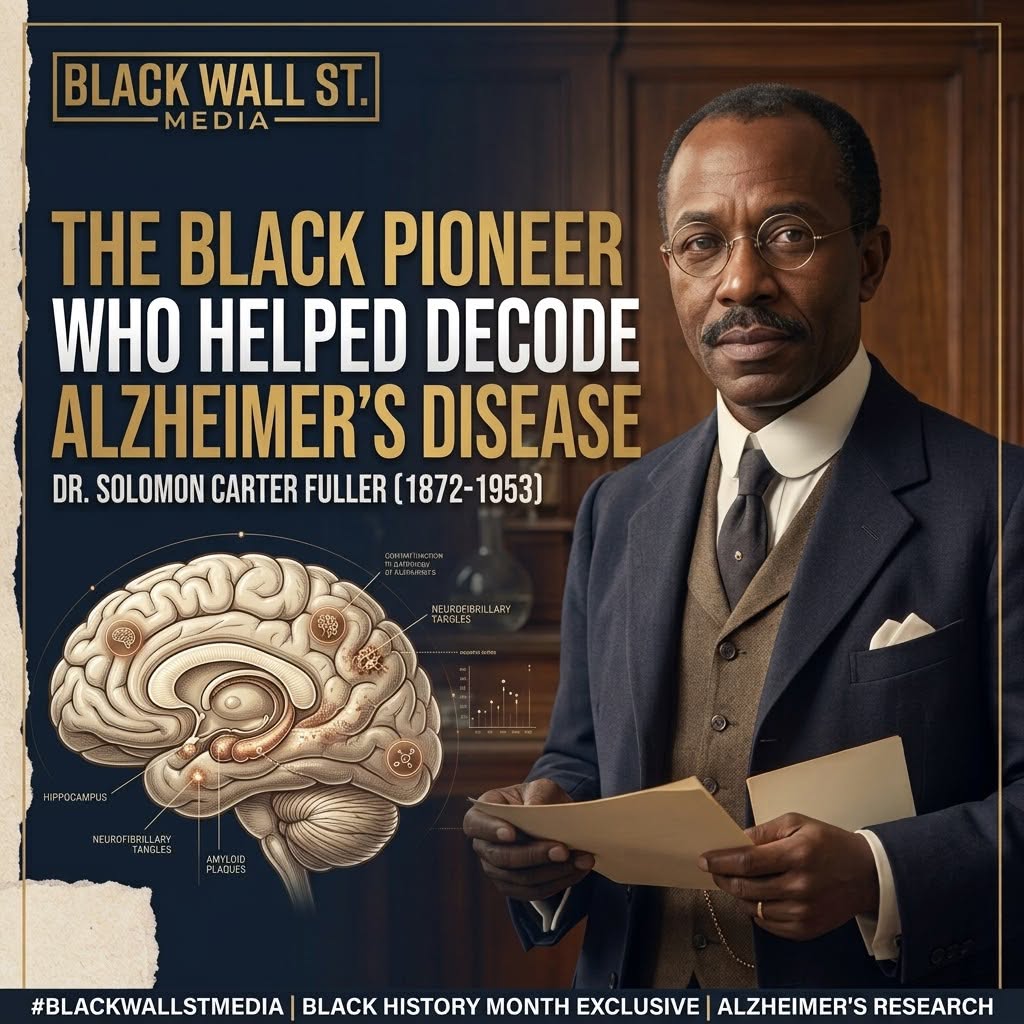
Alzheimer’s the Black doctor who helped decode the disease
Read More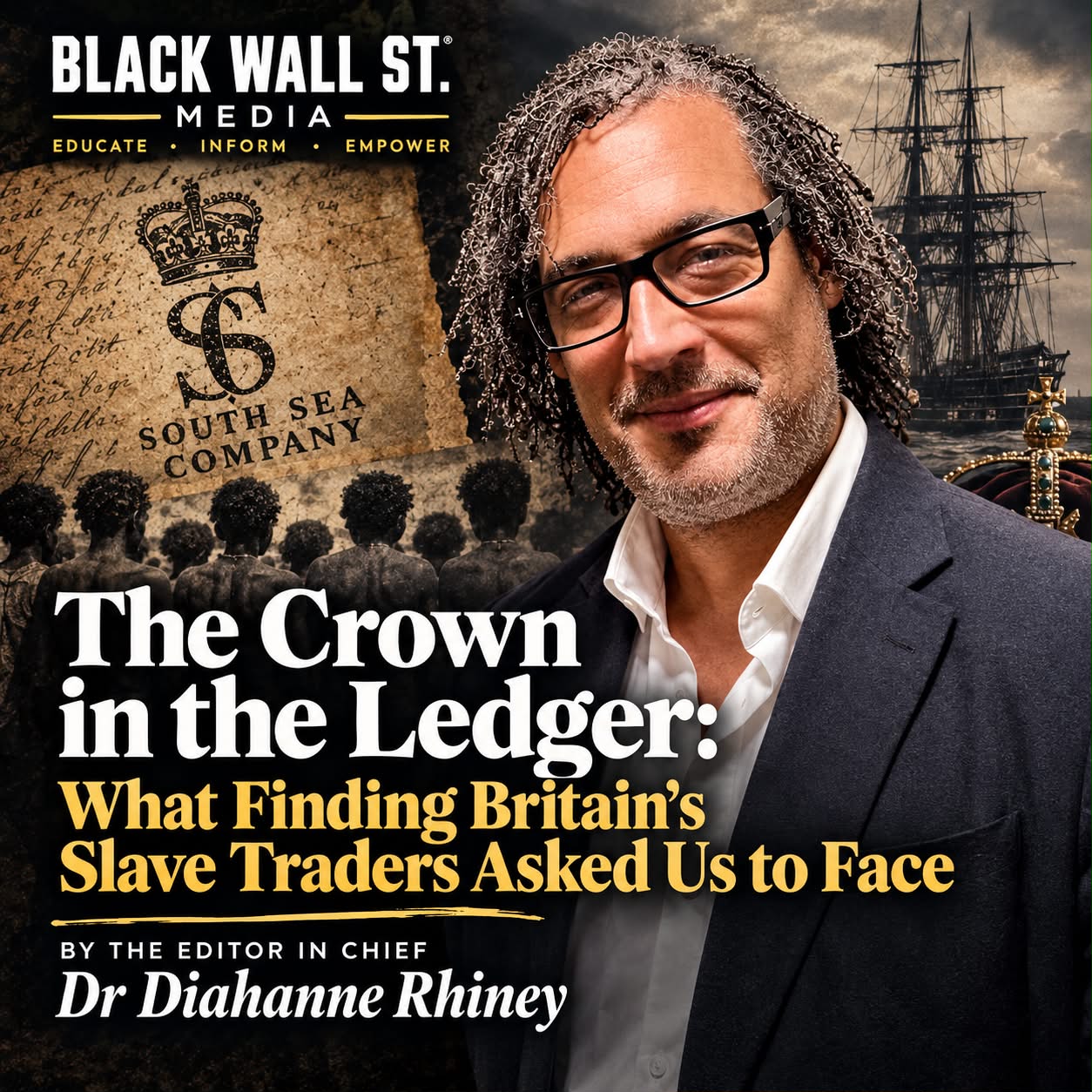
The Crown in the Ledger: What Finding Britain’s Slave Traders Asked Us to Face
Read More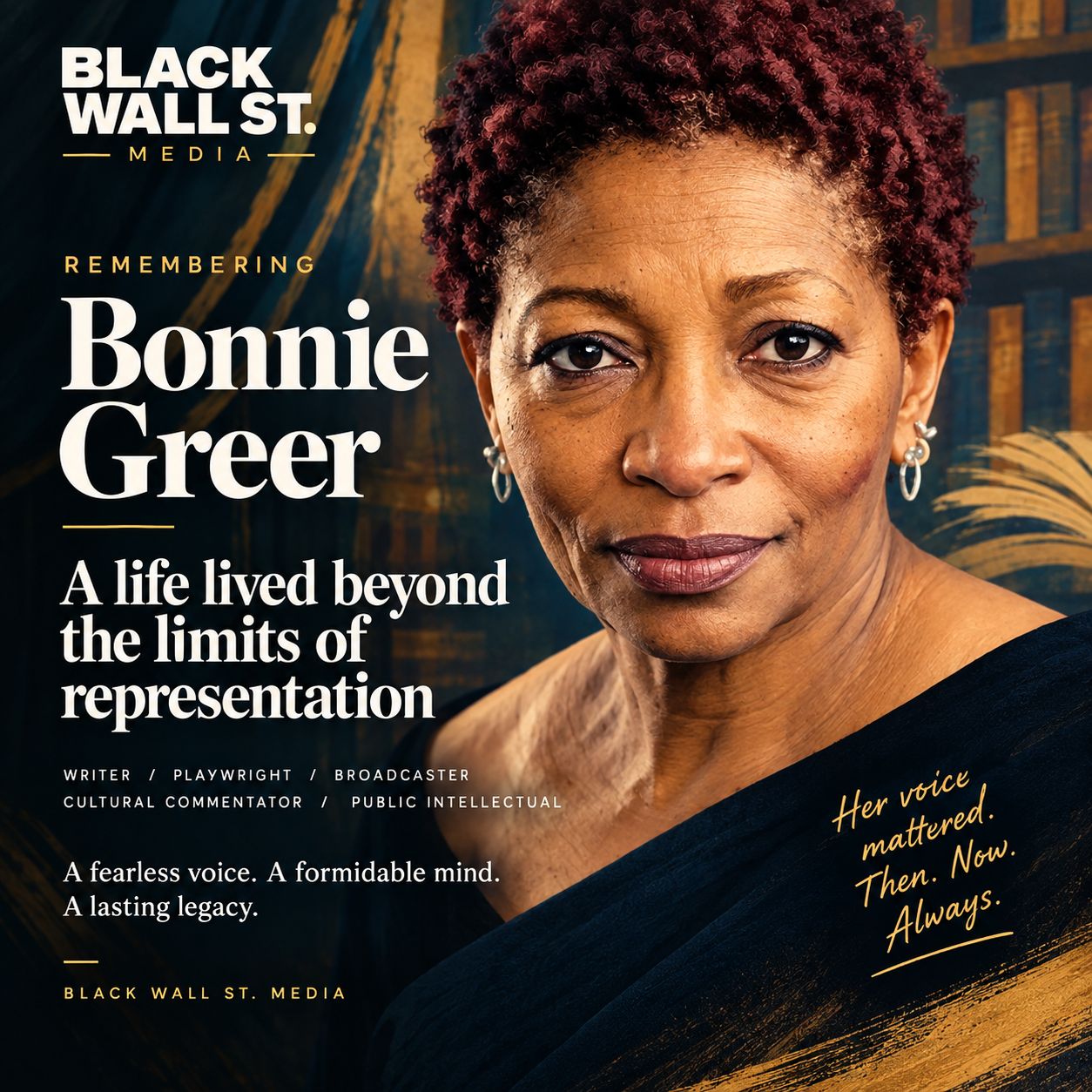
A life lived beyond the limits of representation
Read More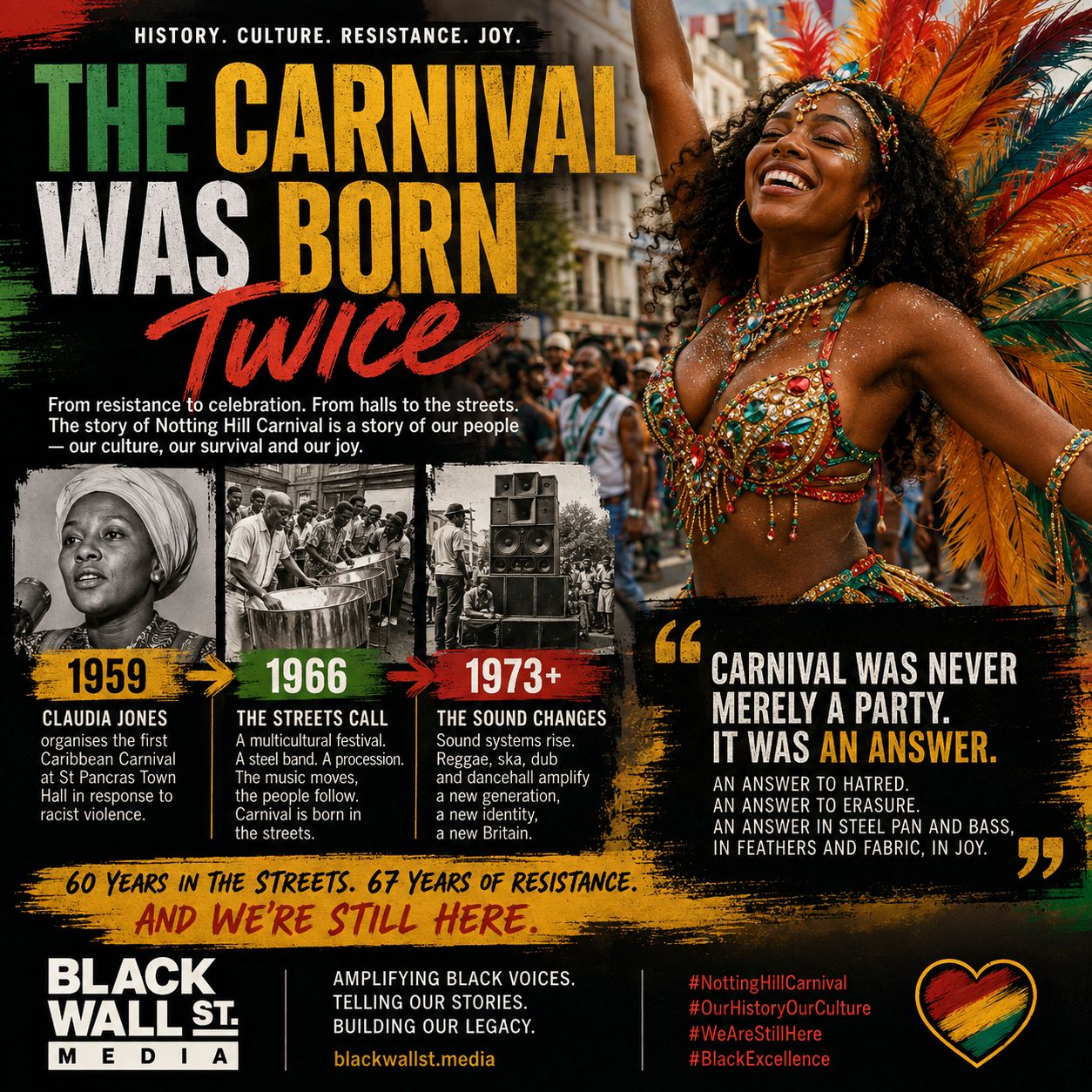
The Carnival Was Born Twice
Read More
Afterlives of Looted Heritage
Read More
The Wards They Were Erased From
Read More
World’s first Black professional footballer
Read More
Malcolm’s Time Is Still Ours
Read More
Kelso Cochrane: The Name Britain Tried to Forget
Read More