Race & Society
“Why did Britain need to see Jane, Christina and Rebecca as little girls to recognise their humanity? In this powerful and thought-provoking article, Daniella Maison challenges us to confront how race, media representation and perceptions of Black womanhood shape whose pain we recognise and whose vulnerability we acknowledge.
Daniella MaisonEditor of Social Cause Issues
Their childhood photographs may move us, but they should never have been necessary for us to see their humanity.
Read Daniella Maison’s compelling article and join the conversation. Why should Black women have to be seen as children to receive the tenderness and compassion they deserve?”

Jane Adetoro, Christina Walters, and Rebecca Walters were sisters in their thirties when, in May, they made one final journey together.
They travelled first to Birmingham, to a place connected to the mother they had lost sixteen years earlier and then took a quiet taxi ride to Brighton. In the early hours, all three entered the sea.
Last week, an inquest concluded that they had intended to end their lives. When their names returned to the news, what struck me was the version of them Britain was repeatedly shown.
Again and again, adulthood was edited out of the frame. The women were shown as children, not as the beautiful Black women they had become.
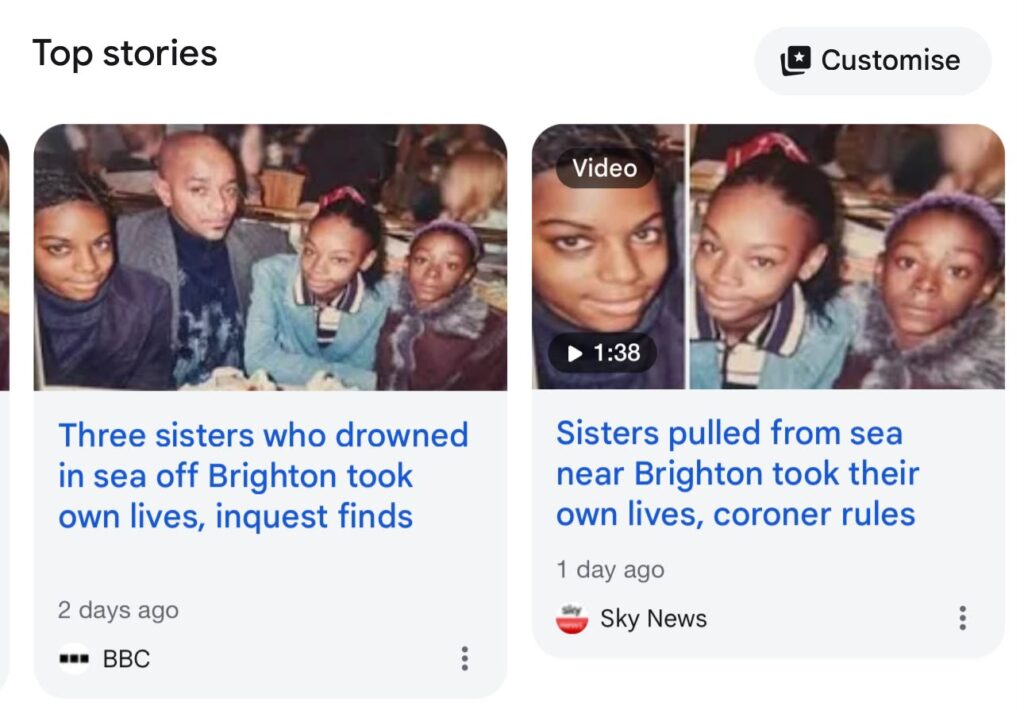
Photographs in journalism do not simply show us who somebody was. They help decide how we are invited to see them. Research into visual framing has found that the photograph accompanying a story can alter readers’ emotional responses.
The Independent wrote in 2007 about “the face that’s haunted us all,” describing how Madeleine McCann’s photograph had become indelibly lodged in public memory; academic work later described her as a “mediagenic image of innocence.” Her case is almost theperfect British example of a photograph becoming inseparable from the emotional meaning of a story.
Which makes the faces chosen for Jane, Christina and Rebecca worth taking seriously.
Childhood carries one particularly efficient instruction: be gentle with this person. Innocence is one of journalism’s most powerful currencies, and childhood spends it effortlessly.
So are Jane, Christina, and Rebecca easier to mourn as girls?
Black female pain is already interpreted inside a culture that has repeatedly shown itself capable of underestimating it. Research published in The Journal of Pain found women of colour had their pain underestimated more severely than any other race-and-gender group studied.
Their suffering was visible; what differed was how seriously somebody else read it. Pain does not become smaller because the person looking at it has decided you are built to carry more of it.
If adult Black female pain is culturally easier to underestimate, the childhood photograph performs a terrible kind of translation: it replaces the adult Black woman with someone whose vulnerability requires less explanation.
Black women have long been asked to wear resilience as though it were a biological feature. We are read as capable, robust, difficult, able to absorb more.
Amnesty International found that Diane Abbott alone received more than 45 per cent of all abusive tweets aimed at women MPs during the six weeks before the 2017 general election — ten times more abuse than any other woman MP.
Visibility, then, is not the same thing as humanity. A Black woman can be seen everywhere and still not be seen tenderly.
Patrick Olajide’s analysis of 100 pieces of London homicide reporting found Black victims were the least likely to be humanised, with coverage giving readers far more information about how they died than about the person who had lived before the death. The disparity was especially pronounced for women of colour. When Black people enter the news through catastrophe, what version of our humanity survives the edit?
David Marriott’s On Black Men interrogated this terrain more than two decades ago. His examination of photography, death and the Black body insisted that representation itself deserves scrutiny: the dead Black subject can become something onto which a culture places its own meanings: fear, pathology, spectacle, pity. Blackness enters the frame as a human being and can leave it as an idea.
I can’t forget Anthony Walker, who was murdered in a racist attack in 2005, aged just 18. One of the photographs that became attached to his public memory shows him younger, immaculate in school uniform.
Fifteen years later, broadcasters were still using it to illustrate his story. The photograph insists on youth, promise, respectability, innocence. And that raises an uncomfortable question of its own: would an 18-year-old Black man in ordinary clothes have been granted exactly the same presumption?
And perhaps that is the unease here too. Were Jane, Christina and Rebecca being shown to us, or translated for us?
Criminologists describe the “ideal victim” as the person society recognises almost instinctively as innocent, vulnerable, blameless and deserving of sympathy. Whiteness has historically sat more comfortably inside that category. Black victims have too often had to establish innocence after the fact.
Research into adultification has found that Black girls can be perceived as older, less innocent and less in need of protection than white girls. That matters here because it exposes the depth of the problem. If even Black female children are denied the full presumption of innocence, what happens when those girls become women?
White adult femininity is already coded as potentially innocent, endangered, vulnerable and mournable. That is why a wedding photograph; graduation picture or restaurant selfie of a white woman can be enough. Black adult femininity is not always granted that same presumption. The Black woman may have to be visually de-aged before the same tenderness is assumed.
Why should Black womanhood require translation?
I asked versions of these questions earlier this year while Professor Jason Arday was still alive, frustrated by investigative tactics more ordinarily trained on politicians and those wielding significant public power being directed at a pedagogue, while white academics involved in serious controversies never became household names.
NewsCord later counted hundreds of national-media articles about Arday over just a few weeks, including 188 in his final nine days.
The media machine is the same machine. It can magnify Blackness when suspicion is required and soften it when sympathy is required.
The same machinery capable of turning one Black academic into a national object of interrogation can decide which version of three Black women Britain receives when what is required is not scrutiny but sympathy.
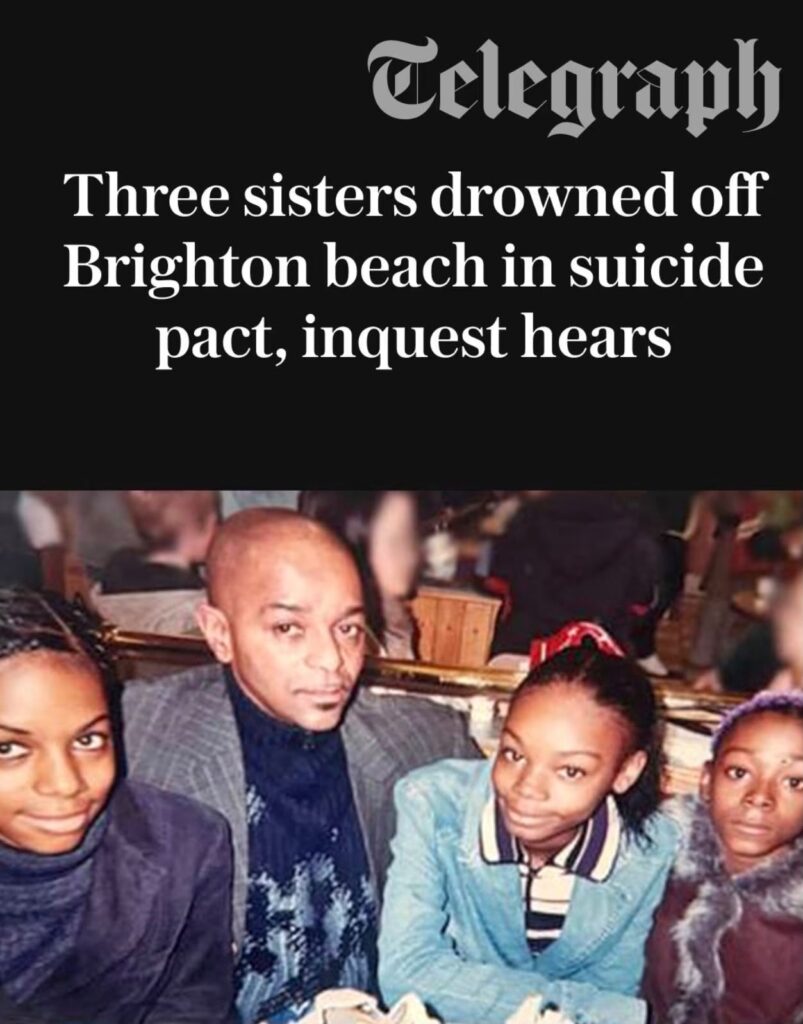
And the press does not make those decisions in isolation. Editors select images they believe will resonate. They anticipate sympathy as much as they help construct it, reading the culture in front of them and deciding what an audience will recognise.
That is the double edge.
Those decisions are being made in a Britain where racial hostility remains conspicuous in public life. So, the question cannot stop at why editors chose childhood photographs of Jane, Christina and Rebecca.
We also have to ask what those editors believed the public needed to see.
If three beautiful Black women in their thirties become more readily relatable, innocent or vulnerable when shown as little girls, the problem does not stop at the newsroom door. It comes home to the rest of us.
Perhaps the most troubling possibility is that the press did not simply show us Jane, Christina and Rebecca as children because those photographs were moving. It showed us the version of them it believed Britain would find easiest to love. And there is something profoundly wrong with a culture in which Black womanhood must first be stripped of its adulthood before tenderness feels uncomplicated.
There is profound tenderness in seeing the girls they once were. But they did not need to remain girls to deserve it.
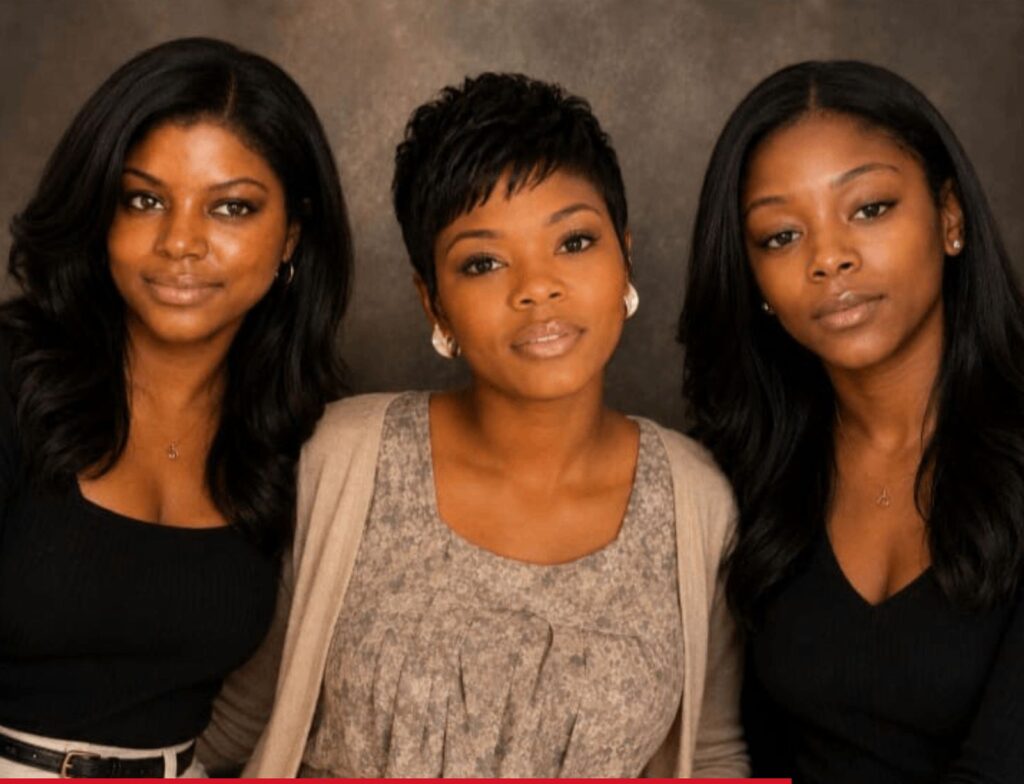
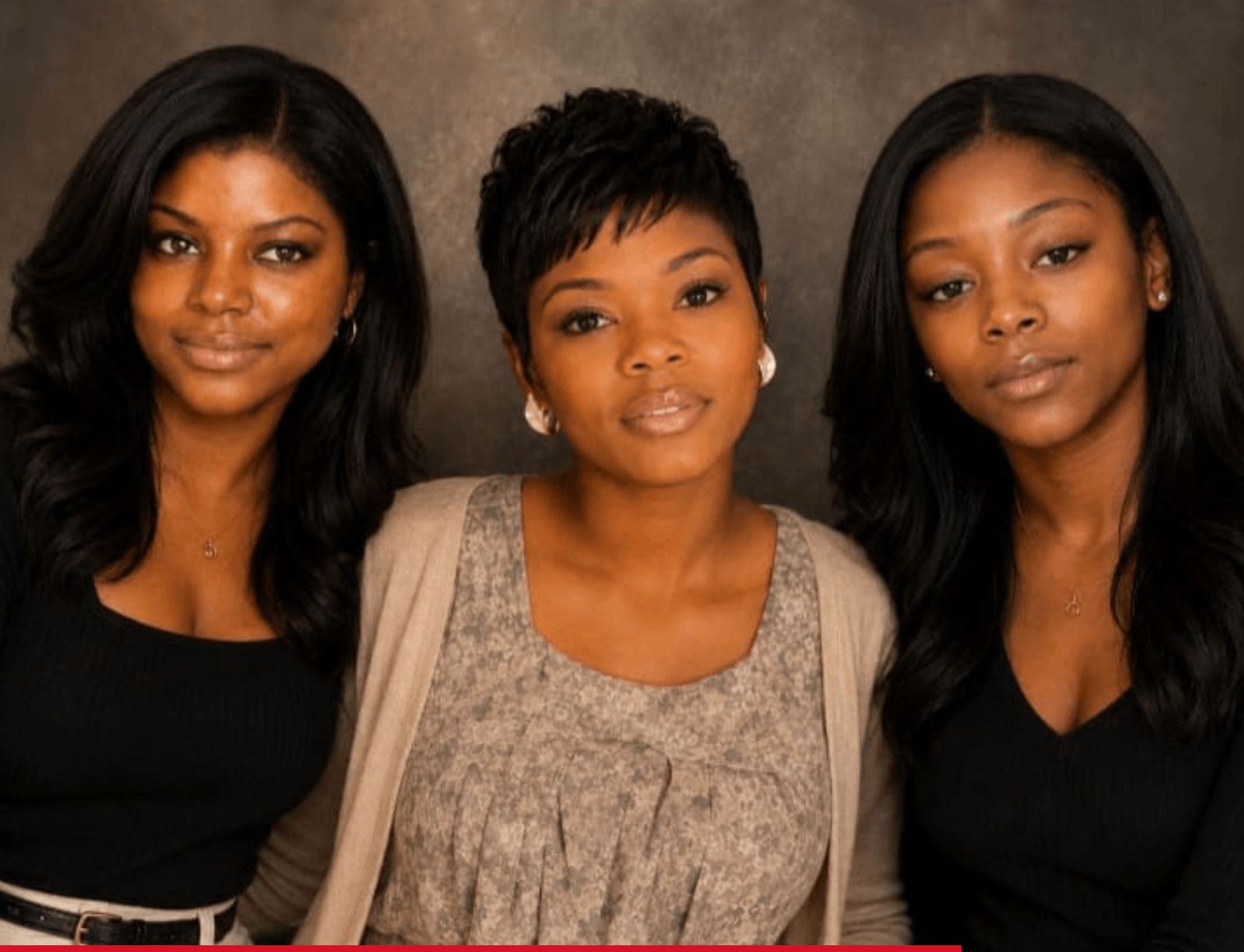
FAMILY TRAGEDY: Left to right: Jane, Christina and Rebecca. (Pic Credit: Sussex Police)
Jane, Christina and Rebecca grew up. They became beautiful Black women, carrying histories, grief, personalities, and lives that cannot be contained by the manner in which they ended.
Their childhood should help us remember them. It should never have been necessary to humanise them.
The women were already enough.
- Why Did Britain Need to See Jane, Christina, and Rebecca as Little Girls?
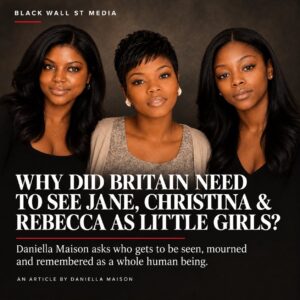 Why did Britain need to see Jane, Christina and Rebecca as little girls to recognise their humanity? In this powerful and thought-provoking article, Daniella Maison challenges us to confront how race, media representation and perceptions of Black womanhood shape whose pain we recognise and whose vulnerability we acknowledge. Their childhood photographs may move us, but they should never have been necessary for us to see their humanity. Read Daniella Maison’s compelling article and join the conversation. Why should Black women have to be seen as children to receive the tenderness and compassion they deserve?
 - The Jamaican Who Stood Beside Kenyatta
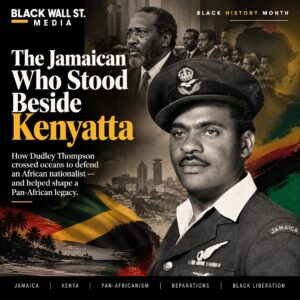 How did a boy from Kingston, Jamaica, become one of Britain’s most influential thinkers on race, culture and identity? This Black History Month, discover the story of Stuart Hall, the man who challenged Britain to question its history, its identity and who gets to define what it means to be British. Read his remarkable story and discover why his legacy still matters today.
 - Professor Folarin Shyllon Reclaiming Africa’s History
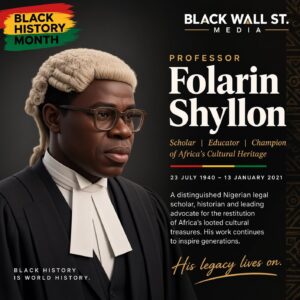 Black History Month: Professor Folarin Shyllon — Reclaiming Africa’s History From uncovering the forgotten history of Black people in Britain to championing the return of Africa’s looted cultural treasures, Professor Folarin Shyllon dedicated his life to truth, justice and reclaiming heritage. Discover the remarkable legacy of a pioneering Nigerian legal scholar who challenged historical erasure and championed Africa’s right to its own history. Because reclaiming our history is reclaiming our power. Read the full article with Black Wall St. Media. Black history is world history.
 - ALLISTER VICTOR BAIN: THE MAN, THE ARTIST AND THE HISTORY WE MUST NOT FORGET
 This Black History Month, Black Wall St. Media pays tribute to Allister Victor Bain, the Grenadian-born artist, storyteller and cultural pioneer whose creativity helped shape Caribbean and Black British cultural life. Through the heartfelt memories of his friends, colleagues and family, we celebrate not only his remarkable contribution to the arts, but the man behind the legacy. His story is a powerful reminder that our pioneers deserve more than to be remembered after they are gone, their lives, work and history must be preserved for generations to come. Read the tribute. Discover his legacy. Help keep his story alive.
 - When Your Achievements Are Treated as a Question
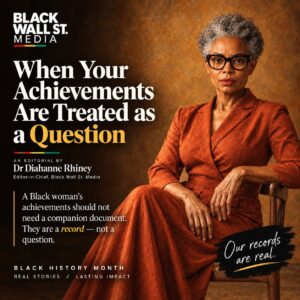 When a Black Woman Has to Prove Her Worth What happens when decades of achievement are met with doubt, and a Black woman finds herself having to justify not just her work, but her right to be in the room? This powerful and deeply personal reflection explores race, credibility, the emotional cost of constant scrutiny, and why being told to “let it go” is not always enough. This Black History Month, it is time to look beyond celebration and confront the realities Black women continue to face in the workplace.




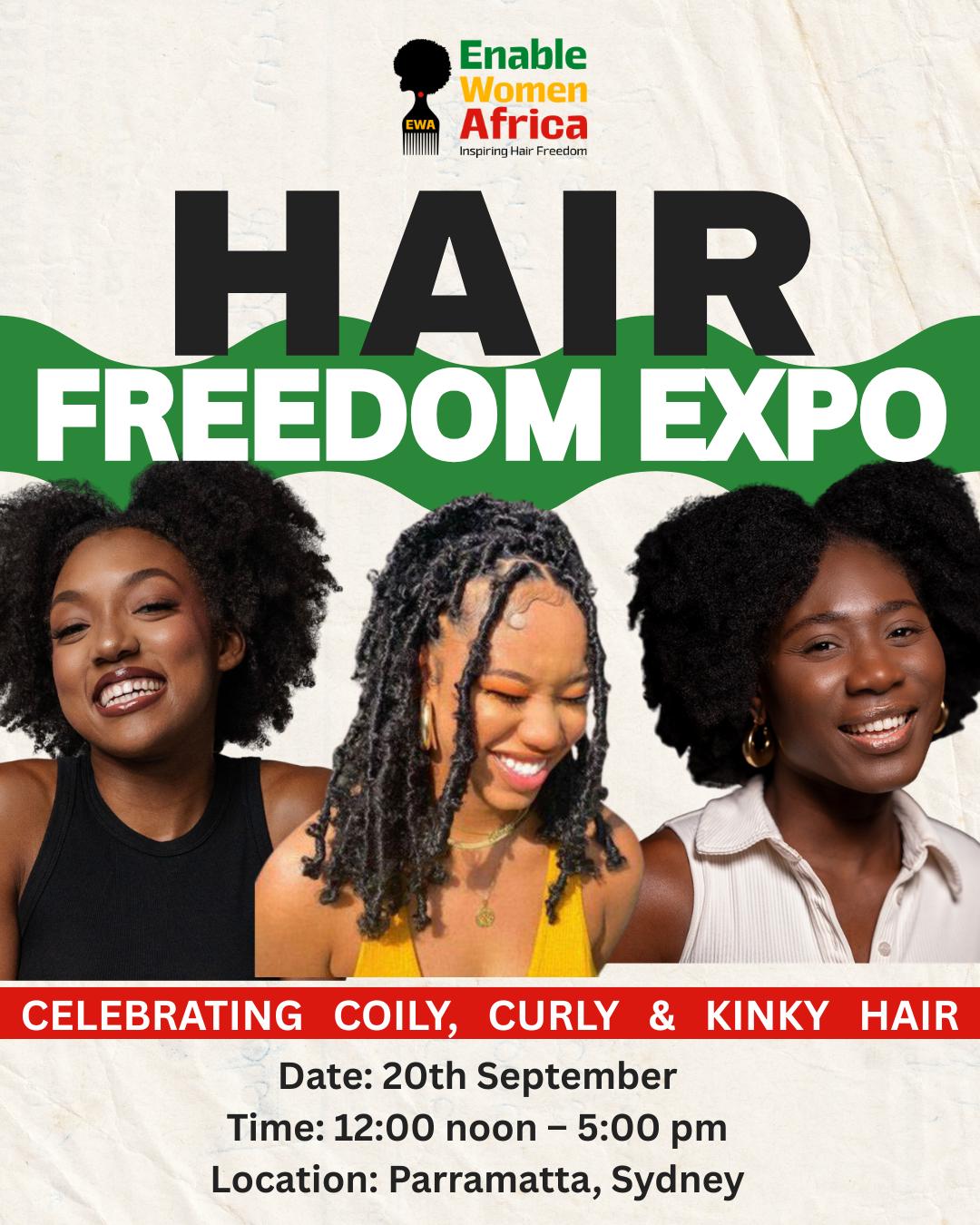
Hair Freedom EXPO 2026
Read More
100 Black Women Campaign
Read More
Black Parenting: Discipline as Protection
Read More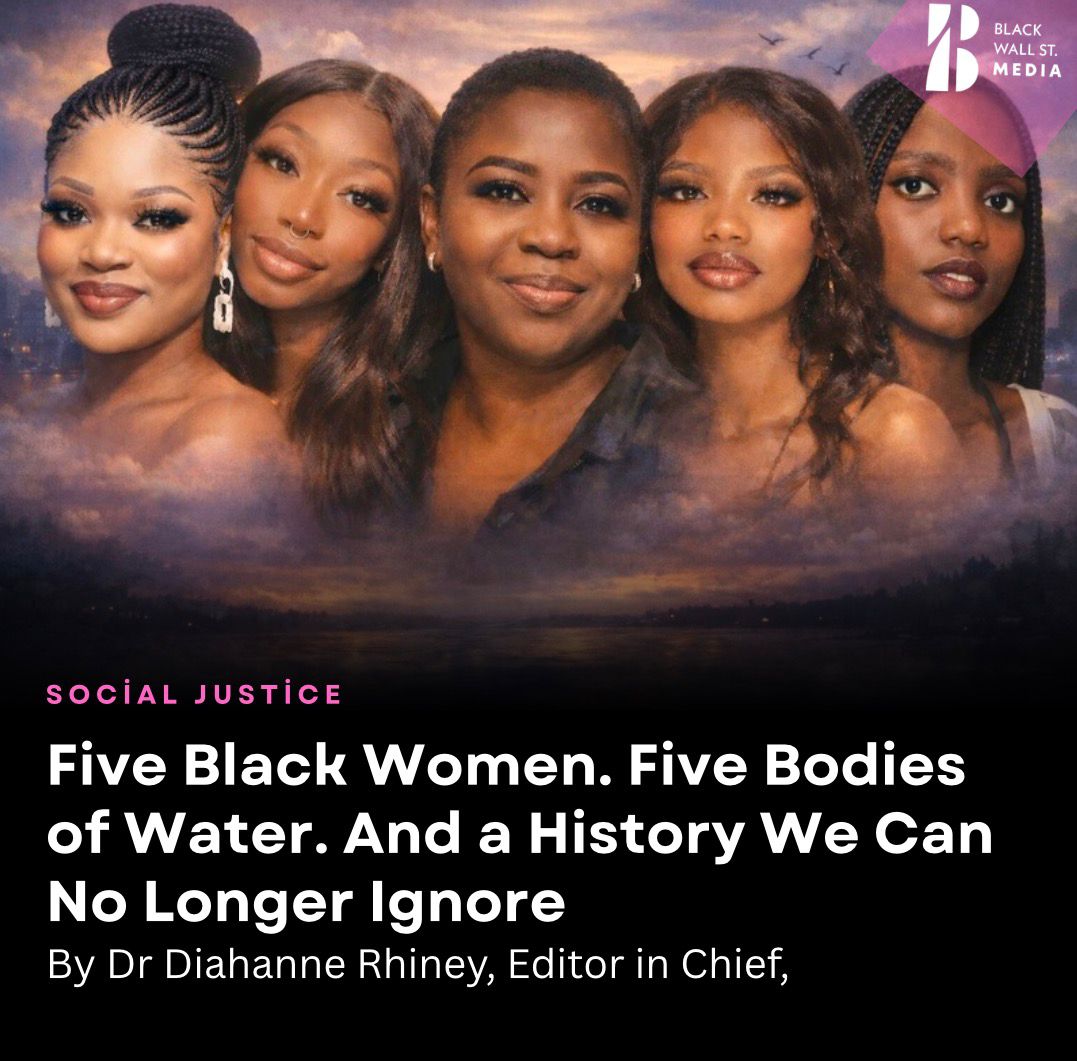
Five Black Women. Five Bodies of Water. And a History We Can No Longer Ignore
Read More
International Women’s Day: The Diaspora Women Who Carry the World on Their Shoulders
Read More
When Inclusion and Impact Collide at the BAFTAs
Read More
When Oversight Falls Silent
Read More
Ras Judah: The Elder Who Stood So We Could Stand
Read More
A Giant Has Fallen. What Jesse Jackson Meant to the Diaspora
Read More