
Social Justice & Equality
When Oversight Falls Silent
“Britain rarely announces regression. It administers it quietly.
BWSMContributor
Across housing, policing, employment and public services, the institutions designed to confront discrimination are being thinned out, under-resourced, and politically restrained. Not abolished — just softened.
This is a story about what happens when oversight falls silent, and why the cost of that silence will be paid by those with the least protection.”
Britain Is Weakening the Very Tools That Protect Its Most Vulnerable
There is a peculiar British habit of believing that injustice is something that happens elsewhere.
We watch other societies wrestle with race, policing, and rights, and reassure ourselves that our system is more measured, more restrained, more mature.
But injustice does not disappear simply because it speaks in a quieter accent.
Across the United Kingdom, the administrative tools designed to confront discrimination, in policing, housing, employment, immigration detention, and public services are being thinned out, under-resourced, or politically neutralised. Unless you have needed those tools, you may not notice their absence, until you do.
“The referee is stepping back, and ordinary people are the ones who feel it first.”

Organisations like Human Rights Watch warn of a broader erosion of civil rights enforcement in democracies. While much attention focuses on developments elsewhere, Britain is not immune from the same drift: oversight mechanisms are being weakened quietly, not by repeal, but by retreat.
Not dramatic announcements.
Just budget cuts.
Regulatory restraint.
A narrowing of mandate.
And slowly, the referee steps back from the field.
Numbers That Show What We Already Know
Every day, people experience the effects of inequality long before it reaches the courts.
Homelessness: In the year to March 2023 nearly 300,000 households qualified for homelessness help from local authorities in England. Minority households accounted for over 44% of temporary accommodation lead applicants, despite making up only around a quarter of the population. People from Black backgrounds, just 4.2% of England’s population, accounted for over 20% of temporary accommodation cases.
Employment: Ethnic pay gaps persist, even after adjusting for age and qualifications. Minority groups earn less than white peers, and some earn substantially less when doing comparable work.
Civil Service: Median hourly earnings for Black civil servants in London are nearly 28% lower than those of white colleagues, with even larger disparities in bonuses.
“These numbers are not abstract. They spell out how inequality compounds: poorer housing, lower pay, fewer opportunities, more precarious conditions.”
Why Oversight Matters
Britain does not have consent decrees like elsewhere, but it does have institutions meant to investigate systemic problems and compel reform:
• Equality and Human Rights Commission (EHRC)
• Independent Office for Police Conduct (IOPC)
• His Majesty’s Inspectorate of Constabulary and Fire & Rescue Services (HMICFRS)
These bodies exist so that when discrimination occurs entrenched or subtle it can be identified, challenged, and corrected.
But oversight bodies are only as strong as their independence, funding, and political backing. Remove any of those, and enforcement becomes advisory. Advisory power does not restrain entrenched systems.
Why This Matters to You
You may not think civil rights enforcement concerns you, but consider this:
• If you are stopped repeatedly under suspicion without clear cause, oversight matters.
• If your child is excluded from school at disproportionately high rates, oversight matters.
• If you apply for housing and find invisible barriers, oversight matters.
• If you raise concerns about discrimination at work and discover the burden of proof rests entirely on your shoulders, oversight matters.
When enforcement mechanisms weaken, responsibility shifts from institutions to individuals, and individuals do not have the resources of the state.
The Myth of British Exceptionalism
Britain often prides itself on gradualism, reform by evolution rather than rupture, but history tells a different story.
From the Bristol Bus Boycott to the Stephen Lawrence inquiry, meaningful change has come not from quiet institutional self-reflection but from external pressure and accountability.
The public inquiry into Stephen Lawrence’s death did not emerge because the system volunteered confession. It emerged because families and communities demanded truth, and scrutiny made denial impossible. Oversight bodies were strengthened precisely because internal systems had failed.
“To weaken these bodies now is to forget why they were built.”
The Danger of Polite Regression
Regression in Britain does not arrive shouting; it arrives politely,
It speaks of “efficiency,”
Of “streamlining,”
Of “balancing rights with responsibilities,”
But when enforcement fades, discrimination becomes harder to challenge, not because it vanishes, but because proving it becomes nearly impossible.
Structural inequality thrives in environments where intent must be proven but outcomes are ignored. If disproportionate harm cannot trigger investigation unless someone confesses bias, injustice will learn to speak in coded language, and it will flourish.
The Cost of Silence
The erosion of enforcement will not dominate tomorrow’s headlines, but its consequences will appear gradually:
• In widened disparities,
• In stalled reform,
• In communities who feel unheard,
• In institutions less inclined to change,
By the time the damage becomes undeniable, rebuilding oversight will be harder than preserving it now.
Civil rights do not disappear all at once. They erode in increments, and erosion, if left unchallenged, becomes absence.
“In Britain today, the silence of oversight is louder than we admit, and that silence costs lives, opportunities, and dignity. The time to act is now, before absence becomes the norm.”

- Alzheimer’s the Black doctor who helped decode the disease
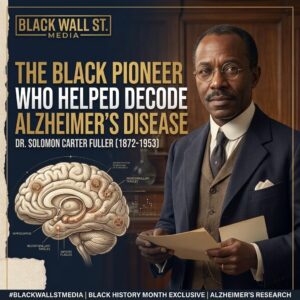 🧠✨ Celebrating an Unsung Hero! Dive into the captivating journey of Dr. Solomon Fuller, a pioneer in Alzheimer's research and a standout figure in Black history. From his roots in Liberia to groundbreaking discoveries, discover the legacy of a medical trailblazer who defied adversity. 🌟
 - The Voice of the Child, Young Person and; Service User
 Whose voices are we really hearing? And what happens when we truly listen? The 3rd DARDR/DVA & Criminal Justice Summit 2026 will bring together professionals, practitioners, community organisations, academics and people with lived experience to place children, young people and service users at the heart of the conversation. Under the theme “The Voice of the Child, Young Person & Service User,” this year’s Summit will explore domestic abuse, violence, safeguarding, exploitation, trauma and criminal justice — but most importantly, how listening can move beyond consultation and become meaningful action. 📅 Friday 27 November 2026 📍 Brent Civic Centre, Wembley 💻 Hybrid Event | CPD Accredited Read more about the Summit, the conversations it will explore and how to book your place.
 - The Crown in the Ledger: What Finding Britain’s Slave Traders Asked Us to Face
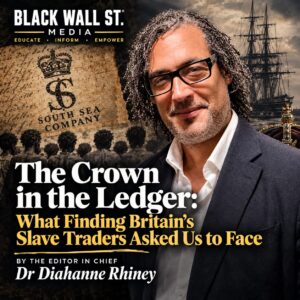 What happens when Britain’s history is no longer told through monuments, wealth and institutions, but through the ledger behind them? Finding Britain’s Slave Traders with David Olusoga brings names, companies, royal connections and fortunes into focus, forcing us to confront how deeply the transatlantic slave trade was embedded in British society. In “The Crown in the Ledger,” we explore what these records reveal about wealth, power, responsibility and the legacy that remains today. Read the full article and ask yourself: who owns what, who benefited, and what does honest accounting look like?
 - Is ‘Othello’ relevant today?
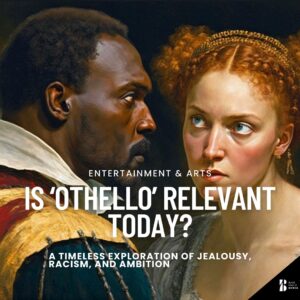 Othello: A Timeless Exploration of Jealousy, Racism, and Ambition
 - A life lived beyond the limits of representation
 Bonnie Greer was never simply a writer, playwright or broadcaster. She was a cultural force who refused to be confined by the expectations placed on Black women in public life. From Chicago to Britain, from theatre and literature to television and institutional leadership, she built a life defined by intellect, independence and an unapologetic right to occupy space. As Britain remembers her following her death at 77, this article looks beyond the achievements and asks what her life represented: the power of cultural authority, the importance of institutional access, and the freedom to be fully human rather than simply inspirational.




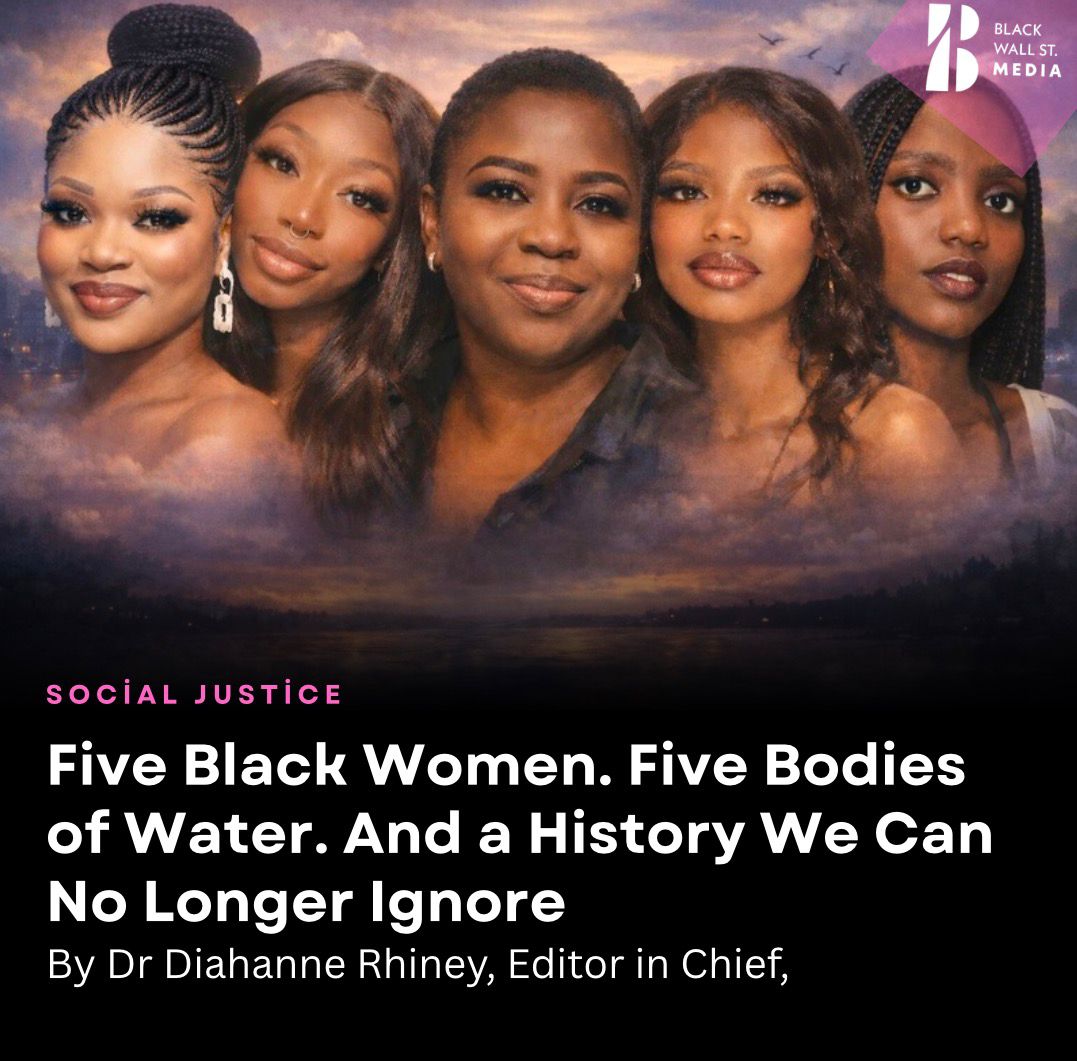
Five Black Women. Five Bodies of Water. And a History We Can No Longer Ignore
Read More
Mother’s Day and the Quiet Legacy of Our Mothers
Read More
Editor’s Letter March 2026
Read More
Locked Out of the Purse Strings
Read More
Editors Letter – January 2026
Read More
Editors Letter – October 2025
Read More
Editors Letter – September 2025
Read More
Editors Letter – August 2025
Read More
Editors Letter – July 2025
Read More