
Race, Equality & Inclusion
When a Black Woman Has to Prove Her Worth
“What happens when decades of achievement are met with doubt, and a Black woman finds herself having to justify not just her work, but her right to be in the room? This powerful and deeply personal reflection explores race, credibility, the emotional cost of constant scrutiny, and why being told to “let it go” is not always enough. This Black History Month, it is time to look beyond celebration and confront the realities Black women continue to face in the workplace.”
Dr Diahanne RhineyEditor in Chief

Recently, I found myself inside a process where my achievements seemed to be treated as a question rather than a record.
It is a strange thing to write. I am not going to describe the situation or the person involved, and I am not going to set out the details of something that is still ongoing and that I am not able to discuss. What follows is my own account and my own view, based on what I experienced. It is not a complaint about one person. It is about a pattern I have watched happen to Black women all my working life, and which I am now watching from the inside.
What I experienced did not stay private. I found myself defending the whole of who I am, my credibility, my record, the ground I thought I had built under my own feet. I raised it. And since raising it, I have been in a situation I cannot control, and cannot discuss.
I have been sitting with that last part for a while. The not knowing. The way a story can begin to move without you once you have spoken, and how you can explain exactly what you experienced while having no say in what anybody does with it next. There is a particular kind of tiredness that comes with doing the thing you believe is right and then waiting.
People have been kind, mostly. The advice I keep being given is to let it go. To rise above it. To protect my peace and not give this any more energy than it has already taken. I understand it. I have given the same advice to women I love.
But letting go only works when something has been acknowledged first. You cannot put down a weight that nobody has agreed was ever there. When I hear that a Black woman should simply move on, what I hear underneath is a request to absorb the cost quietly so that nobody else has to look at it. I did enough of that for years, in rooms where it was safer to smile than to speak.
I am not asking to be spared accountability. I have held senior roles and answered for decisions that affected people’s working lives, and I have never once asked to be treated gently. What I am asking for is what every professional takes for granted without noticing. That my record is what it is. That my achievements do not need a companion document. That being Black and a woman and good at my work are not facts that require a reconciliation.
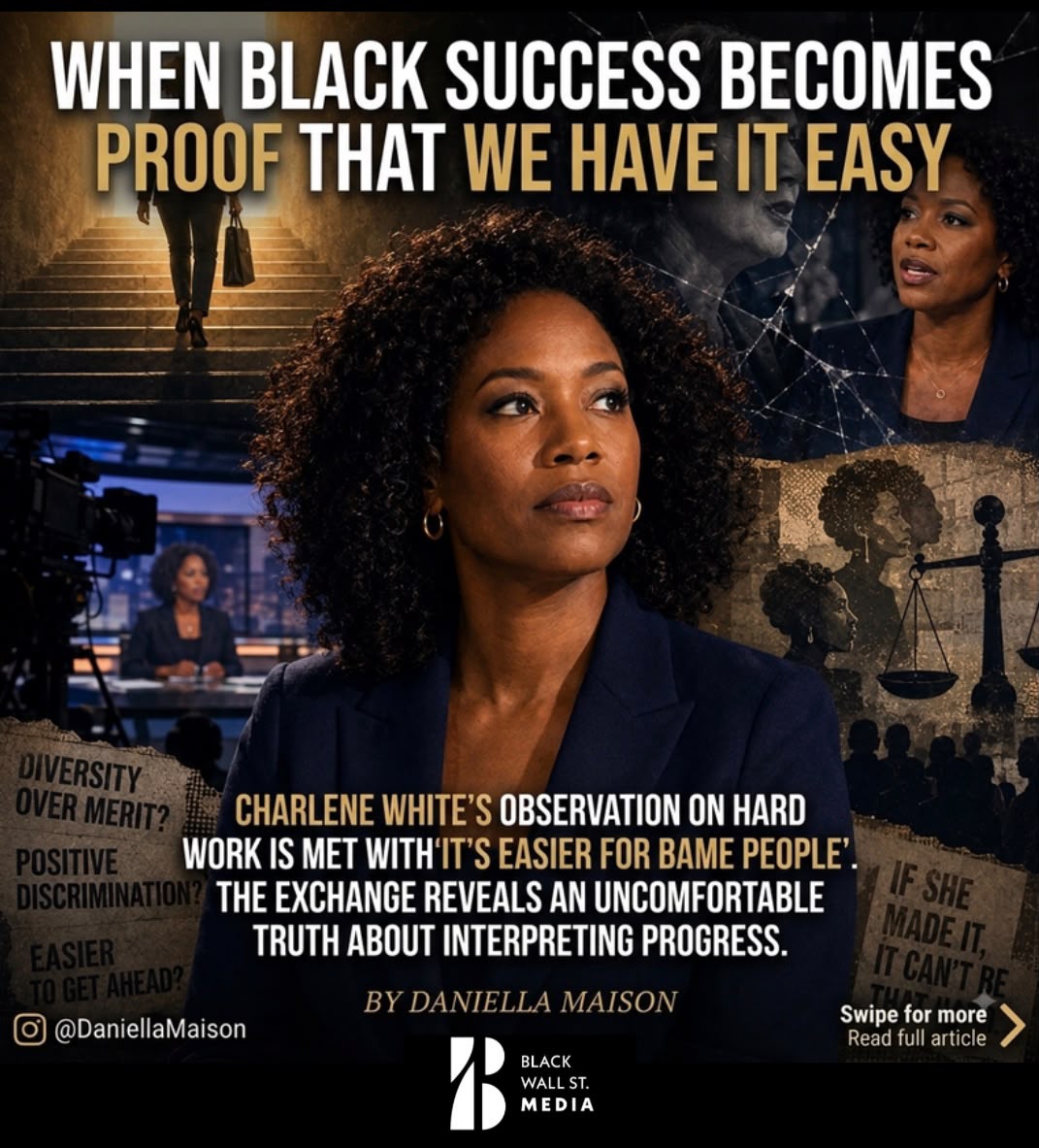
I know this pattern. I have spent thirty years in rooms where I was the only Black woman, and I have become fluent in the small adjustment that happens when a woman has to explain her achievements and a man does not. It never arrives as an insult. It arrives as a question. Are you sure that was you. Who else worked on it. How did you come to be in this position. Would you mind taking me through your background. And the woman answering believes, long before the conversation is over, that the questions are not about the work. They are about whether she should be standing there at all.
There is a particular loneliness in having your achievements treated as though they need to be explained. As if the work itself is not enough. As if your record must be checked again, your history examined more closely, your credibility established from the very beginning, every time, for every room.
I know that feeling of wondering whether the questions are really about the work, or whether something else has entered the room. And I know how quickly you can start questioning yourself.
I have a habit of interrogating myself when I think race may be playing a part. Not everything is about race. I tell myself that often, and I mean it. I want to be fair. I want to consider other explanations. I do not want to be the woman who finds racism under every stone, because I know how easily that label is handed to us and how hard it is to put down once it has been.
Those instincts matter. They can also become a way of dismissing what is right in front of me. You can spend so long looking for a reason that sounds more comfortable than racism that you begin to doubt your own ability to recognise a pattern at all. There is a cost to that. It is not only the world that doubts us. We are taught to doubt ourselves, and then praised for being measured about it.
For many of us, it is not one moment alone. It is the accumulation. The comment that makes you pause. The contribution that goes unrecognised, then reappears when someone else makes it. The achievement that is met not with curiosity or congratulations, but with suspicion.
We learn to notice the shift. We prepare to explain ourselves before anyone has asked us to. We wonder whether we should be more careful, more agreeable, more polished. We may even start to believe that if we find the perfect words, we will finally be understood.
But there is no perfect way to make someone see you if they have already decided to doubt you.
That is hard to say. It is harder to accept.
I am speaking about a general pattern here, not a particular case. There is a difference between being held to account and being dismantled in public. Accountability matters. Equality cannot mean that anyone is exempt from fair questions or honest scrutiny.
But equality must also mean proportion. The focus should stay on the work and on the matter that needs to be considered. When scrutiny expands until it seems to question a whole person, their character, their personal history and everything they have achieved, it has moved beyond the work.
That distinction matters. Not because we should never be questioned, but because we should not have to surrender our whole selves in order to answer a question about one part of our work.
I have thought about why this lands differently in midlife. When you are young and someone questions what you have built, you can tell yourself there is time, that the work will speak eventually. When you are in your fifties, with three decades behind you, the questioning stops being an obstacle you will overcome and becomes something else. A refusal. A door quietly held shut while you stand there holding your file.
I am not bitter. I am clear. I know what I have built. The hours, the pitches, the campaigns, the women I brought into rooms they had never been invited into, the nights spent rewriting something at midnight because it was not good enough yet. That is not a claim about my worth as a person. It is a record, and a record should be able to travel into a room without being questioned at the door.
I also know the double bind underneath all of this. Stay quiet and the doubt hardens into agreement. Speak, and I am told I am difficult, that I have taken it personally, that I have made it about race when it was only ever about standards. There is no version of me that gets to be both honest and easy. Many Black women reading this will know what I am describing, and will know how long it took them to stop apologising for noticing it.
We talk a great deal now about women’s wellbeing, and I am glad of it. What I have not written about enough is that having to justify your right to be in the room is not separate from any of that. It is one of the most reliable sources of stress a woman can carry, because it never resolves. There is no finishing line. Just the next room, and the next set of questions, and the knowledge that you will have to be twice as composed while answering them.
I work in an industry paid to shape how people are seen. We advise governments and boardrooms on how to be understood, and yet parts of this industry still struggle to look at a Black woman in midlife and see expertise rather than a risk.
The research gives some context. In 2022 the Fawcett Society and the Runnymede Trust published a report called Broken Ladders, based on a survey of 2,000 women of colour. It found that 75 per cent of them had experienced racism at work, and 61 per cent had changed something about themselves to fit in. That research covered women of colour rather than Black women alone, so it cannot describe every Black woman’s experience, but it tells you the weather.
More recently, a 2025 doctoral thesis from the University of Essex by Ruth Pombi Chiraga, called Walking a Tightrope Without a Safety Net, looked specifically at Black women in senior leadership in the UK through a small number of in depth interviews. It described systemic racism arriving as microaggressions, women playing it safe, masking their emotions and carrying a projected sense of inadequacy. It is not population level data, and I am not presenting it as such. Reading it still felt like being handed the map of a house I have lived in for most of my working life. Statistics do not tell my story for me. They remind me that what happens to one woman does not begin and end with her.
The exhaustion of having to prove yourself repeatedly is hard to explain to someone who has not had to do it. It is not only preparing your response. It is carrying the uncertainty afterwards. Replaying what was said. Searching back through your history for evidence you thought was already clear. Wondering whether you should have answered differently.
That vigilance follows you home. It sits beside you while you make dinner, or when the house is quiet and you are awake at two in the morning. It wears down confidence and takes up space that should belong to rest, joy and the ordinary business of living. The cost of having to establish your right to be in the room should not be treated as nothing.
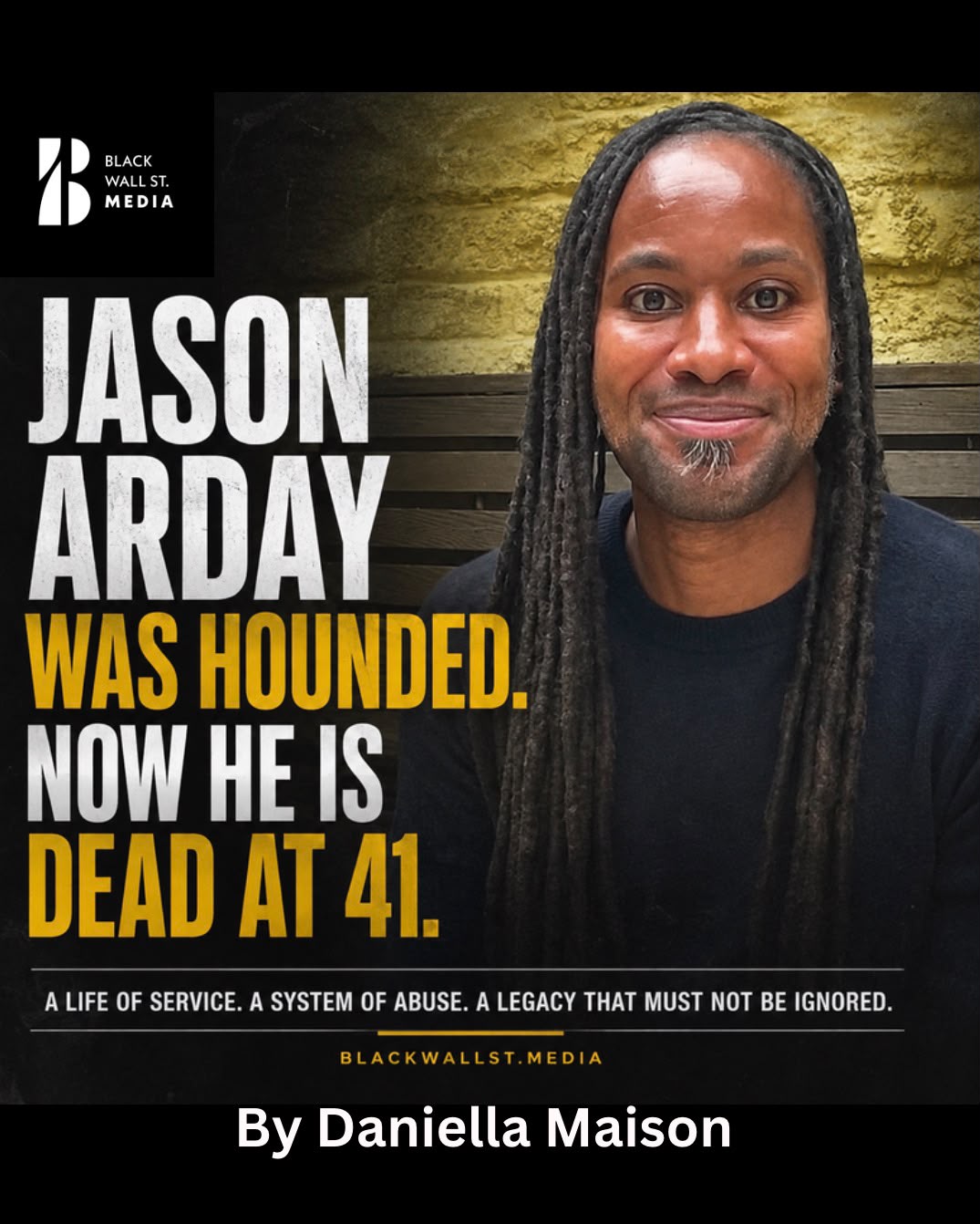
In August 2026, Professor Jason Arday died. An inquest has opened into the circumstances of his death and has since been adjourned, and until it concludes none of us watching from outside should assume we know what happened. I did not know him, I am making no comment on the circumstances of his death or its cause, and I am not going to turn his life into an argument.
What I will say is that the coverage around him became a conversation in itself, and its tone unsettled me. David McQueen wrote a piece called “Handle With Care”, published on LinkedIn in August 2026, about the way we treat people in public life, and it stayed with me. Not because hard questions should never be asked. They should. But there is a difference between asking questions about a person and taking a person apart.
That distinction matters most when the person being questioned is a Black woman. We are expected to be strong enough to withstand it, gracious enough not to name what it is doing to us, and measured enough to keep everyone else comfortable while it happens.
It is October, and it is Black History Month. I have mixed feelings about the month, as I know many of us do. It can feel like a window in the year when the country turns to look at us before turning away again. I will take the invitation anyway. Because the history we are asked to honour this month is not only the history of what was endured. It is this as well. Black women building careers, holding authority, running organisations, and being asked to account for all of it in a way nobody else is. That is history too. It is happening right now, and it is being written down in the rooms we are still having to prove ourselves in.
I have asked myself what I want to hold on to while I wait for a situation I cannot control to unfold.
I want to hold on to what I have built. I want to remember that questioning the doubt placed on me does not make me unreasonable. And I want to resist the idea that silence is always wisest, just because speaking brings consequences I cannot predict.
I want to hold on to the women as well. The ones who did not ask me to explain myself this month. The ones who rang without being asked, or messaged at eleven at night to say they were thinking of me, or sat alongside me and said nothing at all. Sisterhood is not a nice word for a nice feeling. In a situation like mine it is practical. It is the difference between going through something and going through something alone.
I want to hold on to the younger Black women watching, because I know they are. Some of them are in rooms where the doubt is newer and quieter and they cannot yet name what they are feeling. You do not need to be able to prove what happened in order to know that something did. Your instinct is evidence. Keep a record, keep your people close, and do not spend your career trying to become legible to somebody who has already decided you are not.
I also want us to make spaces where a woman does not have to produce a file of evidence before her own account is taken seriously. Where listening comes before judgement. Where care does not mean avoiding hard conversations, but approaching them with fairness, proportion and respect.
If you are a Black woman who has found yourself explaining an achievement you worked hard for, or wondering whether your credibility is being tested in a way nobody else’s is, you are not wrong to pause and notice. You are not obliged to talk yourself out of what you have experienced in order to look balanced to somebody else. You are allowed to be clear eyed and generous at the same time, and you are allowed to name what you see.
What I would ask of the women who are not Black, and who hold authority, is smaller than it sounds. Look again. When a Black woman’s record seems improbable to you, ask yourself why. Ask whether the same record in a white colleague would have felt improbable at all. Notice how quickly the questions come, and what they attach themselves to, and whether you would accept them being asked of you. Believe her the first time, and not five years later when she has already left, or quietly stopped contributing, or moved somewhere she is treated as though she has always belonged.
I cannot control every decision made about me. I can try to remain clear about what I know, and gentle with myself about what I do not. I can decide not to hand over my own sense of my record just because somebody else cannot read it straight.
I have watched what relentless public scrutiny can do to people, including people who did nothing wrong, and I have watched how rarely we apply the same appetite for it to those who hold the most power. That imbalance is the wider question I hope the conversation around his death leaves us with, while being clear that I am making no claim about what happened to him. Not whether hard questions should be asked. Who we choose to ask them of, and how far we let ourselves go once we have started.
A Black woman should be able to have what she has built without her credibility being treated as a question. Not exemption from accountability. Proportion. The same curiosity afforded to everyone else, the same benefit of the doubt, the same assumption that where there is a record, there is a woman who made it.
That is what I am holding on to while I wait. Not a verdict, and not revenge, and not a need for anyone to admit anything. Just this. That I know what I built. That I was right to say so. And that somewhere on the other side of this, there is a version of me who is still standing, and still building, and no longer surprised.
So this Black History Month, I am not asking to be celebrated. I am asking for something smaller and harder. Proportion. Look at the record, and let it be a record. If you are a Black woman in the middle of your own version of this, hold on to yours too. What you built is not up for debate just because somebody arrived late to it.


- ALLISTER VICTOR BAIN: THE MAN, THE ARTIST AND THE HISTORY WE MUST NOT FORGET
 This Black History Month, Black Wall St. Media pays tribute to Allister Victor Bain, the Grenadian-born artist, storyteller and cultural pioneer whose creativity helped shape Caribbean and Black British cultural life. Through the heartfelt memories of his friends, colleagues and family, we celebrate not only his remarkable contribution to the arts, but the man behind the legacy. His story is a powerful reminder that our pioneers deserve more than to be remembered after they are gone, their lives, work and history must be preserved for generations to come. Read the tribute. Discover his legacy. Help keep his story alive.
 - When Your Achievements Are Treated as a Question
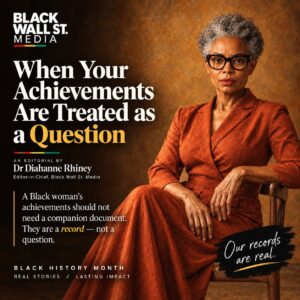 When a Black Woman Has to Prove Her Worth What happens when decades of achievement are met with doubt, and a Black woman finds herself having to justify not just her work, but her right to be in the room? This powerful and deeply personal reflection explores race, credibility, the emotional cost of constant scrutiny, and why being told to “let it go” is not always enough. This Black History Month, it is time to look beyond celebration and confront the realities Black women continue to face in the workplace.
 - The Jamaican Sculptor Who Carved His Way Into History
 Have you heard of Alvin Marriott? A Jamaican sculptor whose extraordinary talent took him from carving limestone in Jamaica to helping restore the Houses of Parliament in Britain, teaching a new generation of artists and creating a monument to Bob Marley in his eighties. This Black History Month, discover the remarkable story of a man whose hands helped shape history, yet whose name remains unfamiliar to so many. It is time to look again, remember his contribution and give Alvin Marriott the recognition he deserves.
 - Damilola Taylor: The Boy Who Never Made It Home
 He was just ten years old. He loved football, supported Manchester United and dreamed of becoming a medical researcher so he could help his sister. On 27 November 2000, Damilola Taylor was fatally injured while walking home in Peckham. His death shocked Britain. His family endured years of waiting for justice. But his parents, Richard and Gloria Taylor, refused to let their son’s legacy be defined by the violence that took him. They established the Damilola Taylor Trust to help give other young people hope, opportunities and a better chance of a future. This Black History Month, we remember the child behind the headlines — his dreams, his family and the future he was never given the chance to live. Every child deserves to make it home. Every child deserves a future. Read our Black History Month feature with Black Wall St. Media.
 - Alzheimer’s the Black doctor who helped decode the disease
 🧠✨ Celebrating an Unsung Hero! Dive into the captivating journey of Dr. Solomon Fuller, a pioneer in Alzheimer's research and a standout figure in Black history. From his roots in Liberia to groundbreaking discoveries, discover the legacy of a medical trailblazer who defied adversity. 🌟




Editor’s Letter April 2026
Read More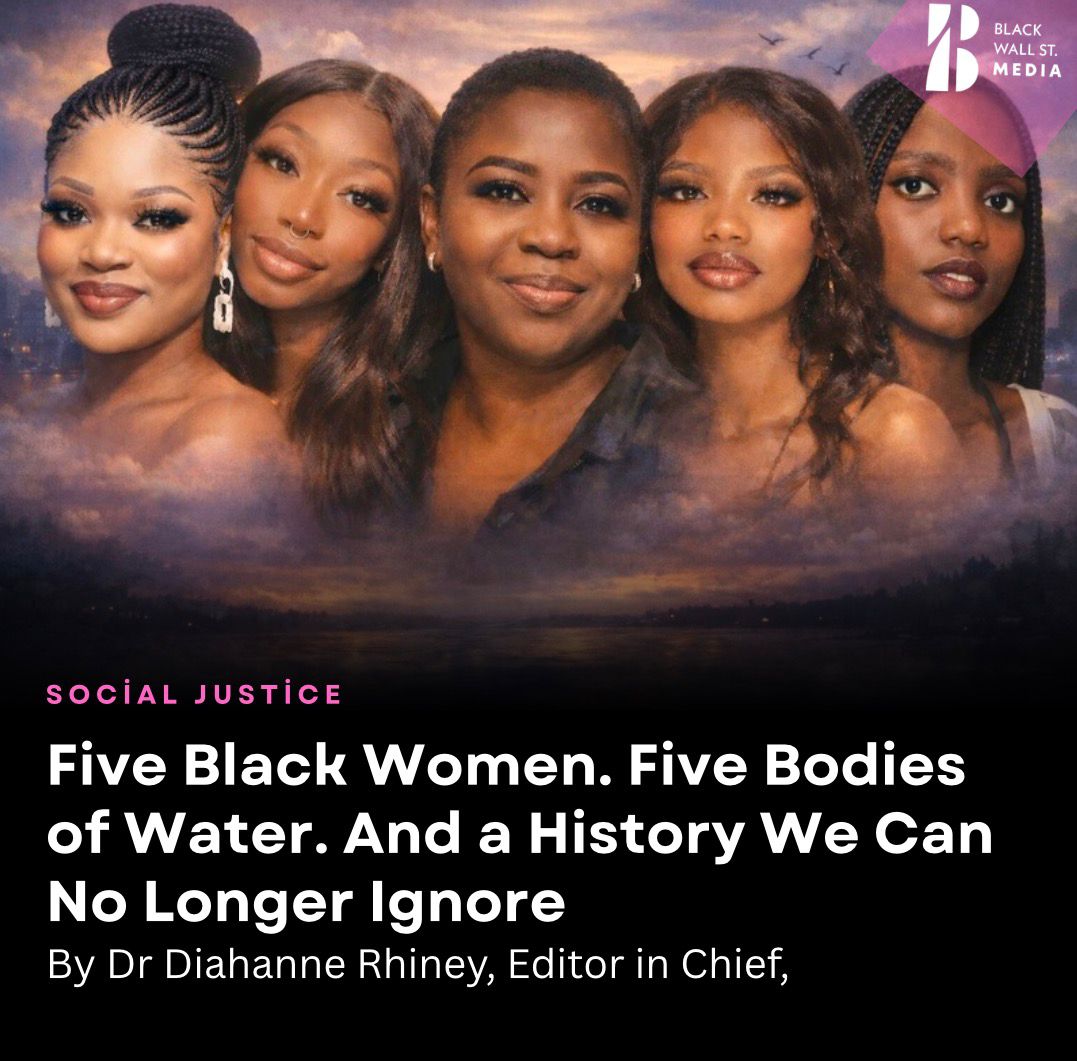
Five Black Women. Five Bodies of Water. And a History We Can No Longer Ignore
Read More
Mother’s Day and the Quiet Legacy of Our Mothers
Read More
Editor’s Letter March 2026
Read More
Locked Out of the Purse Strings
Read More
Editors Letter – January 2026
Read More
Editors Letter – October 2025
Read More
Editors Letter – September 2025
Read More
Editors Letter – August 2025
Read More