
Politics, Power & Diaspora
A Giant Has Fallen. What Jesse Jackson Meant to the Diaspora
“The passing of Jesse Jackson is more than the loss of a towering figure in American politics. It marks the end of an era in global Black political imagination.
Diahanne RhineyEditor in Chief
For the African diaspora, Jackson was not simply a civil rights activist. He was a strategist, a negotiator and a bridge between movements. From his work with the Southern Christian Leadership Conference to the founding of the Rainbow PUSH Coalition, he expanded the meaning of civil rights into the realm of economic power, coalition politics and international solidarity.
This is not an obituary rooted in nostalgia. It is a reflection on impact — and on what his legacy demands of the diaspora now.”

A Giant Has Fallen. What Jesse Jackson Meant to the Diaspora
The passing of Jesse Jackson is not simply the loss of an American civil rights leader. It is the closing of a chapter in global Black political consciousness.

For many across the African diaspora, from Brixton to Brooklyn, from Kingston to Johannesburg, Jackson was not just a US figure. He was proof that Black political ambition did not have to be whispered. It could be declared. It could be organised. It could run for president.
At Black Wall Street Media, we do not romanticise leaders. We assess legacy by impact. And Jesse Jackson’s impact was seismic.
From Civil Rights to Global Rights
Emerging from the Southern Christian Leadership Conference and working closely with Martin Luther King Jr., Jackson carried forward a tradition rooted in protest, economic justice and moral clarity. But he expanded it beyond American segregation.
Through the Rainbow PUSH Coalition, he reframed civil rights as economic rights. He demanded corporate accountability. He negotiated with institutions. He insisted that representation without redistribution was hollow.
For the diaspora watching from afar, this mattered.
In the United Kingdom, Black communities navigating Thatcherism saw in Jackson a model of coalition building. In the Caribbean, where post independence dreams were colliding with IMF structural adjustment, his language of economic empowerment resonated. Across Africa, where liberation movements were transforming into governing parties, his insistence on moral leadership offered both inspiration and warning.
The Audacity of the 1984 and 1988 Campaigns
When Jackson ran for president in 1984 and again in 1988, he did something radical. He expanded the electorate’s imagination.
At a time when many believed a Black presidential run was symbolic at best, he built a multiracial coalition and won millions of votes. Long before Barack Obama’s historic victory, Jackson made the pathway visible.
His campaigns were watched closely across the diaspora. For Black Britons, still largely absent from Westminster leadership, his candidacy felt like a mirror held up to possibility. For young people in Toronto, Lagos and Port of Spain, it planted a seed.
Political ambition was not arrogance. It was inheritance.
Diaspora Diplomacy and Moral Intervention
Jackson’s international interventions, from advocating for sanctions against apartheid South Africa to negotiating humanitarian releases abroad, positioned him as more than a domestic figure. He was a bridge.
He understood that the African diaspora is not a loose collection of communities, but a political force connected by shared histories of extraction, resistance and creativity.
His voice against apartheid echoed alongside leaders such as Nelson Mandela. His advocacy signalled that African American struggles were inseparable from global Black liberation movements.
For the diaspora, this was affirmation. Our battles were interconnected. Our victories would be too.
The Critiques and the Complexity
No serious assessment ignores complexity. Jackson’s career was not without controversy. Political pragmatism, shifting alliances and personal missteps complicated his image.
But diaspora leadership has always required navigation through hostile systems. The question is not whether a leader was flawless. It is whether they shifted the terrain.
Jackson shifted it.
He normalised Black negotiation with power. He mainstreamed conversations about economic inclusion. He insisted that Black voters were not a monolith but a coalition with leverage.
What His Death Means Now
Jesse Jackson’s death arrives at a time when the diaspora faces renewed global challenges.
Across Europe, far right politics are rising. In the United States, voting rights remain contested. In parts of Africa and the Caribbean, economic sovereignty is still constrained by global financial systems. Anti Blackness continues to mutate rather than disappear.
The generation that marched with King is largely transitioning from this earth. The question becomes urgent. Who carries the moral megaphone now?
Jackson’s legacy challenges us to move beyond performative activism. It calls for infrastructure. For economic strategy. For coalition politics that include but are not limited to identity.
For Black founders, organisers and policymakers across the diaspora, the lesson is clear. Charisma must be matched by institution building. Protest must be paired with policy. Representation must demand redistribution.
A Diaspora in Reflection
In London, community elders will recall watching his speeches on late night news. In Caribbean households, his presidential runs will be remembered as moments of shared pride. In African universities, his name will appear in lectures about transnational Black politics.
His passing invites the diaspora to reflect not only on what he achieved but on what remains unfinished.
At Black Wall Street Media, we say this plainly. Leadership is not about perfection. It is about impact, courage and consequence.
Jesse Jackson dared to imagine Black political power at scale before the world was ready to accept it.
Now the question facing the diaspora is whether we will dare to scale it further.

- Alzheimer’s the Black doctor who helped decode the disease
 🧠✨ Celebrating an Unsung Hero! Dive into the captivating journey of Dr. Solomon Fuller, a pioneer in Alzheimer's research and a standout figure in Black history. From his roots in Liberia to groundbreaking discoveries, discover the legacy of a medical trailblazer who defied adversity. 🌟
 - The Voice of the Child, Young Person and; Service User
 Whose voices are we really hearing? And what happens when we truly listen? The 3rd DARDR/DVA & Criminal Justice Summit 2026 will bring together professionals, practitioners, community organisations, academics and people with lived experience to place children, young people and service users at the heart of the conversation. Under the theme “The Voice of the Child, Young Person & Service User,” this year’s Summit will explore domestic abuse, violence, safeguarding, exploitation, trauma and criminal justice — but most importantly, how listening can move beyond consultation and become meaningful action. 📅 Friday 27 November 2026 📍 Brent Civic Centre, Wembley 💻 Hybrid Event | CPD Accredited Read more about the Summit, the conversations it will explore and how to book your place.
 - The Crown in the Ledger: What Finding Britain’s Slave Traders Asked Us to Face
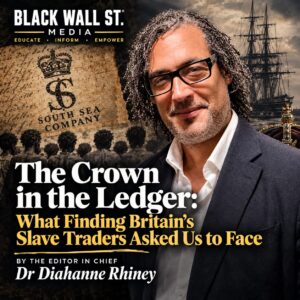 What happens when Britain’s history is no longer told through monuments, wealth and institutions, but through the ledger behind them? Finding Britain’s Slave Traders with David Olusoga brings names, companies, royal connections and fortunes into focus, forcing us to confront how deeply the transatlantic slave trade was embedded in British society. In “The Crown in the Ledger,” we explore what these records reveal about wealth, power, responsibility and the legacy that remains today. Read the full article and ask yourself: who owns what, who benefited, and what does honest accounting look like?
 - Is ‘Othello’ relevant today?
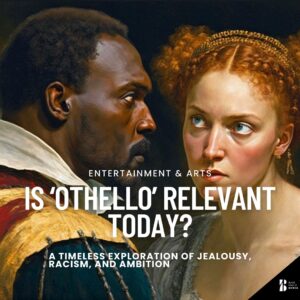 Othello: A Timeless Exploration of Jealousy, Racism, and Ambition
 - A life lived beyond the limits of representation
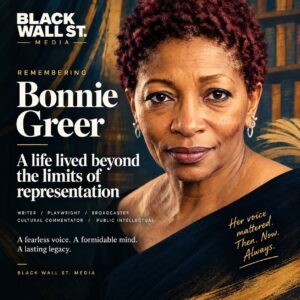 Bonnie Greer was never simply a writer, playwright or broadcaster. She was a cultural force who refused to be confined by the expectations placed on Black women in public life. From Chicago to Britain, from theatre and literature to television and institutional leadership, she built a life defined by intellect, independence and an unapologetic right to occupy space. As Britain remembers her following her death at 77, this article looks beyond the achievements and asks what her life represented: the power of cultural authority, the importance of institutional access, and the freedom to be fully human rather than simply inspirational.




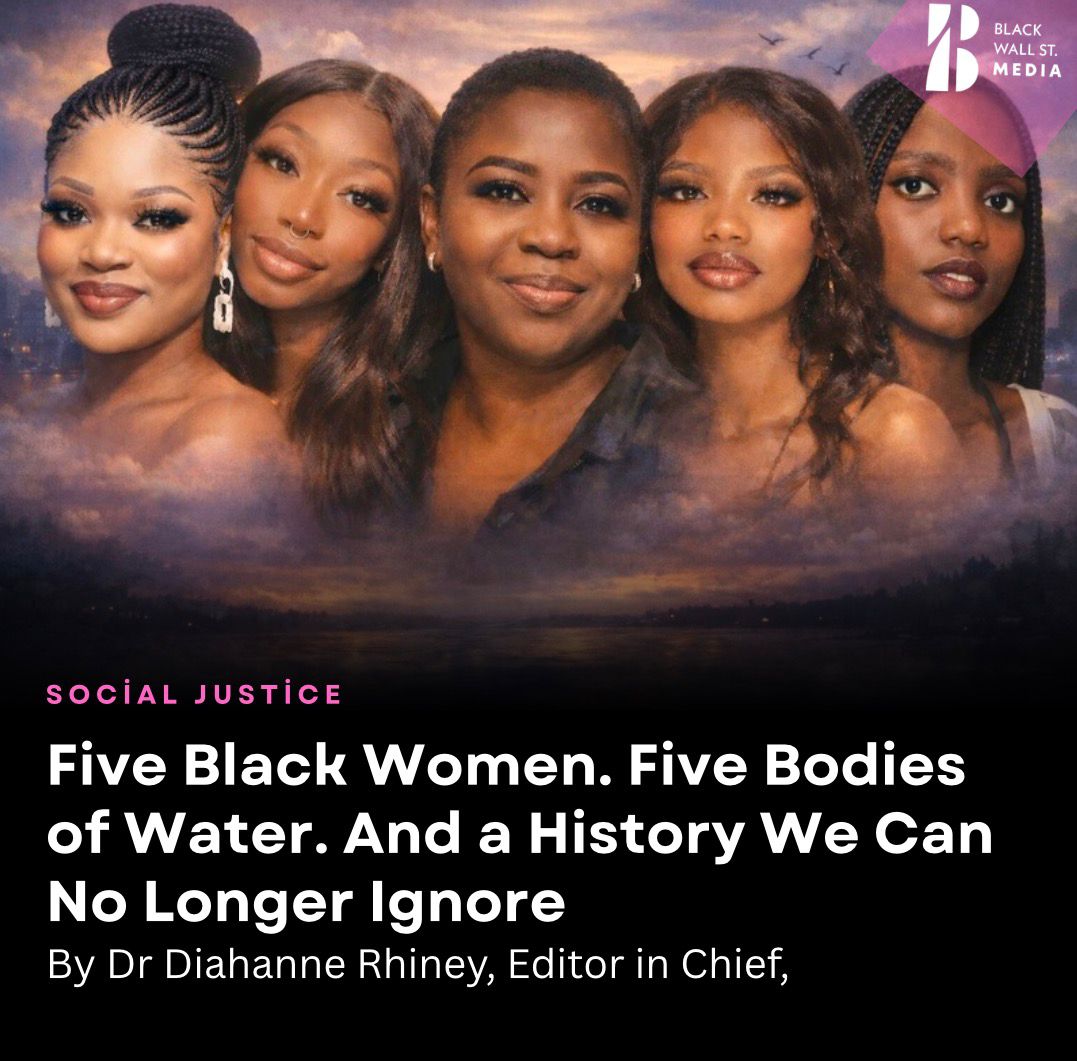
Five Black Women. Five Bodies of Water. And a History We Can No Longer Ignore
Read More
Mother’s Day and the Quiet Legacy of Our Mothers
Read More
Editor’s Letter March 2026
Read More
Locked Out of the Purse Strings
Read More
Editors Letter – January 2026
Read More
Editors Letter – October 2025
Read More
Editors Letter – September 2025
Read More
Editors Letter – August 2025
Read More
Editors Letter – July 2025
Read More