Art and Culture
Memory, Belonging and the Psychological Experience of Diaspora
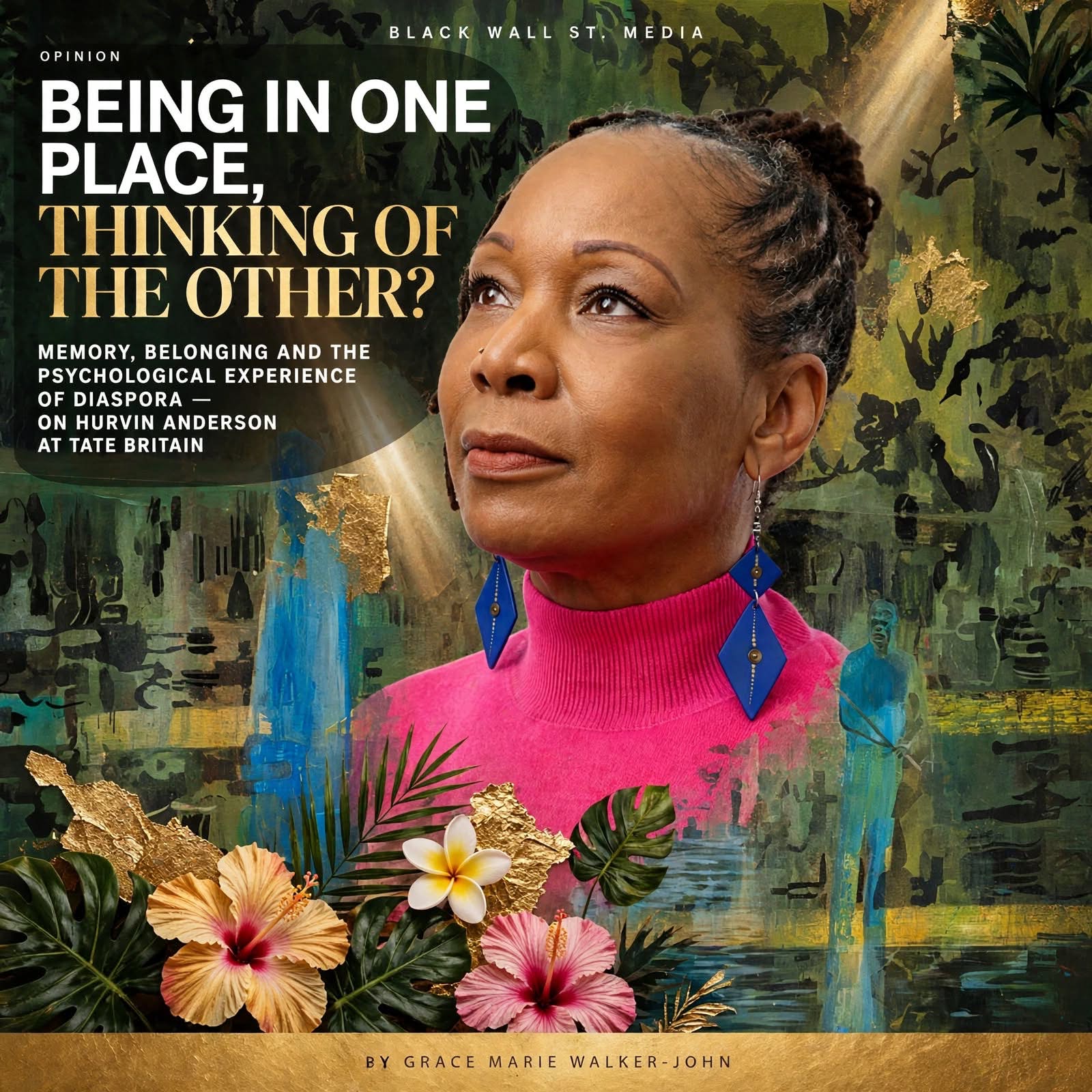
“What does it mean to belong when your heart, memories and identity are connected to more than one place? In Being in One Place, Thinking About Another, Grace Marie Walker-John reflects on diaspora, cultural identity and the psychological meaning of home, drawing inspiration from Hurvin Anderson’s exhibition at Tate Britain. She explores the pressures Black people can face to make themselves smaller to fit in, and why belonging should never require us to shrink who we are. Read this thoughtful and deeply personal reflection on memory, identity and the freedom to belong on our own terms.”
Grace Marie Walker-JohnContributor
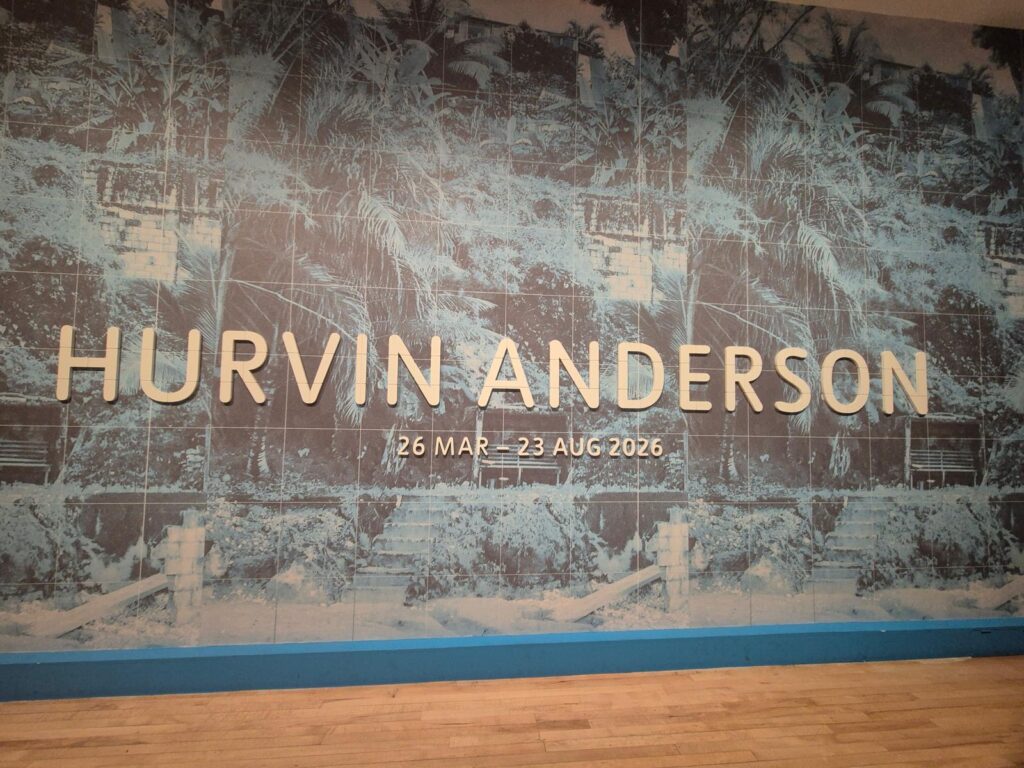
On the final day of Hurvin Anderson’s exhibition at Tate Britain, I found myself standing in front of words that stayed with me long after I had moved on to the next painting.
Anderson speaks of wanting to see the “Black vision”. He then says something deceptively simple: in Britain, “your vision shrinks somehow”. His desire is to broaden it out.
As a Jamaican-born Black British psychoanalytic psychotherapist, those words stopped me.
Perhaps they resonated because Anderson’s exhibition is concerned with something I recognise both personally and professionally: the complexity of belonging. Born in Birmingham to Jamaican parents, Anderson draws upon Britain and the Caribbean, bringing together memory, family history, migration and imagined landscapes.
His paintings made me think about what we actually mean when we speak of home.
Home is geographical, but it is also psychological. We carry places internally. Childhood landscapes, family stories, language, food, music, relationships and losses can remain part of our internal world long after our geographical location has changed. Having been born in Jamaica and made my life in Britain, I do not see belonging as something that must be confined to one place. Jamaica is part of who I am, but so too are the years I have lived, worked and built relationships in Britain. One does not cancel out the other.
Even the question “Where are you from?” can have more than one answer. Research on migration and social identity helps explain why: the connections we maintain between different parts of our identity can matter to our wellbeing, while the children of migrants may face their own questions about belonging and exclusion.
We can belong here while remaining psychologically connected to somewhere else.
Anderson’s work also raises another question: what happens when some of the memories through which we know a place are not entirely our own?
Children of migrants may develop relationships with a homeland long before they visit it. Places are passed down through parents and grandparents, through stories, photographs, food, music, language, celebrations, grief and sometimes silence. These connections are not always captured by conventional ideas of how people adapt to a new culture. As Bhatia and Ram have explored, diasporic identity can take shape across more than one culture, history and national boundary.
So, can we inherit a psychological relationship with somewhere we did not grow up?
I think we can.
Yet it was Anderson’s reference to the “Black vision” that took my thinking somewhere else.
There is a difference between seeing Black people and allowing Black people to be the ones who see.
Representation matters. But I found myself thinking about something beyond representation: who gets to interpret what they see? There is a difference between appearing in someone else’s picture of the world and being able to make meaning through our own history, culture and frame of reference.
This is why Anderson’s word “shrinks” stayed with me.
What happens when the way we understand ourselves is not necessarily reflected in the dominant culture around us?
Human beings adapt. We alter aspects of how we speak, behave and present ourselves according to context. This can be necessary, creative and socially sophisticated.
But adaptation is not the same as gradually learning to make oneself smaller.
For Black people, this negotiation can carry an additional racialised burden. How direct can I be? How firmly can I disagree? How much emotion can I show? How will confidence, authority or assertiveness be interpreted? I recognise these questions not only through my professional work but also through my own experience of navigating spaces where being confident, direct or questioning can be interpreted differently depending on who is speaking.
For Black women, these are not merely imagined concerns. In studies of how anger is received at work, Motro and colleagues found that Black women expressing anger were more likely to be judged as though the problem lay within them, with consequences for how their performance and leadership were evaluated.
The familiar stereotype of the “angry Black woman” does more than distort perception; it can shape evaluation.
This leaves me with a question that followed me out of the exhibition:
What happens when a Black person does not shrink?
There is a psychological cost to continually wondering how we might be perceived. We can find ourselves monitoring our tone, language, emotional expression and even how confidently we occupy space. Somewhere in that process, a gap can open between the person we know ourselves to be and the person we fear others have already decided we are.
The cost of belonging should not be the gradual editing away of oneself.
Yet I do not want to understand Black identity or diaspora only through struggle. To do so would reproduce another limitation: seeing Black experience primarily through adversity.
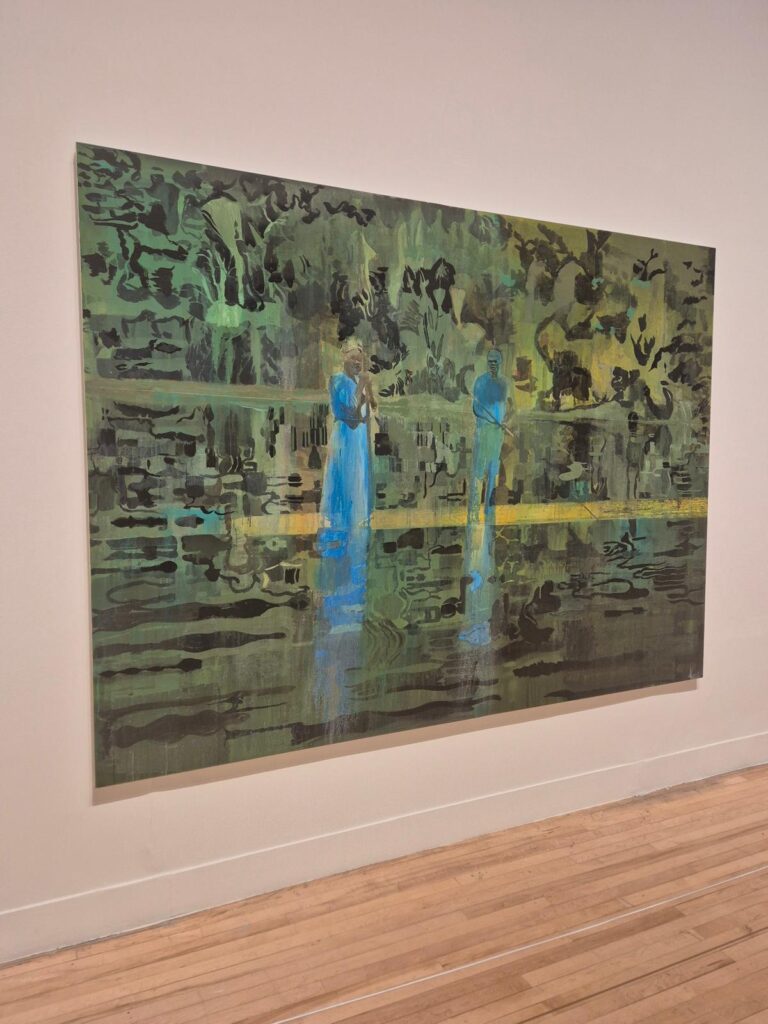
That is not what I experienced in Anderson’s work.
I encountered colour, pleasure, leisure, memory, beauty and ordinary life. Different places and histories could coexist without one needing to erase the other. In the exhibition’s Raftingsection, love and leisure themselves emerge as quiet forms of resistance.
Perhaps our understanding of belonging needs the same expansiveness.
Belonging should not demand a choice between here and there. Integration should not demand the disappearance of the histories, cultures and experiences that helped form us.
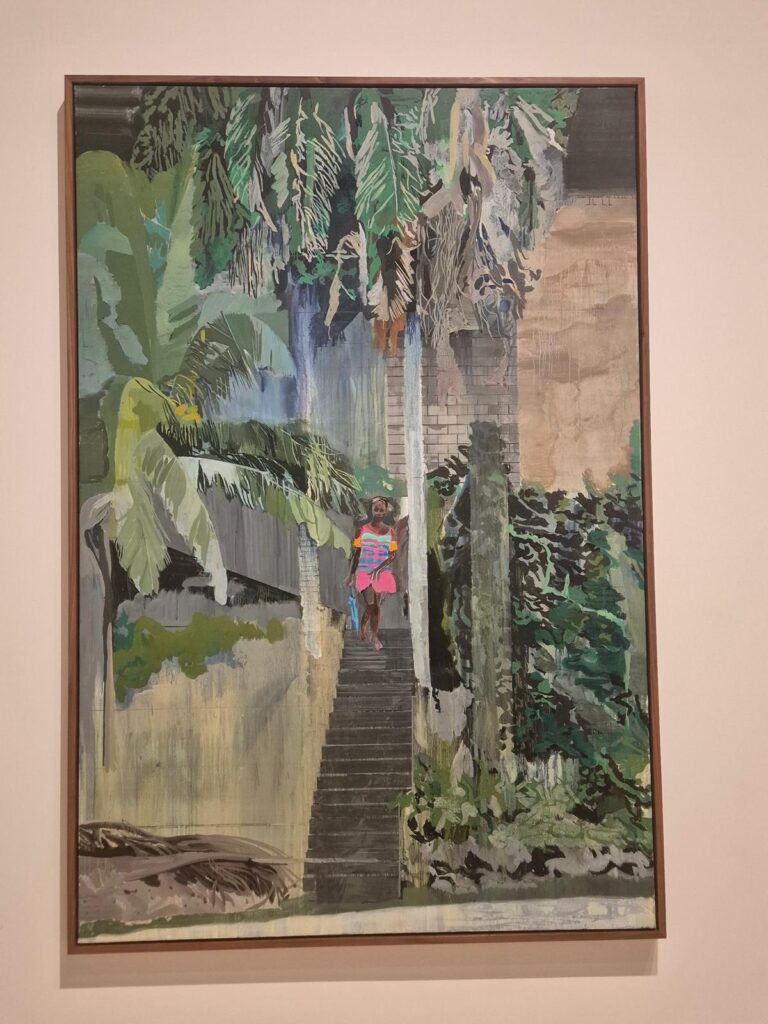
For those of us whose lives cross countries, cultures and generations, perhaps the task is not to choose one part of ourselves over another. It is to find the freedom to hold them together without diminishing either.
There is something powerful about retaining the freedom to see through our own eyes.
To remember.
To question.
To interpret.
To take up space.
And not to shrink simply in order to belong.
Belonging need not require shrinking.
Footnotes
Tate Britain. Hurvin Anderson, exhibition wall texts, Tate Britain, London, 26 March–23 August 2026. Anderson’s reflections on Black vision, Britain, memory and belonging inform the title and discussion in this article.
Brance, K., Chatzimpyros, V. & Bentall, R. P. (2024). “Social identity, mental health and the experience of migration.” British Journal of Social Psychology, 63(4), 1681–1700. DOI: 10.1111/bjso.12745.
Bhatia, S. & Ram, A. (2009). “Theorizing identity in transnational and diaspora cultures: A critical approach to acculturation.” International Journal of Intercultural Relations, 33(2), 140–149. DOI: 10.1016/j.ijintrel.2008.12.009.
Motro, D., Evans, J. B., Ellis, A. P. J. & Benson, L. (2022). “Race and reactions to women’s expressions of anger at work: Examining the effects of the ‘angry Black woman’ stereotype.” Journal of Applied Psychology, 107(1), 142–152. DOI: 10.1037/apl0000884.
- Being in One Place, Thinking About Another
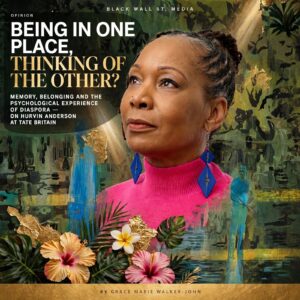 What does it mean to belong when your heart, memories and identity are connected to more than one place? In Being in One Place, Thinking About Another, Grace Marie Walker-John reflects on diaspora, cultural identity and the psychological meaning of home, drawing inspiration from Hurvin Anderson’s exhibition at Tate Britain. She explores the pressures Black people can face to make themselves smaller to fit in, and why belonging should never require us to shrink who we are. Read this thoughtful and deeply personal reflection on memory, identity and the freedom to belong on our own terms.
- Why is Nathan Cofnas still being treated as an authority on merit?
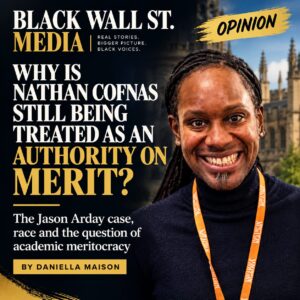 Why is Nathan Cofnas still being treated as an authority on merit? In this powerful opinion piece, Daniella Maison examines the controversy surrounding Professor Jason Arday, the allegations that were not substantiated, and the wider questions of race, racism and meritocracy in British academia. Read the full article and join the conversation.
- Why Did Britain Need to See Jane, Christina, and Rebecca as Little Girls?
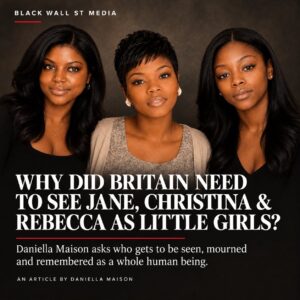 Why did Britain need to see Jane, Christina and Rebecca as little girls to recognise their humanity? In this powerful and thought-provoking article, Daniella Maison challenges us to confront how race, media representation and perceptions of Black womanhood shape whose pain we recognise and whose vulnerability we acknowledge. Their childhood photographs may move us, but they should never have been necessary for us to see their humanity. Read Daniella Maison’s compelling article and join the conversation. Why should Black women have to be seen as children to receive the tenderness and compassion they deserve?
- The Jamaican Who Stood Beside Kenyatta
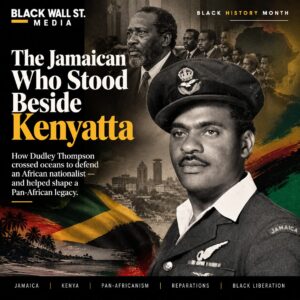 How did a boy from Kingston, Jamaica, become one of Britain’s most influential thinkers on race, culture and identity? This Black History Month, discover the story of Stuart Hall, the man who challenged Britain to question its history, its identity and who gets to define what it means to be British. Read his remarkable story and discover why his legacy still matters today.
- Professor Folarin Shyllon Reclaiming Africa’s History
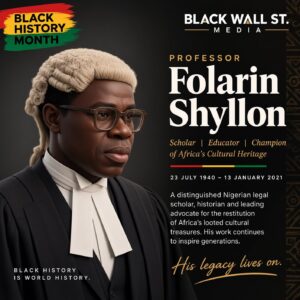 Black History Month: Professor Folarin Shyllon — Reclaiming Africa’s History From uncovering the forgotten history of Black people in Britain to championing the return of Africa’s looted cultural treasures, Professor Folarin Shyllon dedicated his life to truth, justice and reclaiming heritage. Discover the remarkable legacy of a pioneering Nigerian legal scholar who challenged historical erasure and championed Africa’s right to its own history. Because reclaiming our history is reclaiming our power. Read the full article with Black Wall St. Media. Black history is world history.




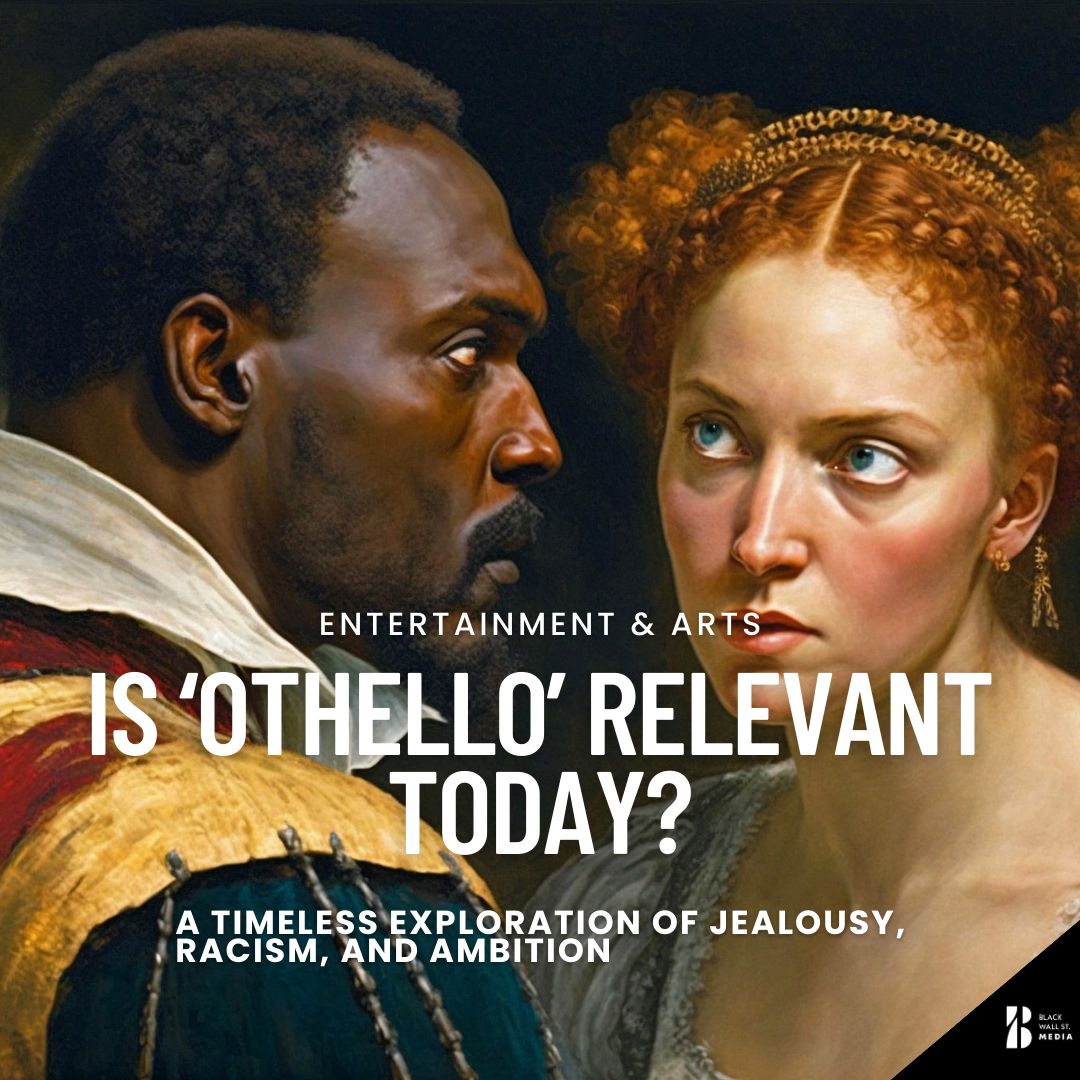
Is ‘Othello’ relevant today?
Read More
INSANE ENERGY INCOMING!
Read More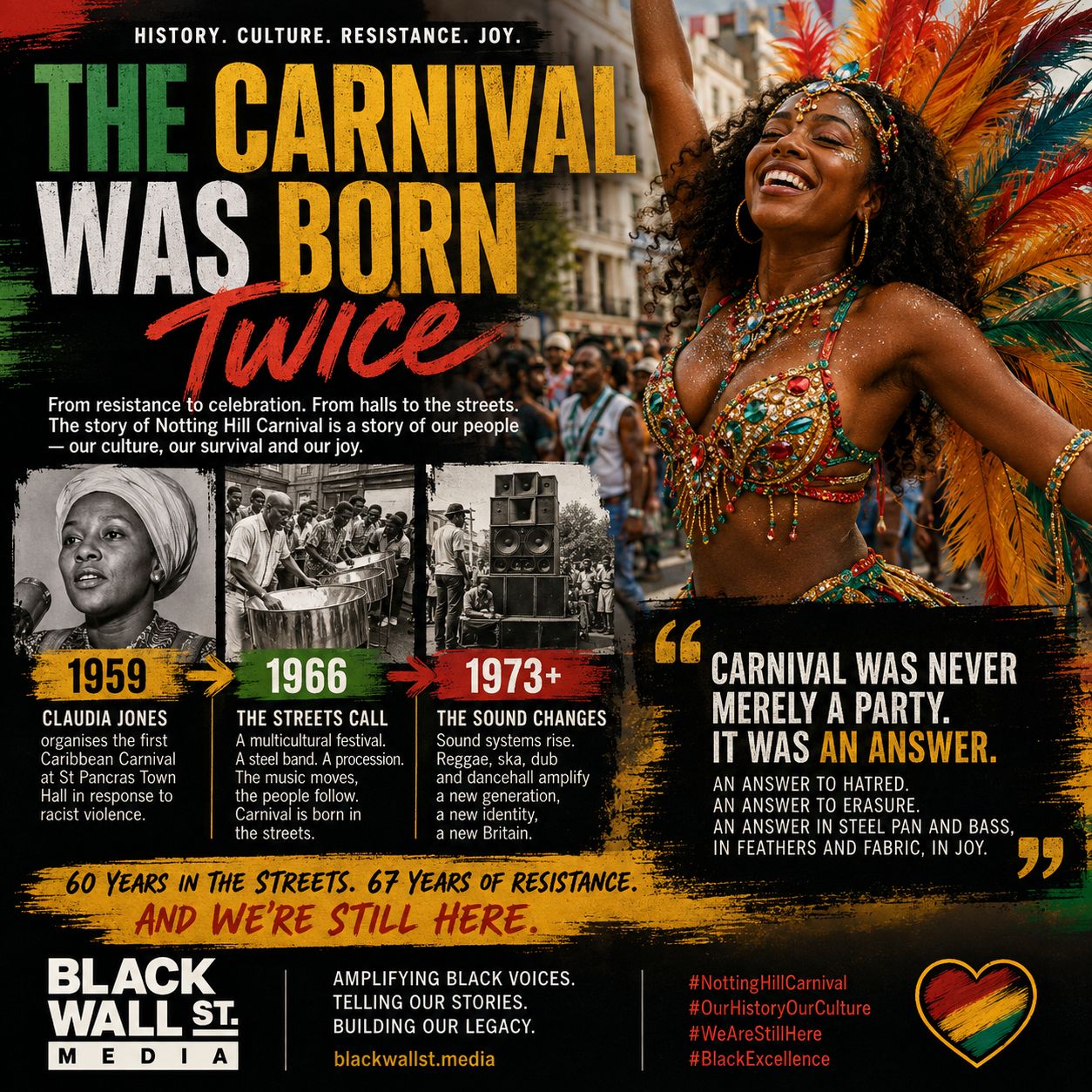
The Carnival Was Born Twice
Read More
The Africa Centre’s 60th Anniversary Exhibition: a landmark celebration of history, presence and legacy
Read More
Margaret Busby’s Part of the Story (Hamish Hamilton, 2026)
Read More
Afterlives of Looted Heritage
Read More
The Music is Black
Read More
Mother’s Day and the Quiet Legacy of Our Mothers
Read More
Radio Bimshire – Bajan to the Bone
Read More