Opinion & Commentary
“In this powerful opinion piece, Daniella Maison examines the controversy surrounding Professor Jason Arday, the allegations that were not substantiated, and the wider questions of race, racism and meritocracy in British academia.
Daniella MaisonEditor of Social Cause Issues
Read the full article and join the conversation.”

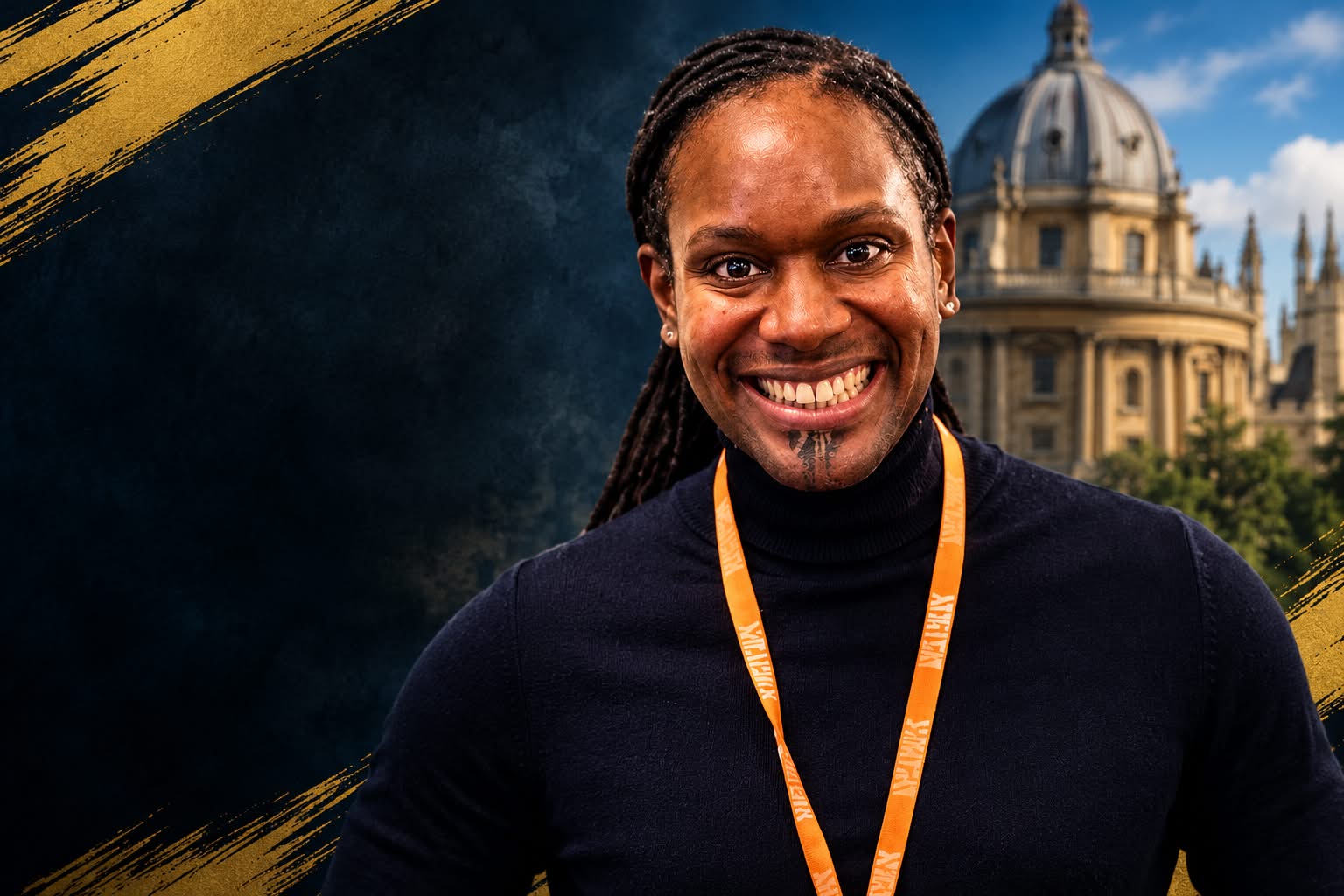
On 17 November, Nathan Cofnas is due to stride into Oriel College, Oxford, to speak on whether diversity, equity and inclusion is undermining higher education.
The self-described “race realist” whose allegations against Professor Jason Arday helped propel one Black academic into a 22-day national inquisition is now being presented to a university audience as someone with something authoritative to tell us about merit.
Worse, Arday is still part of the sales pitch. The event publicity describes Cofnas as the man who “exposed the plagiarism of Jason Arday” and explicitly links Arday’s case to questions about DEI, academic hiring, and standards. (The Independent)
There is just one rather inconvenient problem. Professor Jason Arday was never found guilty of plagiarism.
Liverpool John Moores University investigated his PhD and did not uphold plagiarism allegations, concluding that citation problems amounted to honest and reasonable error. A 2018 paper subsequently described in national reporting as having been “retracted” had not been retracted at all. Errors were corrected; plagiarism and data fabrication were not found. Another paper had already been investigated by Taylor & Francis and cleared before being dragged back into the controversy. Now a fresh Taylor & Francis investigation has again concluded without substantiating plagiarism allegations. (Byline Times)
So, what, precisely, did Cofnas “expose”?
That question becomes considerably more important once we examine the worldview of the man doing the exposing. Cofnas has described himself as a “race realist”. He has argued that racial differences in intelligence are real and wrote that under what he considers a genuinely meritocratic system, Black people would “disappear from almost all high-profile positions outside of sports and entertainment”.
He predicted that Black professors at Harvard would approach zero. He called Arday “not smart” enough to be a Cambridge professor and described his appointment in DEI terms. (The Observer)
Let us stop sanitising what that argument means. The proposition that Black people are, as a racial group, intellectually inferior and would therefore virtually disappear from elite academic life if only merit were allowed to prevail is racism. Calling it “race realism” does not magically transform the proposition. It merely gives an ancient racial hierarchy a modern academic wardrobe.
Which raises a fairly obvious question. If a man begins from the position that genuine meritocracy should produce almost no Black professors, how on earth did he become a neutral authority on whether a particular Black professor deserved to be one?
This matters because Cofnas’s interest in Arday was not detached from his opposition to DEI. Arday became useful to a much larger argument. One Black professor could be made into evidence that diversity had displaced merit. The individual accusation could become an indictment of the system that allowed him through the door.
I was the first mainstream commentator to argue publicly, while Professor Arday was still alive, that the level of scrutiny surrounding him had become wildly disproportionate. In The Independent, I wrote that he was being subjected to the kind of investigative treatment usually reserved for politicians and people who wield immense public power. Arday was not running a country. He was a pedagogue facing allegations relating to his professional record, allegations that academic institutions were perfectly capable of investigating.
Instead, his thesis, intelligence, childhood, achievements, biography and private life became public property. Professor Steven Barnett calculated that the mainstream press published 289 stories about him in just 22 days. Almost two thirds came after Arday resigned. (The Washington Post)
Two hundred and eighty-nine stories about one university professor.
As I later wrote in The European, academia is hardly unfamiliar with misconduct. At Cambridge itself, historian William O’Reilly remained in post after a university process found that more than 12 pages of a published article had been taken almost word for word from essays by one of his students. The tribunal regarded the conduct as negligent rather than deliberate. Whatever one thinks of that finding, nobody turned O’Reilly into evidence that white men had been mistakenly allowed into Cambridge. Nobody asked whether his conduct proved that white academic advancement had gone too far. (archive.varsity.co.uk)
That is the asymmetry.
White academics are allowed to succeed individually and fail individually. Black academics have an exhausting tendency to be made representative. One Black professor is accused of wrongdoing and suddenly DEI is on trial. His appointment becomes suspect. His intelligence becomes suspect. Eventually, the very presence of people who look like him becomes suspect.
All this in an academy hardly groaning under the weight of excessive Black representation. HESA’s latest figures show that only 270 of the UK’s 26,110 professors were Black in 2024/25. That is around one per cent. The previous year it was 250. (HESA)
Yet we are being invited to contemplate whether diversity has allowed Black people to swamp merit.
Please.
What makes this moment so bitterly full circle is what should be happening now. Had Professor Jason Arday survived that onslaught, he could be sitting on the Good Morning Britain sofa this week discussing the investigations that did not substantiate plagiarism. He could be talking about what it was like to have his intelligence publicly appraised, his legitimacy debated, his private life excavated and his appointment turned into a referendum on DEI. He could be answering Cofnas himself.
He is not here to do any of that.
Instead, Cofnas is doing events. Arday’s accuser still has the microphone, and Arday himself is still being used posthumously as evidence in an argument against the diversity policies Cofnas already opposed.
That is what I find so outrageous about Oxford giving this argument a lecture theatre. The issue is no longer simply whether Cofnas has a right to his opinions. The issue is why those opinions have been granted such extraordinary authority over the legitimacy of Black people in academia, particularly when his starting proposition already assumes that a genuinely meritocratic academy would contain almost none of us.
Professor Jason Arday endured 289 articles while allegations were being made against him. The findings that have followed have received nothing remotely comparable.
Had he lived, perhaps this would have been the week in which Britain finally handed him the microphone.
Instead, Nathan Cofnas still has it.
- Being in One Place, Thinking About Another
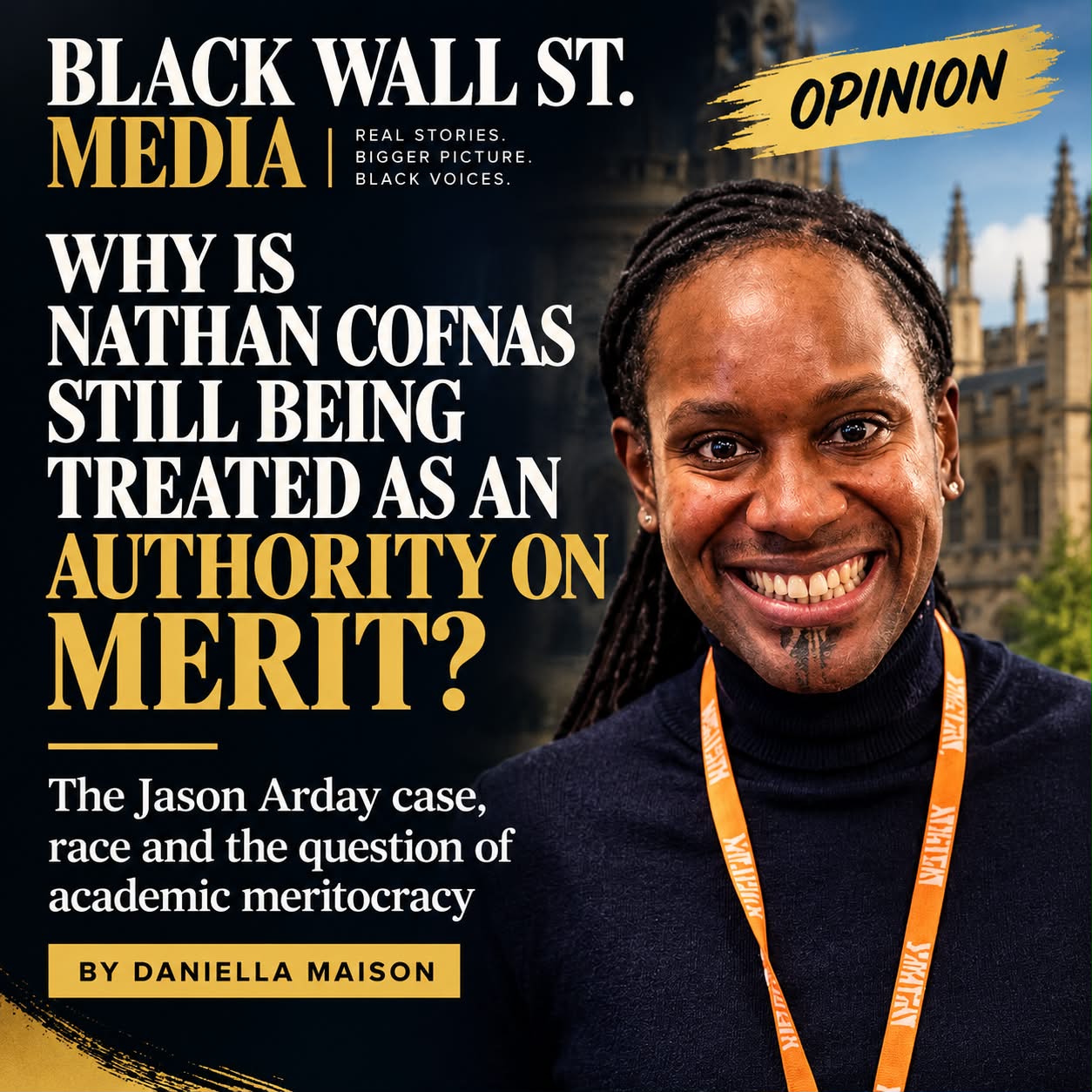
 What does it mean to belong when your heart, memories and identity are connected to more than one place? In Being in One Place, Thinking About Another, Grace Marie Walker-John reflects on diaspora, cultural identity and the psychological meaning of home, drawing inspiration from Hurvin Anderson’s exhibition at Tate Britain. She explores the pressures Black people can face to make themselves smaller to fit in, and why belonging should never require us to shrink who we are. Read this thoughtful and deeply personal reflection on memory, identity and the freedom to belong on our own terms.
- Why is Nathan Cofnas still being treated as an authority on merit?
 Why is Nathan Cofnas still being treated as an authority on merit? In this powerful opinion piece, Daniella Maison examines the controversy surrounding Professor Jason Arday, the allegations that were not substantiated, and the wider questions of race, racism and meritocracy in British academia. Read the full article and join the conversation.
- Why Did Britain Need to See Jane, Christina, and Rebecca as Little Girls?
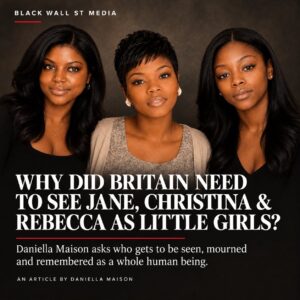 Why did Britain need to see Jane, Christina and Rebecca as little girls to recognise their humanity? In this powerful and thought-provoking article, Daniella Maison challenges us to confront how race, media representation and perceptions of Black womanhood shape whose pain we recognise and whose vulnerability we acknowledge. Their childhood photographs may move us, but they should never have been necessary for us to see their humanity. Read Daniella Maison’s compelling article and join the conversation. Why should Black women have to be seen as children to receive the tenderness and compassion they deserve?
- The Jamaican Who Stood Beside Kenyatta
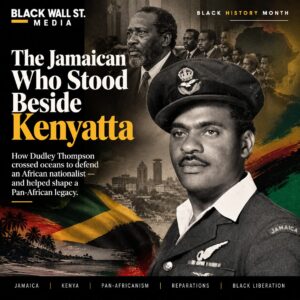 How did a boy from Kingston, Jamaica, become one of Britain’s most influential thinkers on race, culture and identity? This Black History Month, discover the story of Stuart Hall, the man who challenged Britain to question its history, its identity and who gets to define what it means to be British. Read his remarkable story and discover why his legacy still matters today.
- Professor Folarin Shyllon Reclaiming Africa’s History
 Black History Month: Professor Folarin Shyllon — Reclaiming Africa’s History From uncovering the forgotten history of Black people in Britain to championing the return of Africa’s looted cultural treasures, Professor Folarin Shyllon dedicated his life to truth, justice and reclaiming heritage. Discover the remarkable legacy of a pioneering Nigerian legal scholar who challenged historical erasure and championed Africa’s right to its own history. Because reclaiming our history is reclaiming our power. Read the full article with Black Wall St. Media. Black history is world history.




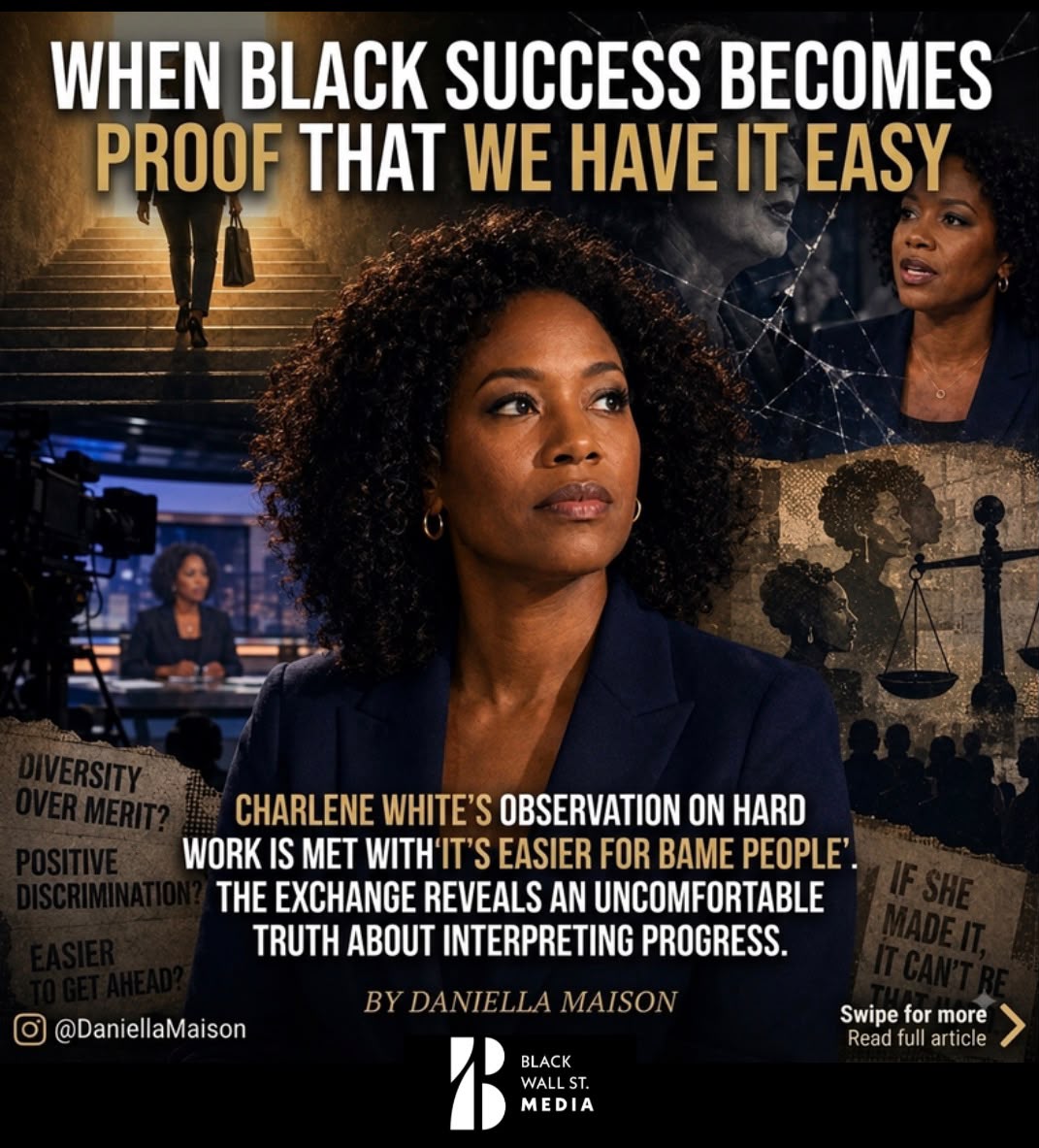
When Black Success Becomes Proof That We Have It Easy
Read More
Hair Freedom EXPO 2026
Read More
100 Black Women Campaign
Read More
Black Parenting: Discipline as Protection
Read More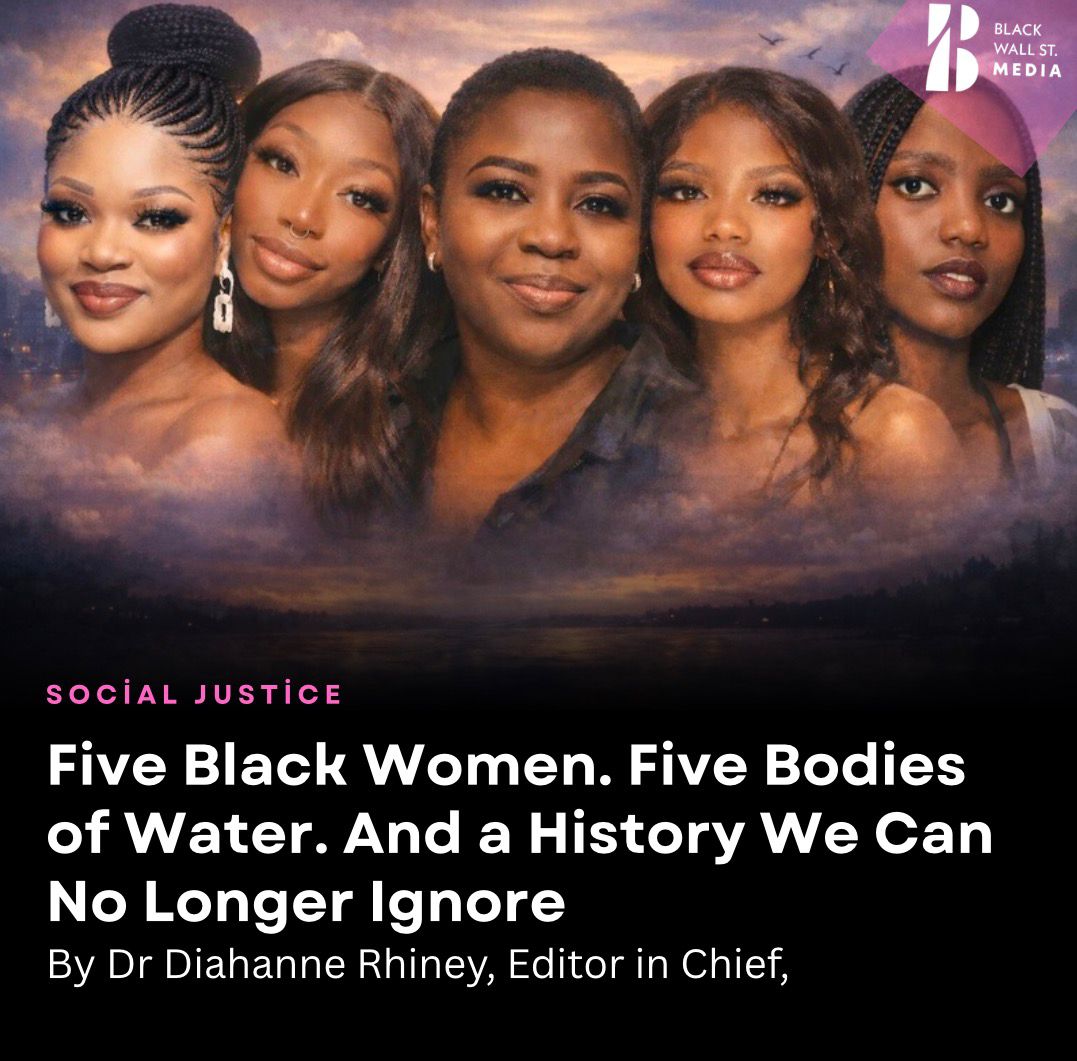
Five Black Women. Five Bodies of Water. And a History We Can No Longer Ignore
Read More
International Women’s Day: The Diaspora Women Who Carry the World on Their Shoulders
Read More
When Inclusion and Impact Collide at the BAFTAs
Read More
When Oversight Falls Silent
Read More
Ras Judah: The Elder Who Stood So We Could Stand
Read More