
Opinion / Social Commentary
Who Gets to Belong? From Minneapolis to Wolverhampton, the Cost of Deciding Who Is ‘From Here’
“Who gets to belong is rarely a neutral question. It is shaped by power, enforced by institutions, and tested most sharply when ordinary people refuse to accept that some lives are worth less than others. From immigration raids to police encounters, the boundary between “us” and “them” is drawn and redrawn, often with devastating consequences.
Daniella MaisonEditor of Social Cause Issues
In January, in Minneapolis, that boundary cost Renée Nicole Good her life. In 1987, in Wolverhampton, it cost Clinton McCurbin his. Their stories unfold in different countries, under different authorities, yet they are bound by the same logic: that belonging can be conditional, policed, and withdrawn.
This article traces how that logic travels—from the United States to Britain, from migrants to citizens, from symbols of national pride to acts of state violence—and asks what it reveals about who is allowed to be “from here,” and at what cost.”
We design A Perfect Fit for Black Women
We’re breaking barriers of one-size-fits-all culture of mainstream fashion to a more customised fit for you.
Contemporary African design
54kibo brings you exclusive luxury African decor for the home, office and other lifestyle spaces.
WHERE HERITAGE HITS HOME
The Cornrow is a homeware curation dedicated to celebrating a modern Black aesthetic.
On a January morning in Minneapolis, a woman stood up for her neighbours.
Renée Nicole Good had already dropped her child at school when she noticed Immigration and Customs Enforcement officers operating in her neighbourhood.
Families were anxious. Children were present. So she did what many people instinctively do when something feels wrong: she stayed close, she watched, she tried to protect the people around her.
Her neighbours were ethnic minorities. Many were immigrants. Some were simply perceived to be. Renée was white, a U.S. citizen, a mother of three, and yet she was killed by an ICE officer while attempting to leave the scene.
Her wife would later say, plainly: “We had whistles. They had guns.” That detail matters. Because Renée did not die because she crossed a border. She died because she crossed a line that power does not like to be crossed: the line where ordinary people refuse to accept that some lives are more disposable than others.
Her death exposed something brutal and often unspoken: the mentality that decides who belongs does not stop with migrants. It never has. Across the world, Black and brown people know this instinctively. We have always understood that when society becomes obsessed with “sending people back where they came from,” the definition of where you came from is both elastic and dangerous. It stretches. It bends and shifts. It eventually lands on people who were born here, raised here, shaped here. It lands on people who are from here. In Britain, this is not theoretical.
Generations of diaspora have been told to “go home” in the very streets where they learned to ride bikes, went to school, paid taxes, buried grandparents.
The Windrush scandal made explicit what many already knew: belonging, when issued and policed by the state, is conditional. And it is enforced. Sometimes quietly, sometimes violently, by institutions that claim neutrality while disproportionately harming certain communities. That is why the story of Renée Good does not belong to America alone. It sits alongside other names, other places, other moments when authority met ordinary life with force instead of care.
It echoes in Brazil’s favelas, where police killings are routine and racialised. It echoes in France’s banlieues, where young Black and Arab men are stopped, searched, and sometimes killed for existing in public space.
It echoes in Nigeria during End SARS, in Australia with Aboriginal deaths in custody, and in Britain, where the name Clinton McCurbin still demands to be spoken aloud.
Nearly four decades ago, McCurbin, a young Black British man, died after being restrained by police inside a Wolverhampton department store. His death shocked the community. There was grief. There were questions. There were protests. There were promises. And then there was silence.
Today, campaigners are calling for a blue plaque to mark his life and death. Not as provocation. Not as protest theatre. But as recognition. A blue plaque says something deceptively simple: this person lived here. It fixes memory into place. It refuses erasure. Erasure is often the final act of brutality.
What connects McCurbin and Good is not sameness of circumstance, but sameness of outcome: lives lost at the intersection of authority, suspicion, and a refusal to see people as fully human.
In both cases, communities were left carrying grief, and the unsettling awareness that systems designed to “maintain order” can, when unchecked, destroy the very fabric of communal trust.
In the UK, initiatives like Operation Raise the Flag, which placed national flags across towns under the language of ‘pride’ revealed how symbolism can unsettle as much as it reassures.
For many Black and mixed-race Britons, those flags did not feel like pride. They felt like a warning. A reminder that national identity is often imagined narrowly, and enforced socially long before it is enforced legally. Flags, borders, raids, stop-and-search, they all communicate the same question, over and over again: Are you really supposed to be here? For the global diaspora, this question is exhausting because it never goes away.
It follows people across generations, passports, accents, and achievements. You can be born somewhere and still be treated as provisional. You can defend your neighbours and still be met with lethal force.
You can live a whole life and still be denied a plaque that says you mattered. This is why remembrance matters. This is why blue plaques matter. This is why stories like Clinton McCurbin’s must be told carefully, honestly, and without racial gatekeeping. For Black and brown communities across the world, communities long familiar with being told to move along, quieten down, go back, that worldview has never been abstract. It has always been personal.
The question now is whether we continue to accept it as inevitable, or whether we finally insist that home is not something granted by power, but something built, lived, and defended together.

- Alzheimer’s the Black doctor who helped decode the disease
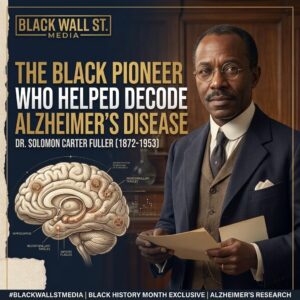 🧠✨ Celebrating an Unsung Hero! Dive into the captivating journey of Dr. Solomon Fuller, a pioneer in Alzheimer's research and a standout figure in Black history. From his roots in Liberia to groundbreaking discoveries, discover the legacy of a medical trailblazer who defied adversity. 🌟
 - The Voice of the Child, Young Person and; Service User
 Whose voices are we really hearing? And what happens when we truly listen? The 3rd DARDR/DVA & Criminal Justice Summit 2026 will bring together professionals, practitioners, community organisations, academics and people with lived experience to place children, young people and service users at the heart of the conversation. Under the theme “The Voice of the Child, Young Person & Service User,” this year’s Summit will explore domestic abuse, violence, safeguarding, exploitation, trauma and criminal justice — but most importantly, how listening can move beyond consultation and become meaningful action. 📅 Friday 27 November 2026 📍 Brent Civic Centre, Wembley 💻 Hybrid Event | CPD Accredited Read more about the Summit, the conversations it will explore and how to book your place.
 - The Crown in the Ledger: What Finding Britain’s Slave Traders Asked Us to Face
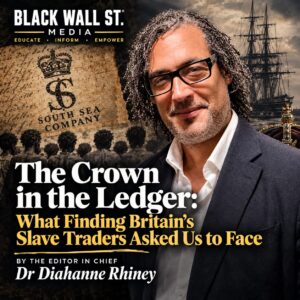 What happens when Britain’s history is no longer told through monuments, wealth and institutions, but through the ledger behind them? Finding Britain’s Slave Traders with David Olusoga brings names, companies, royal connections and fortunes into focus, forcing us to confront how deeply the transatlantic slave trade was embedded in British society. In “The Crown in the Ledger,” we explore what these records reveal about wealth, power, responsibility and the legacy that remains today. Read the full article and ask yourself: who owns what, who benefited, and what does honest accounting look like?
 - Is ‘Othello’ relevant today?
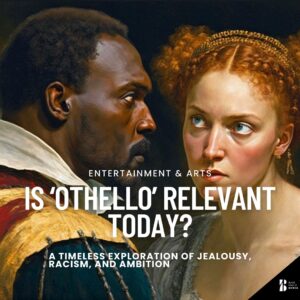 Othello: A Timeless Exploration of Jealousy, Racism, and Ambition
 - A life lived beyond the limits of representation
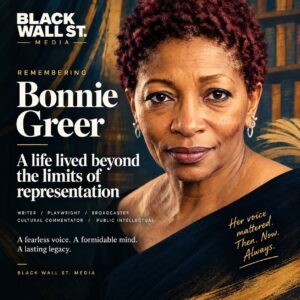 Bonnie Greer was never simply a writer, playwright or broadcaster. She was a cultural force who refused to be confined by the expectations placed on Black women in public life. From Chicago to Britain, from theatre and literature to television and institutional leadership, she built a life defined by intellect, independence and an unapologetic right to occupy space. As Britain remembers her following her death at 77, this article looks beyond the achievements and asks what her life represented: the power of cultural authority, the importance of institutional access, and the freedom to be fully human rather than simply inspirational.





100 Black Women Campaign
Read More
Black Parenting: Discipline as Protection
Read More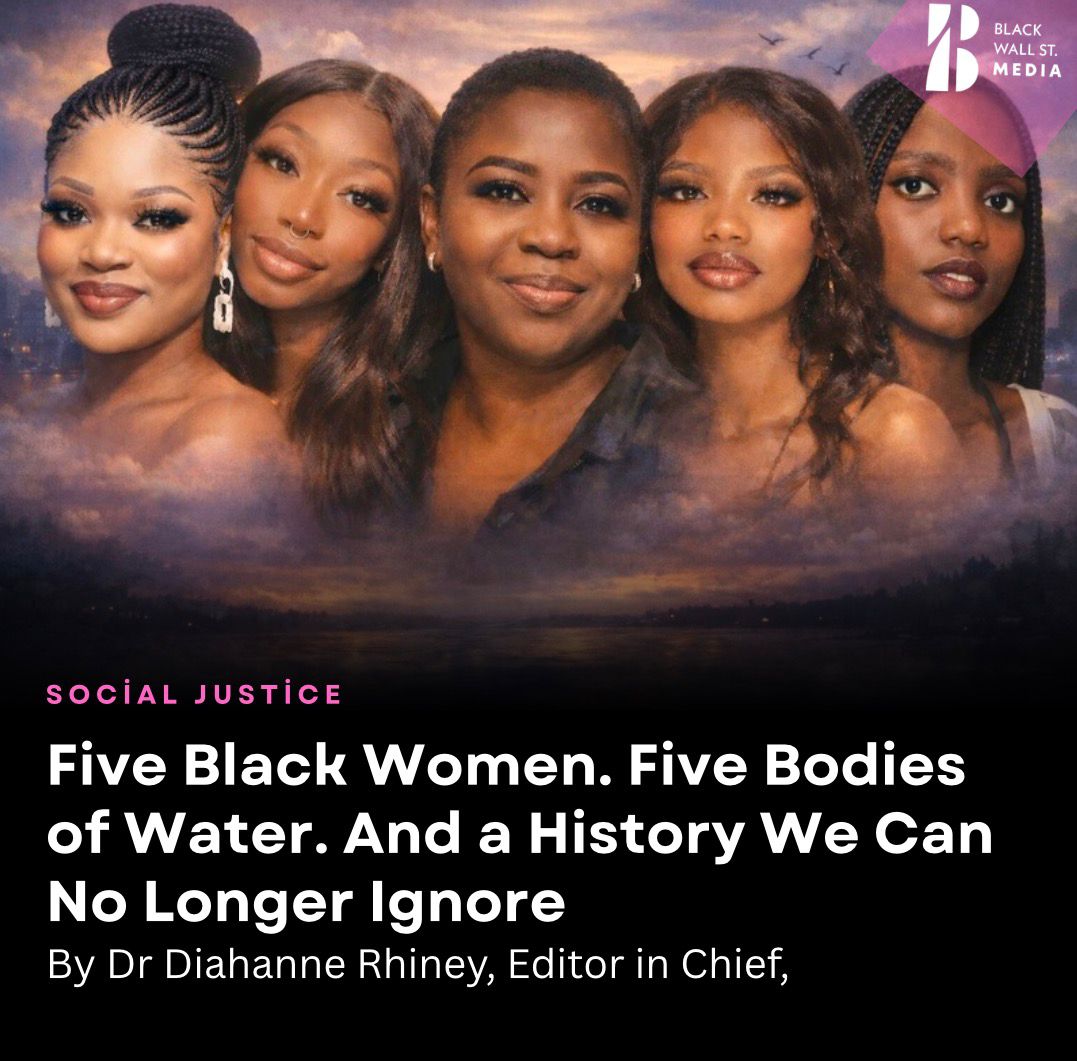
Five Black Women. Five Bodies of Water. And a History We Can No Longer Ignore
Read More
International Women’s Day: The Diaspora Women Who Carry the World on Their Shoulders
Read More
When Inclusion and Impact Collide at the BAFTAs
Read More
When Oversight Falls Silent
Read More
Ras Judah: The Elder Who Stood So We Could Stand
Read More
A Giant Has Fallen. What Jesse Jackson Meant to the Diaspora
Read More
Landmark Ruling
Read More