On 1 February 2015, the British state redeemed a government stock whose history reaches back to the £20 million it borrowed in 1833 to compensate enslavers.
The people who had been enslaved received nothing. That contrast is not a metaphor, nor a disputed reading of a complex past. It is the starting point for any serious conversation about reparations.
The date matters because “a long time ago” is often used to make slavery feel safely distant, sealed away from the present. But the debt connected to compensation for slave owners was extinguished within living memory. Britain’s Treasury has confirmed that the relevant government stock was finally redeemed in 2015. The original borrowing had been folded into government finance over generations, and the Treasury has said it cannot identify what portion of the stock redeemed that day represented the 1833 loan. So we should be exact: the original £20 million did not sit untouched in a separate account for 182 years. Its financing became part of the state’s continuing debt. In 2015, the successor stock was redeemed.
Precision does not weaken the point. It makes it harder to dismiss.
The Slavery Abolition Act of 1833 ended slavery across most of the British Empire, though not everywhere under British rule. Emancipation was not immediate or complete. In many colonies, formerly enslaved people were forced into an apprenticeship system that kept them working for former enslavers, often without wages, for years.
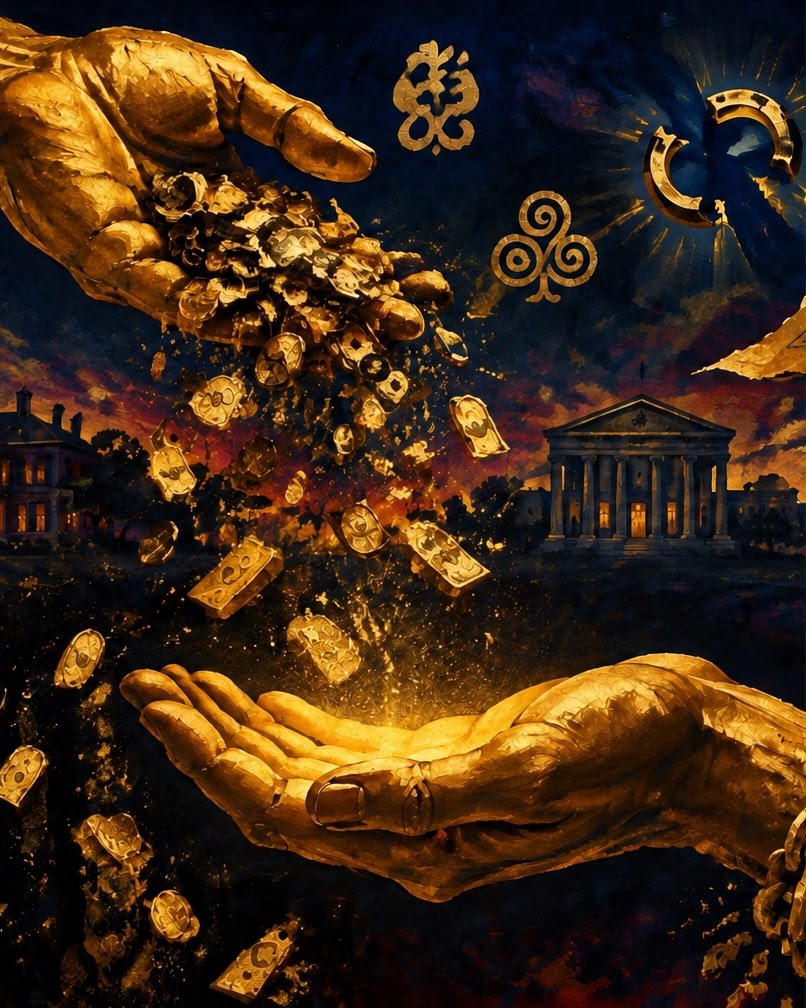
Meanwhile, the government agreed to pay £20 million in compensation to slave owners for the loss of what the law had treated as property. The sum amounted to roughly 40 per cent of government expenditure in 1833.
The enslaved were not compensated for the loss of their freedom. They were not paid for generations of coerced labour. They received no settlement for families broken apart, violence inflicted, children sold, knowledge suppressed or lives organised around another person’s profit. The state counted the enslaver’s loss. It did not count theirs.
That is the moral inversion at the heart of this history. Abolition recognised that slavery had to end, but the financial settlement made good the losses of the people who had benefited from it.
The people who had endured it were left to begin their lives after emancipation with no compensation and no equal access to land, wealth or power. The wrong was acknowledged in law. The consequences were not repaired.
I want to be careful about what that means. This is not a demand that every person in Britain today write a personal cheque, or an accusation that people are individually guilty for the actions of ancestors they never knew.
The argument is about the British state and institutions whose histories did not vanish when slavery was abolished. The government borrowed the money. The Treasury administered the debt. The state made the law that compensated enslavers. The state’s financial obligations continued through changes of government, changes of monarch and generations of taxpayers.
That includes people whose families came to Britain from the Caribbean in the Windrush era and afterwards. They did not decide to borrow money for slave owners. They were not responsible for the policy. But, as citizens and taxpayers, they were part of a society whose public finances continued to service state debt connected to that settlement.
We cannot trace each person’s tax contribution to a specific bond. Nor should we pretend that the debt’s long passage through government finance is simpler than it was. We can say what the public record supports: the state borrowed to compensate enslavers, the obligation persisted through successor government stock, and that stock was redeemed in 2015. The formerly enslaved and their descendants received no equivalent settlement.
The University College London Legacies of British Slave Ownership project has helped make the beneficiaries of compensation more visible. Drawing on records including those of the Slave Compensation Commission, it documents around 47,000 claimants and the people enslaved in connection with those claims. Its research traces how compensation and the wealth built through slavery became woven into British life: into estates and country houses, commercial ventures, industry, art collections, universities and family fortunes.
Not every thread of that history can be reduced to a single payment or a neat line of descent. But the research makes one thing unmistakable. The wealth generated by slavery did not disappear when slavery ended. It moved, changed form and entered institutions and families that continued to shape Britain.
The old defence that “my ancestors did not own slaves” does not answer the question. A reparations case against the state is not a family accusation. It is a claim about public decisions, institutions and benefits that crossed generations.
Most people did not personally own plantations. That does not erase the fact that Britain’s government legislated for slavery, defended its commercial interests, borrowed public money to compensate enslavers and maintained the resulting financial obligation long after the original beneficiaries had died.
“It was a long time ago” is no more decisive. The 2015 redemption is recent enough to be remembered by many people alive today. More importantly, the wealth and harm produced by slavery did not expire at emancipation.
Wealth can be inherited, invested and institutionalised. Disadvantage can also be transmitted, through unequal access to land, education, capital, health and political influence. History is not made current merely because someone remembers it. It is current when its structures and consequences remain active.
Then there is the question, “Where does it end?” It is a fair question if it is asked in the spirit of finding a just and workable settlement. It is less persuasive when it is used to end the conversation before it begins. The answer is not an endless claim against every person alive.
It is a defined process grounded in evidence, responsibility and negotiation. It asks which institutions benefited, what harms can be documented, what needs remain, and which measures could begin to address them. The question of scope is a reason to do the work carefully, not a reason to refuse the work altogether.
Nor does the fact that some African states and traders participated in the capture and sale of Africans resolve Britain’s responsibility.
The history of the trade involved multiple actors, including African political authorities and merchants. That truth deserves serious study. It does not make the British state’s actions disappear.
Britain became one of the central powers in the transatlantic slave trade, built wealth through it, defended it and then compensated enslavers when slavery was abolished. Responsibility is not a prize that can be awarded to only one party. One actor’s wrongdoing does not cancel another’s.
Some say the case is too complicated to price. In one sense, they are right. There is no single figure that can fully express the value of a life stolen, a family torn apart or a community denied the chance to build wealth over generations.
But refusing to calculate anything because we cannot calculate everything is not neutral. The 1833 government did not refuse to put a price on the matter. It calculated the loss to enslavers and paid them. The difficulty of measuring harm cannot be used to preserve a settlement in which only one side’s loss was ever counted.
Reparations, properly understood, need not mean one enormous cash transfer made without agreement or purpose.
Cash compensation is one possible form, and it should not be excluded merely because it is politically uncomfortable. But reparative justice can also involve the reduction or cancellation of debt, educational investment, healthcare partnerships, cultural restitution, technology transfer, institutional support and migration policies that recognise historic connection.
These are not interchangeable gestures. They are different measures that can be negotiated against specific needs and responsibilities.
Caribbean governments have not arrived at this discussion without a framework. CARICOM’s Ten Point Plan for Reparatory Justice, endorsed by regional leaders in 2014, sets out a programme that includes a formal apology, repatriation for those who seek it, support for Indigenous communities, cultural institutions, public health, the eradication of illiteracy, African knowledge programmes, psychological rehabilitation, technology transfer and debt cancellation.
It also calls for monetary compensation. The plan is not a final invoice with a universally agreed sum. It is a serious political framework for addressing the legacy of slavery and colonial rule, and it deserves to be engaged with as such.
Debt cancellation is particularly important. Many Caribbean nations face debt burdens that limit what they can spend on health, education, climate resilience and infrastructure. CARICOM’s case is that colonial extraction helped create the unequal conditions and dependencies in which those burdens developed. Debt relief cannot be presented as a substitute for reparations, and Caribbean leaders have said as much. Nor should ordinary development aid be relabelled as reparative justice.
Aid is often discretionary, shaped by the priorities of the donor and subject to withdrawal. Reparations start from a different premise: that a wrong created obligations, and that those obligations should be discussed with the people and governments whose histories are at stake.
An apology matters for the same reason. It does not rebuild a hospital or cancel a debt. But a formal acknowledgement by the state would name the wrong without qualification and help establish a basis for what follows.
Expressions of sorrow and regret are meaningful, but they are not the same as a formal state apology. The Palace has made clear that the King’s role is to convene and inspire, not to make government policy. Any decision about an official apology rests with ministers.
The distinction matters. The question should be directed to the government that speaks and acts for the state, not treated as a personal decision for the monarch.
People sometimes say that Britain has already apologised, that various Prime Ministers have said the words, so the matter is closed. The record deserves a careful reading.
In 2006, Tony Blair spoke of Britain’s deep sorrow for its role in the slave trade, and the following year he went further, saying he was sorry and repeating that he had said so. Those words mattered. But no Prime Minister has ever issued the formal, unqualified state apology that the Caribbean nations have asked for, one delivered on behalf of the state, through its institutions, with the weight of government behind it. A statement of sorrow in a newspaper article and a formal apology of state are different instruments.
One expresses the conscience of the man speaking. The other binds the nation that speaks through him. And even where words have been said, no government has followed them with a single element of the settlement those words would logically require. An apology that changes nothing is a sentence, not an event.
Then there is the argument people reach for last, when every other defence has failed: that Britain abolished slavery, and that we should therefore be grateful rather than asking for anything.
It is worth stating plainly how much of the story that leaves out. Yes, Parliament passed the Slavery Abolition Act, and yes, British abolitionists fought for decades and deserve their place in the history books. But Britain spent centuries building the largest slave trading operation the world had seen before deciding, when it had grown wealthy from it, to end it. And when it ended it, the state paid the perpetrators £20 million and asked nothing of the victims.
The enslaved did not abolish slavery. They resisted it, from the moment of capture to the moment of emancipation, in revolts, in flight, in refusal, and their resistance is the reason abolition had to come. Acknowledging that Britain ended the trade it had done so much to build is not a moral achievement that cancels the debt. It is the minimum a society owes itself.
A person who sets fire to a house and later helps put it out is not owed thanks by the family who lost their home. And a nation that compensates the arsonist while the family stands in the ashes has not closed the account. Abolition was the right thing done in the most expensive way possible for the wrong people, and two hundred years later the receipts are still on file.
Gratitude for abolition and a claim for reparations are not competing ideas. They sit comfortably together, because one was about ending a wrong and the other is about repairing it.
In 2026, Caribbean nations have continued to press for dialogue on reparatory justice, while the UK government has rejected reparations. That is the political reality.
The existence of dialogue, or the possibility of further discussions, is not itself a settlement. The Prime Minister’s position has been that the UK will not make reparations. Caribbean leaders have continued to make clear that debt relief or aid alone would not answer the historical claim.
If dialogue is to mean anything, it cannot be a polite way to listen and then close the door. It must be an honest process in which the substance of the CARICOM plan, the question of responsibility and the forms of redress are considered.
What might this look like in practice? It could begin with a formal state apology, followed by a jointly agreed programme with Caribbean governments and affected communities.
It could include investment in universities and public institutions, partnerships in healthcare and research, support for cultural institutions and the return of artefacts taken or retained under unequal colonial conditions.
It could involve debt cancellation and fairer migration pathways. It could support infrastructure and climate resilience, while ensuring that local institutions and communities shape priorities rather than having them imposed from abroad.
None of those proposals should be treated as a box ticking exercise. A programme designed without the people it is meant to serve risks repeating the very imbalance it claims to address.
Reparations must be negotiated, transparent and accountable. The measures should be assessed not by how generous they sound in a press release, but by whether they address identified harms, strengthen the capacity of communities and institutions, and create lasting change.
There is also a difficult distinction between charity and justice. Charity is given at the discretion of the giver. It may be generous, but it does not necessarily acknowledge responsibility.
A reparative settlement is different. It begins with the recognition that a state and its institutions helped create a wrong, and that the consequences did not end when the law changed. It asks for a response shaped by evidence and negotiation, not gratitude.
Britain has often presented abolition as the end of the story, as if the act of ending slavery settled the moral account. It did not. Ending a wrong is necessary. It is not the same as repairing it. The enslaved were made to live with the losses while enslavers received compensation. That is not a marginal detail in the history of abolition. It is the financial structure through which Britain chose to leave slavery.
The sum of £20 million is not an invitation to take a modern conversion and declare that the answer is simply to pay that amount again to a different recipient. The history is more complex, the harms broader and the question of an appropriate settlement one for serious negotiation. But neither should complexity be permitted to obscure the plain fact: the British state found a way to compensate those who had profited from slavery. It did not find a way to compensate the people who had been enslaved.
The debt’s successor stock was redeemed in 2015. That does not mean every citizen today is personally liable for the original borrowing. It does mean that the state’s financial continuity is not an abstraction invented by campaigners. Governments inherit obligations. Public institutions carry histories forward.
The descendants of enslaved people are entitled to ask why that continuity was honoured when the beneficiaries were enslavers, yet is treated as irrelevant when the victims and their descendants seek justice.
Reparations will not restore the lives taken or return the years stolen. Nothing can do that. But justice is not measured only by whether the past can be undone. It is also measured by whether a society is willing to tell the truth about what it did, recognise who benefited, listen to those who live with the consequences and commit resources to changing the present.
The invoice was paid. It was paid by the state, over generations, to the wrong side. What remains unsettled is not a figure in an old ledger alone. It is the question of whether Britain can recognise that a settlement for enslavers was never a settlement for the enslaved.
Reparations are not a demand for charity, nor an attempt to make history disappear. They are the beginning of an honest account, and the pursuit of a just settlement for a debt Britain has never paid to the people who were owed it.
- Cuito Cuanavale: From liberation struggles to Caribbean soft power
 What can a historic battle in Angola teach us about the future of Africa and the Caribbean? In this thought-provoking article, John Stevenson explores how shared struggles, cultural connections and Caribbean solidarity helped shape African liberation, and why that shared history could hold the key to stronger partnerships, greater influence and new opportunities across the Atlantic.
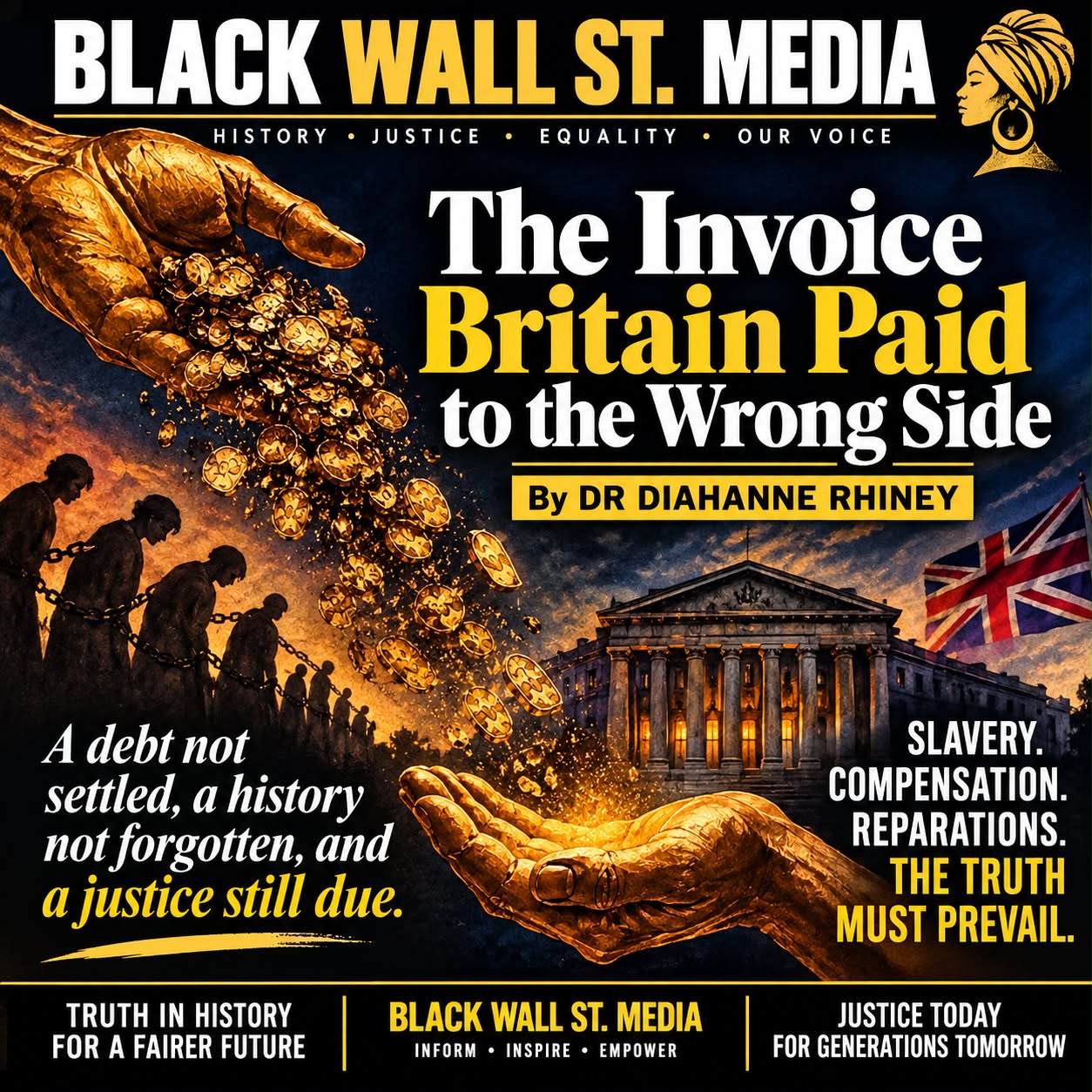
- The Invoice Britain Paid to the Wrong Side
 Britain paid £20 million to compensate slave owners when slavery was abolished. But what did the formerly enslaved receive? Nothing. In this powerful and thought-provoking article, Dr Diahanne Rhiney challenges Britain to confront an uncomfortable truth: the financial debt to enslavers was honoured, but the debt of justice to the enslaved remains unpaid. Who benefited? Who was forgotten? And why does this history still matter today? Read The Invoice Britain Paid to the Wrong Side.
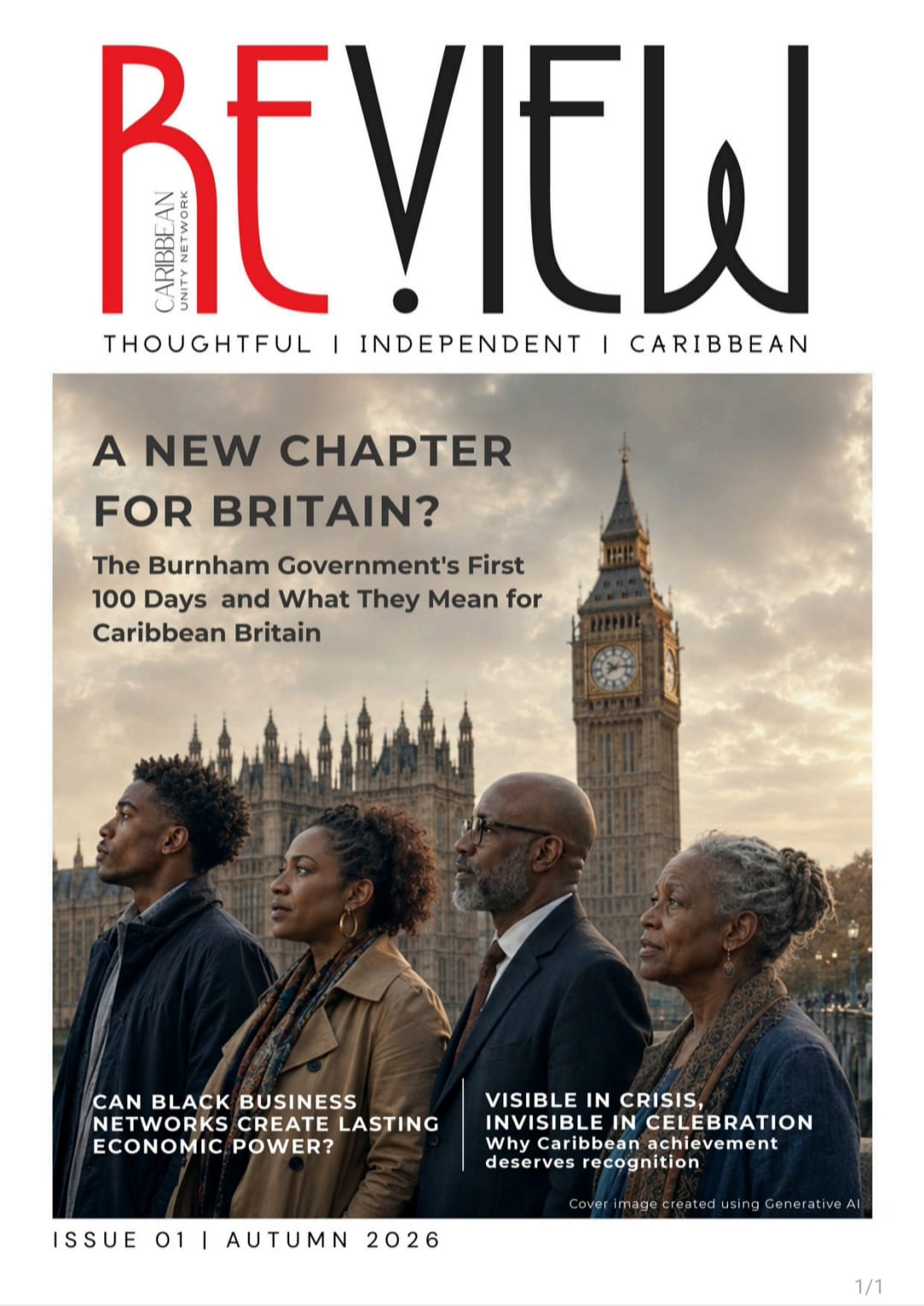
- Elizabeth Flanders Launches Caribbean Unity Network
 Elizabeth Flanders launches the Caribbean Unity Network, a new initiative bringing together publishing, professional services and recognition to strengthen connections between Caribbean communities and the global diaspora. With a vision of “unity without uniformity”, the Network aims to inform, celebrate and advise, while championing Caribbean achievement, enterprise and identity. Read about the launch, explore the inaugural issue of REVIEW and discover how to nominate outstanding individuals for the Caribbean Honour Awards 2027.
- GRENADA GOES TO THE POLLS: A FAMILY STILL WAITING FOR ANSWERS
 Ten months after Andrew Donald Frederick was found dead in Grenada, his family is still searching for answers. With conflicting conclusions surrounding his death, troubling questions raised by a second post-mortem and concerns about international cooperation, why are the questions still unanswered? Black Wall St. Media investigates the circumstances and calls on the Grenadian authorities to address the family's concerns. Justice cannot be buried in silence. Read our full report.
- BRITISH JAMAICAN CHAMBER OF COMMERCE APPOINTS INAUGURAL LEADERSHIP TEAM TO STRENGTHEN UK–JAMAICA TRADE AND INVESTMENT
 Britain and Jamaica share a rich history, but what does the future of their economic relationship look like? The newly established British Jamaican Chamber of Commerce is looking to turn shared heritage into meaningful trade, investment and enterprise. Meet its inaugural leaders, Claudine Reid MBE and Mahari Hay, and discover the ambition behind BritJACC. Read the full story.





When Your Achievements Are Treated as a Question
Read More
Editor’s Letter May 2026
Read More
Editor’s Letter April 2026
Read More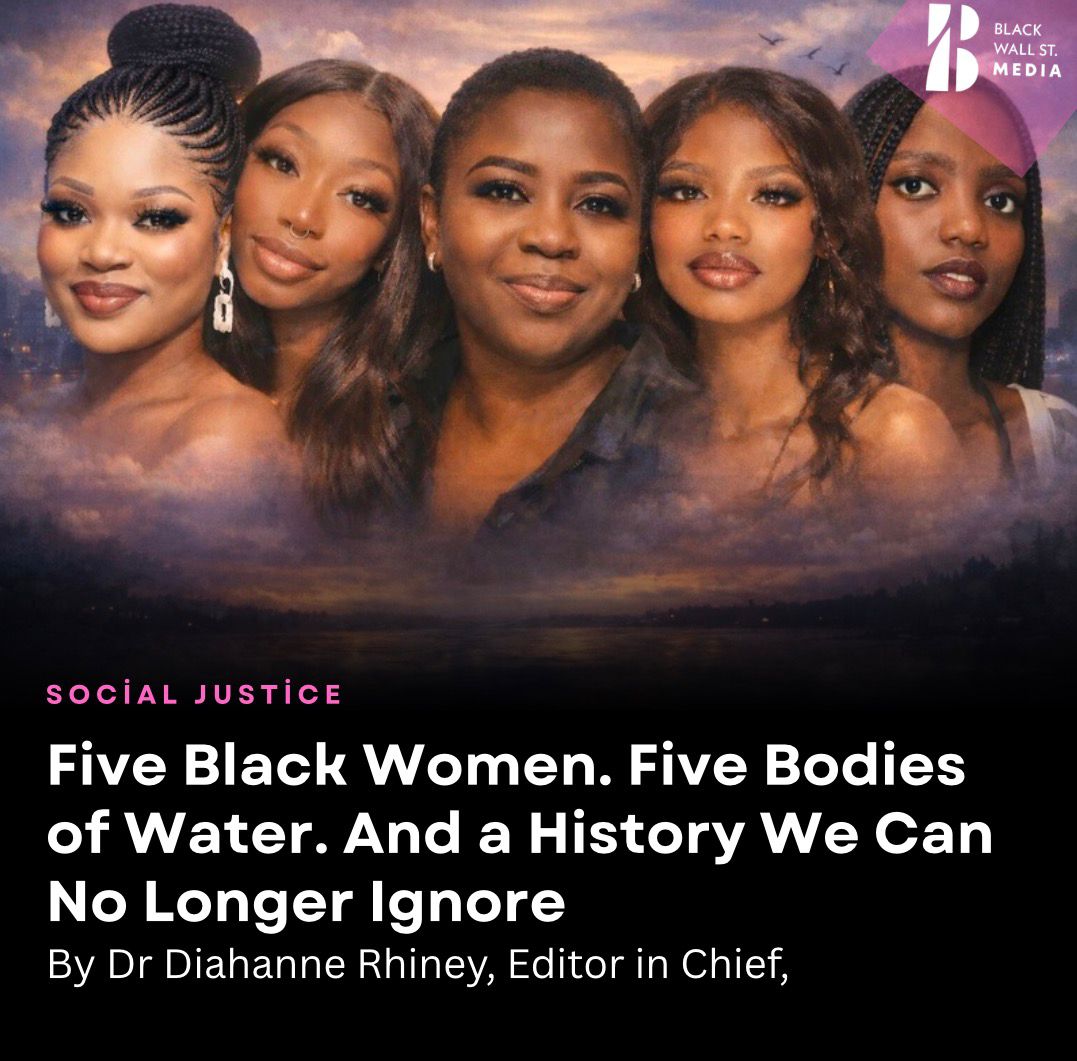
Five Black Women. Five Bodies of Water. And a History We Can No Longer Ignore
Read More
Mother’s Day and the Quiet Legacy of Our Mothers
Read More
Editor’s Letter March 2026
Read More
Locked Out of the Purse Strings
Read More
Editors Letter – January 2026
Read More
Editors Letter – October 2025
Read More