Culture & Heritage
Radio Bimshire - Bajan to the Bone
“As Barbados celebrates 60 years of independence, a quiet cultural revolution is unfolding—not in parliament, but in the voices of everyday Barbadians. Radio Bimshire, the National Library Service’s new digital archive, is preserving and sharing the island’s oral history, from elders’ memories to music, comedy, and Nation Language. Guided by veteran broadcaster Julius Gittens, the platform transforms scattered recordings into a living national soundscape, connecting generations at home and across the diaspora.”
John StevensonCultural Correspondent

As Barbados marks 60 years of Independence in 2026, and just a few years after becoming a Republic in 2021, a quiet cultural revolution is unfolding – not in the nation’s House of Assembly or it’s classrooms, but in the voices of ordinary Barbadians.
 Those voices, once scattered across memories, cassette tapes, dusty archival newsreels in radio and TV station libraries and fading recollections, now have a home: Radio Bimshire, the National Library Service’s bold new digital archive of Barbadian oral history.
The project is the brainchild of the Barbados National Library Service, led by Director Jennifer Yarde and supported by former Deputy Director Evonda Callender, whose early vision helped shape the initiative.
Their goal was deceptively simple: preserve the island’s spoken heritage with the same care that has long been given to its written record.
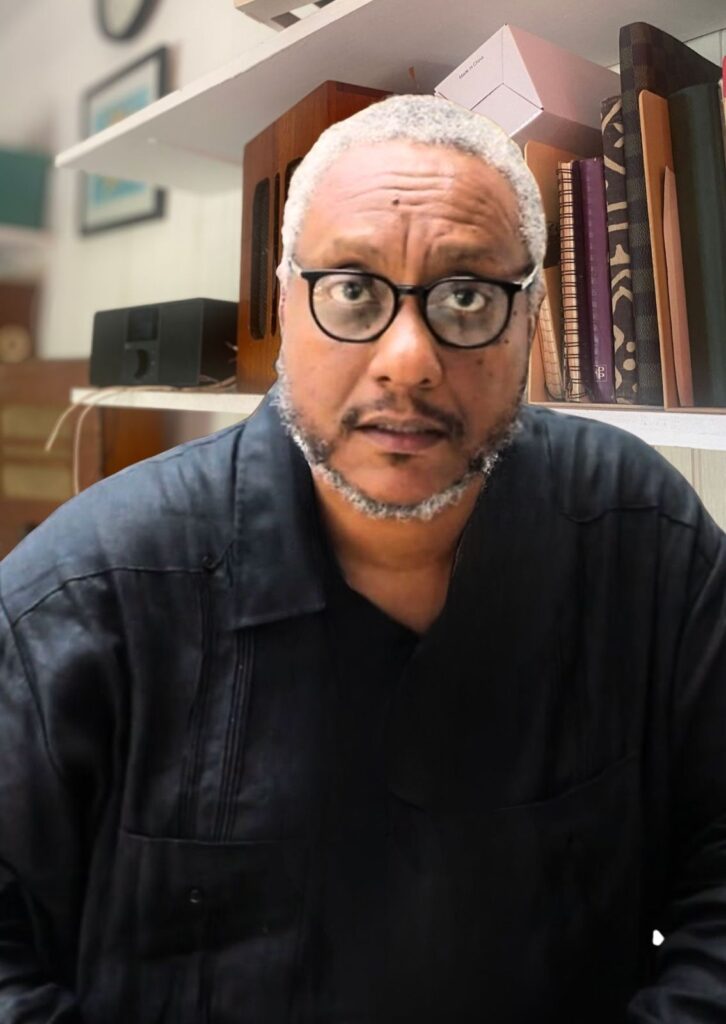
Julius Gittens
To bring that vision to life, and continue the Library’s oral history recording project, they turned to veteran Bajan broadcaster Julius Gittens, a former Caribbean Broadcasting Corporation (CBC) broadcast journalist and one of the region’s most respected broadcasters (television and radio) and media trainers.
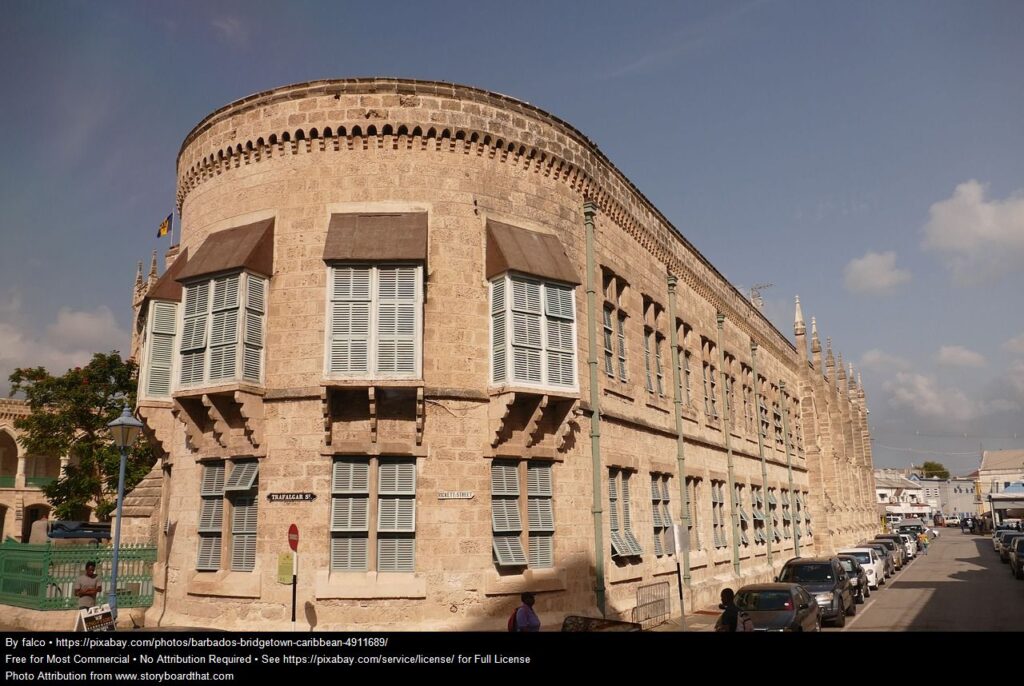
Gittens, who earned his MA in International Journalism from the prestigious City St Georges journalism school in London, immediately recognised the stakes.
Indeed, Gittens persuaded the National Library Service to go beyond recordings and make the spoken narratives accessible in streaming and podcast formats interspersed with Barbadian music. “When the Library approached me,” he recalls, “I realised this wasn’t just about teaching people to conduct interviews. It was about rescuing a national memory that was slipping through our fingers. Barbados has always been rich in voices. We just weren’t capturing them.”
What began as a training workshop quickly evolved into a national cultural undertaking.
A Digital Home for the Barbadian Voice
The National Library Service already held rare recordings including interviews about the 1937 riots, the Lancaster House constitutional talks, and early independence debates. But these treasures were largely inaccessible, locked away on ageing tapes and formats that few people could play.
Gittens saw an opportunity to merge archival preservation with modern digital tools. “Every book published in Barbados must be deposited in the Library,” he says. “Why not extend that to our voices, our music, our radio programmes, our stories? The spoken word is just as vital as the written word.”
From that idea came Radio Bimshire, launched last year as an online streaming and podcasting service dedicated to Barbadian oral culture.
Gittens prefers the concept of a ‘digital commons’ in describing the mission of Radio Bimshire. “It’s not about competing with commercial radio,” he explains. “It’s about creating a free space for our collective memory. A place where the voices of our grandparents sit alongside the voices of our children.”
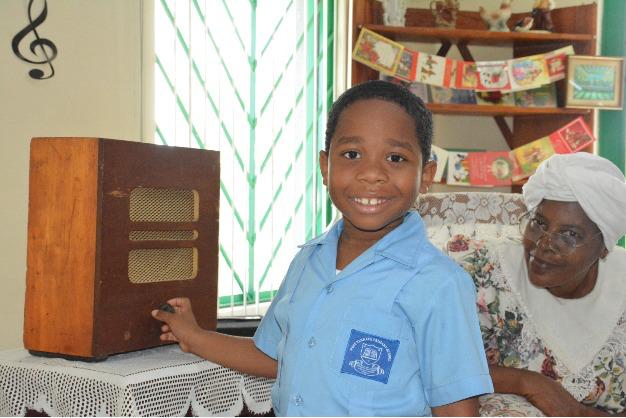
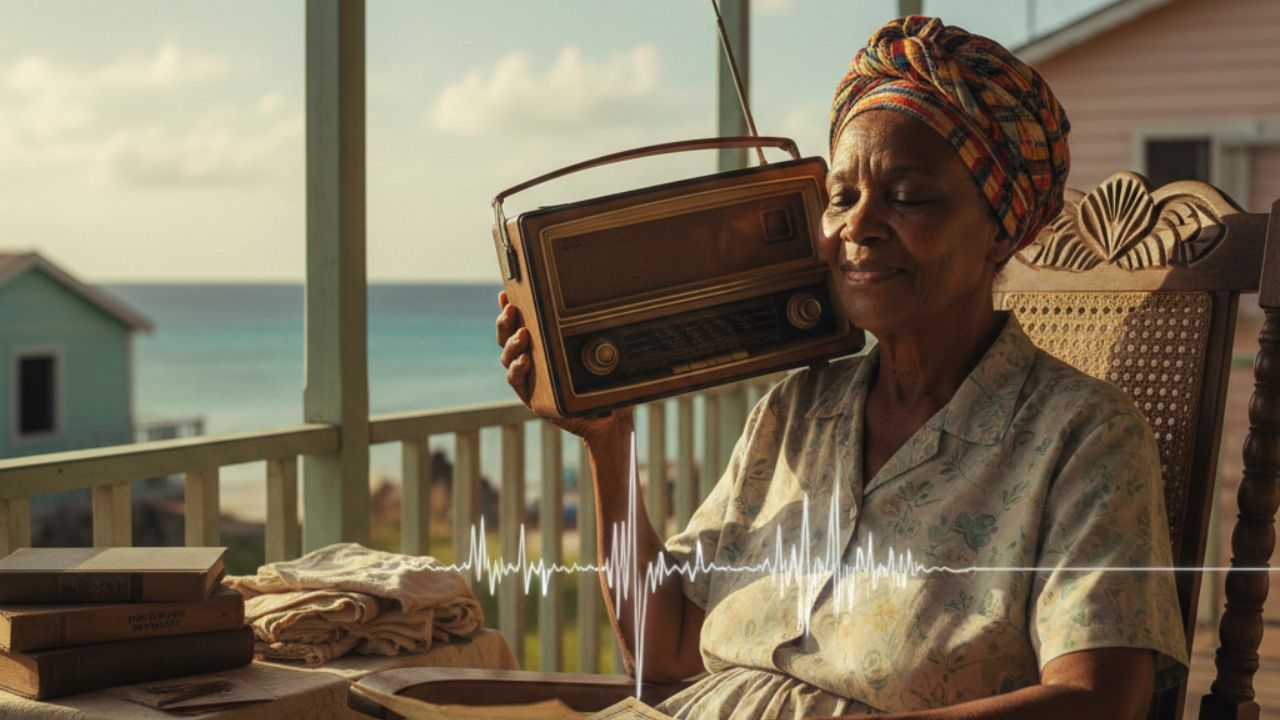
Old and new – West Terrace Primary School pupil Yuri Nicholls switches on Radio Bimshire at its inauguration on May 7th 2025, while “Granny”, Abigail Springer, looks on. The loudspeaker was a familiar sight in Barbadian homes during its era of Rediffusion cable radio, introduced in the early 1950s by the British in four Caribbean territories, Barbados, British Guiana (now Guyana), Trinidad, and Jamaica.
The platform blends newly recorded oral histories with archival material, music, comedy, speeches, and cultural commentary.
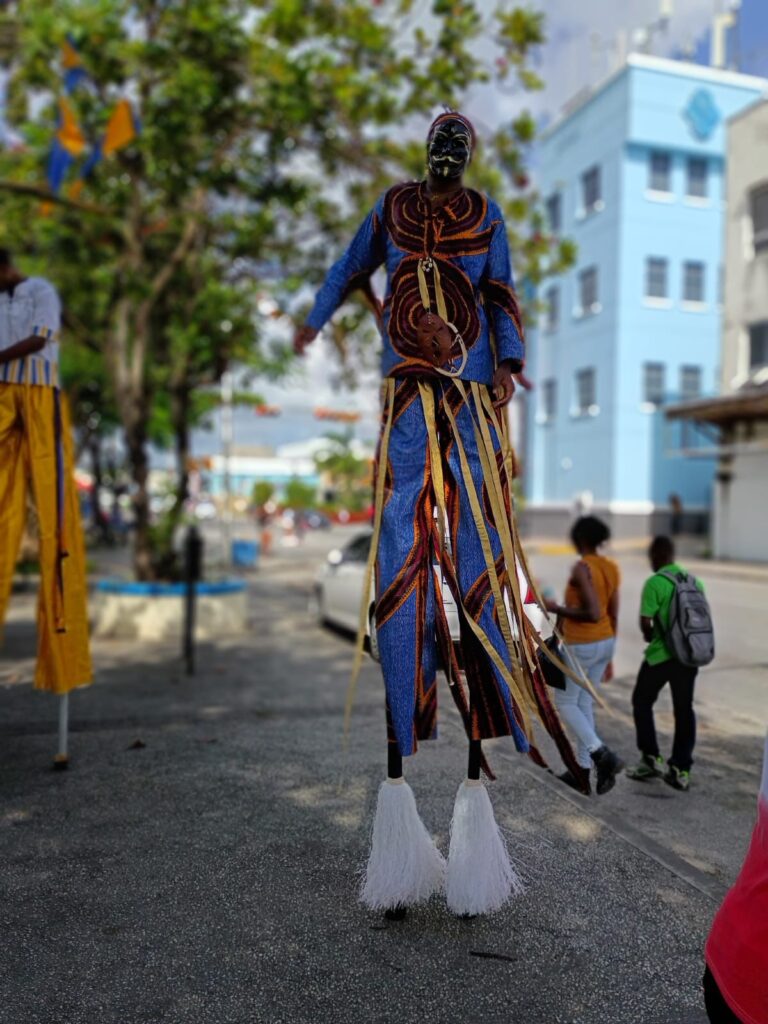
Barbadian stiltwalker Zuri Sehntwali photo courtesy Len Sehntwali
It is, in effect, a national soundscape that honours the voices shaping this unique Caribbean territory, ensuring that they remain accessible to future generations.
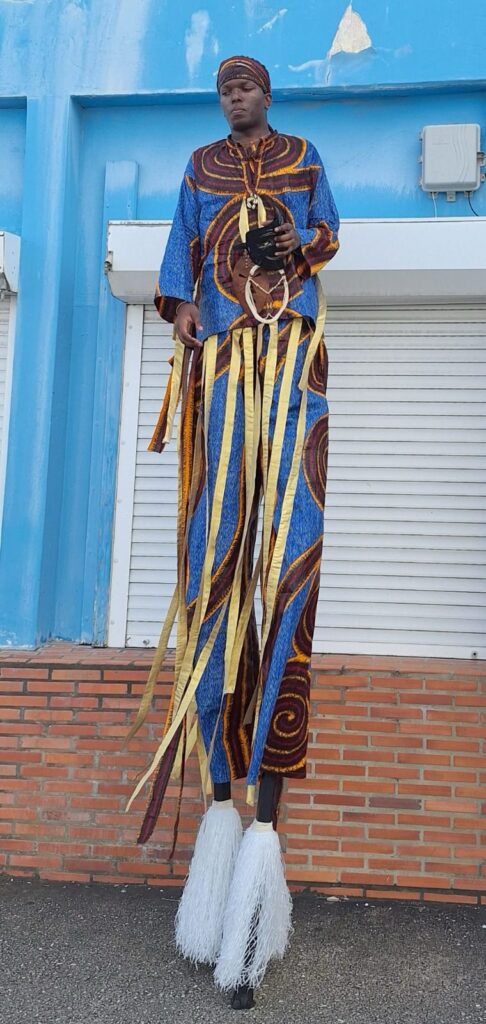
Barbadian stiltwalker Zuri Sehntwali photo courtesy Len Sehntwali
The Stories Behind the Stories
The project’s first major assignment was to interview Barbadians about “wash day.”
What emerged was a sweeping portrait of early 20thcentury life encompassing female labour, community rituals, and the transformative impact of pipe-borne water, introduced after the 1854 cholera epidemic.
“Wash day wasn’t just about clothes,” Gittens says. “It was about dignity, survival, and the ingenuity of women who held families together with almost nothing.”
From there, the team travelled across the island, recording scientists, pastors, fishermen, artisans, and elders whose memories stretch back to the 1940s and 50s. Some interviews proved especially poignant.
Gittens captured the final recorded conversation with historian Trevor Marshall just months before his passing. Soon after, Barbados lost two more giants of public history – Pedro Welch and Karl Watson. “We were racing against time,” Gittens says quietly.
“Every elder we lose is a library burning down. We managed to save some of those libraries.” But the project also confronts a broader cultural challenge: Barbados has not always valued its own material and oral heritage.
“We toss away the very things that tell us who we are,” Gittens says. “Fine furniture, family Bibles, Rediffusion sets, even the rocking chairs our grandmothers used. And once they’re gone, they’re gone. Radio Bimshire is our attempt to stop the bleeding.”
The 1950s: The Decade That Made Modern Barbados
One of the most compelling themes emerging from the archive is the significance of the 1950s, a decade Gittens describes as “extraordinary.”
“It’s the hinge of modern Barbados,” he says. “You can feel the country stretching, straining, preparing to become something new.” It was a period of transition: postwar optimism, the rise of trade unions, the formation of political parties, the slow retreat of white planter dominance, and the first stirrings of mass democracy. Free secondary education arrived.
Rediffusion radios brought news and culture into homes and schools. Barbadians returning from Panama and the First World War brought new skills and ambitions. But the decade also exposed the inequalities that persisted well into the 20th century, including racially restricted neighbourhoods and a century long wage freeze that kept labourers in poverty.
“We had our own quiet apartheid,” Gittens notes. “Not as brutal as South Africa’s, but real. There were places Black Barbadians couldn’t walk after dark. There were dances they couldn’t attend. And yet, somehow, we built a democracy out of that.”
Radio Bimshire does not shy away from these truths; it frames them as essential to understanding the island’s resilience.
Reparations, Emancipation, and the Work of Repair
As Barbados deepens its engagement with reparations, Radio Bimshire provides historical grounding.
Gittens emphasises that reparations are not merely about compensation but about repair. “When people hear ‘reparations,’ they think payout,” he says. “But the root of the word is repair. We’re talking about repairing a civilisation that was deliberately broken.
We’re talking about understanding the violence that built the Caribbean – and the brilliance that survived it.”
Through curated talks and microdocumentaries, the platform explores emancipation stories, the legacies of slavery, and the philosophical case for repair.
“We can’t build a future in a vacuum,” Gittens says. “We need to understand the last 400 years if we’re going to prepare for the next 400.”
A Home for Nation Language
One of Radio Bimshire’s most celebrated features is its embrace of what the late celebrated Barbadian poet and historian, Edward Kamau Braithwaite, called ‘Nation Language’.
Gittens acknowledges that Barbadians still have a “schizophrenic relationship” with their dialect – proud of it in private, but wary of it in formal spaces.
“We love it, we laugh in it, we curse in it,” he says. “But we don’t always respect it. And yet, it’s one of the oldest Englishbased creoles in the world. It carries Shakespeare, the King James Bible, and West Africa in its bones.”
Quintessentially Bajan expressions like “mek hase” (make haste) or “wunna” (you all) are not slang but linguistic fossils linking Barbadians to their ancestors.
“You can’t have Bajan language without the wisdom that shaped it,” Gittens says. “It’s integral to understanding ourselves.”
Radio Bimshire treats the dialect not as a curiosity but as a cultural treasure: one that deserves preservation and celebration.
Reaching the Next Generation
A key question is whether Radio Bimshire resonates with younger Barbadians. Gittens believes it does and will increasingly continue to do so. “People think young people don’t care about history,” he says. “But that’s not true. They care deeply if you give it to them in a way that feels alive.”
Students already use the platform to explore the lives of earlier generations.
The portability of audio makes it a natural fit for modern listening habits. “Radio is for the ears what books are for the eyes,” he says. “Both enrich the imagination. And imagination is how you build a country.”
Curating a National Soundscape
Radio Bimshire is both an archive and a curator.
While metrics show a strong interest in comedy and music, the platform also highlights content that listeners might not seek out on their own: stories of emancipation, the evolution of public transport, the history of foodways, and the lived experience of ordinary Barbadians. “We’re not chasing popularity,” Gittens says. “We’re curating importance.”
Upcoming projects include a major feature on the Mighty Gabby, who has agreed to record his story for the archive.
The platform also plans to expand its “This Barbadian Life” series, exploring everything from fishing traditions to the island’s unique transport system.
A Digital Gift to the Diaspora and celebration of Barbadiana
For Barbadians abroad, Radio Bimshire offers a bridge home.
It reconnects them to the cadences, humour, and history that shaped their identity. “The diaspora is hungry for authenticity,” Gittens says. “They want the real Barbados, not the brochure version. Radio Bimshire gives them that.”
As Barbados celebrates 60 years of Independence, Radio Bimshire stands as a reminder that nationhood is not only built in parliaments or constitutions. It is built in voices – in the stories of washerwomen, fishermen, schoolchildren, activists, and elders whose memories form the bedrock of national identity.
Thanks to the vision of the National Library Service, led by Jennifer Yarde, supported by Evonda Callender and the dedication of Julius Gittens, Barbados now has a platform that treats its spoken word with the same reverence long reserved for the written word.
In doing so, Radio Bimshire reminds Barbadians everywhere that their history is not just something to read.
It is something to hear, to feel, and most of all take pride in. Listen to the Radio Bimshire livestream or in podcast form as Radio Bimshire Presents to experience Barbados in its own voice.


- Black Parenting: Discipline as Protection
 They call it harsh. They rarely call it what it is. Black parenting has long been judged without context, misunderstood as severity rather than seen as protection. But in a world where Black children are too often viewed through a harsher lens, discipline becomes something deeper than control. It becomes preparation. It becomes survival. In the wake of events on Clapham High Street, the question of parenting has once again taken centre stage. But before we ask where the parents are, perhaps we should ask what they are up against. This piece explores the truth behind Black parenting, the tension between protection and perception, and the shift towards healing in a world that still demands resilience.
 - Editor’s Letter April 2026
 We need to talk about the truth behind being overqualified and underpaid. As we step into a new financial year, the same uncomfortable question keeps resurfacing: Who really benefits from our labour—and at what cost? From pay gaps to invisible work, from limited representation to the constant pressure to prove ourselves, the economics of being Black is lived every day. This month’s Editor’s Letter breaks it down with honesty, evidence, and urgency. Read on, because naming the truth is the first step to changing it.
 - The Homecoming, as MOBOs marks 30 years with epic celebration.
 It was a night of legacy, star power and cultural pride as the MOBO Awards marked an incredible 30 years with a landmark celebration in Manchester. Bringing together global icons like Pharrell Williams, Estelle and Tiwa Savage, the milestone event proved why the MOBOs remain a cornerstone of Black music and culture. At the heart of it all was Estelle’s powerful homecoming, a full-circle moment that perfectly captured the spirit of an evening dedicated not just to honouring the past, but shaping the future.
 - Mayor Margaret Greer’s Gala Unites Enfield in Purpose
 Mayor Margaret Greer’s Charity Gala was more than an evening of elegance—it was a powerful celebration of community, heritage, and purpose in the heart of Enfield. As the borough’s first Black woman of Caribbean heritage to serve as Mayor, Cllr Greer brought together residents, leaders, and supporters for a night dedicated to uplifting vital causes and strengthening the spirit of unity. Read how this unforgettable evening reflected the power of representation, resilience, and the collective strength of the Enfield community.
 - Five Black Women. Five Bodies of Water. And a History We Can No Longer Ignore
 The Silence is the Story Five Black women. Five bodies of water. And a national conversation that barely registered a ripple. In this searing and vital piece, Dr Diahanne Rhiney, Editor in Chief of Black Wall St Media, confronts the uncomfortable historical pattern of how Black women’s lives are valued and often made invisible by the systems meant to protect them. From the tragic disappearances of Blessing Olusegun and Samaria Ayanle to the urgent necessity of economic sovereignty as a form of safety, this article is a call to action for visibility, protection, and the refusal to let history repeat itself. Read the full article below to understand why we must say their names.





Mother’s Day and the Quiet Legacy of Our Mothers
Read More
Editor’s Letter March 2026
Read More
Locked Out of the Purse Strings
Read More
Editors Letter – January 2026
Read More
Editors Letter – October 2025
Read More
Editors Letter – September 2025
Read More
Editors Letter – August 2025
Read More
Editors Letter – July 2025
Read More
Editors Letter – June 2025
Read More