Social Justice
The Silence is the Story
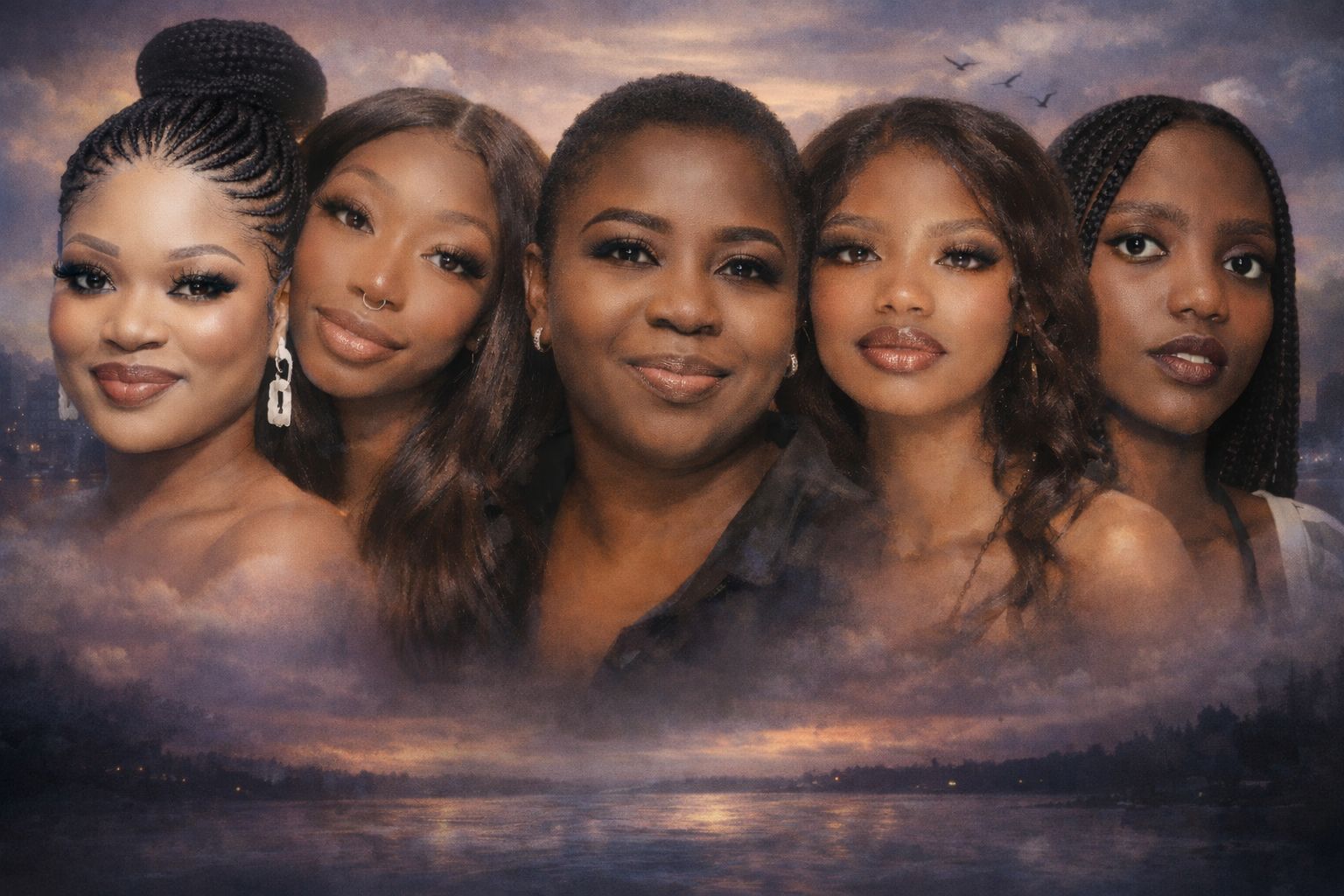
“Five Black women. Five bodies of water. And a national conversation that barely registered a ripple.
Dr Diahanne RhineyEditor in Chief
In this searing and vital piece, Dr Diahanne Rhiney, Editor in Chief of Black Wall St Media, confronts the uncomfortable historical pattern of how Black women’s lives are valued and often made invisible by the systems meant to protect them. From the tragic disappearances of Blessing Olusegun and Samaria Ayanle to the urgent necessity of economic sovereignty as a form of safety, this article is a call to action for visibility, protection, and the refusal to let history repeat itself.
Read the full article below to understand why we must say their names.”


History tells us something uncomfortable about the value placed on Black women’s lives.
It tells us that when Black women disappear, the world rarely stops.
Blessing Olusegun was 21. A student and care worker. She was found dead on a beach in Bexhill on Sea. Her death was ruled a drowning.
Kayon Williams was 24. A fashion blogger. Her body was found in the River Thames four days after a night out. While she was missing, there was little national coverage.
Taiwo Balogun was 53. Her body was discovered 29 days after she disappeared in a lake near Bluewater Shopping Centre. Police said the death was not being treated as suspicious.
Samaria Ayanle was 19. A student at SOAS University of London. University staff eventually alerted police weeks after she was last seen. Her body was found five days later.
Edna Mmbali Ombakho was 31. A Kenyan master’s student. She was reported missing after going for a walk on 1 February. Her body was discovered on 9 March.

Five women.
Five Black women.
Five bodies of water.
And barely a ripple in the national conversation.
No daily countdowns on rolling news. No blanket front page coverage. No televised national appeals asking the public to help find them.
Just brief local reports followed by silence.
Most of us did not even know they were missing.
This silence is not new. It sits inside a much longer historical pattern about how Black women are seen, or more accurately, how we are not seen.
For centuries Black women’s lives have been treated as expendable. During slavery our bodies were labour. During colonialism our suffering was invisible. Even in modern societies that claim progress, our pain rarely triggers the same national urgency.
Black feminist scholars have long described this as the hierarchy of whose lives are considered worthy of protection.
The pattern is painfully familiar. When Black women go missing, their cases rarely receive the same level of attention as others. Media scholars have described this imbalance as the missing white woman syndrome, where cases involving white women dominate headlines while cases involving women of colour struggle to gain visibility.
The contrast in public reaction was painfully clear during the tragic disappearance of Sarah Everard.
Her case rightly sparked national outrage. The media covered every development. Politicians spoke. Vigils were organised across the country. Her name became a rallying cry for women’s safety.
It was the response any missing woman deserves.
But the question that hangs in the air today is this.
Why does that level of urgency seem so rare when the missing woman is Black?
Five Black women have died. Their bodies were found in water across different parts of the country. Yet their stories have not dominated the national conversation in the same way.
That silence speaks to something deeper than individual tragedies. It reflects a society that still struggles to see Black women as central to the story of who deserves protection.
When I read about these cases, I turned to my partner and said something that may sound uncomfortable but feels painfully true.
This is why.
This is why economic strength matters. This is why building our own institutions matters. This is why Black women must invest in ownership, independence, and infrastructure.
Because history shows us that systems do not always protect us.
Not consistently.
Not urgently.
Not equally.
When institutions fail to provide protection, communities begin building their own forms of safety.
Every Black woman who builds financial independence is strengthening that protection.
Every Black woman who owns assets, builds a business, creates stable income, and refuses to rely entirely on systems that have historically undervalued her life is creating a new form of security.
Economic power is protection.
Financial stability is protection.
Ownership is protection.
Because the truth is that when the media does not amplify our stories and when institutions move slowly, our communities are often left to search for answers ourselves.
The organisation ForBlackWomenUK recently captured what many people are quietly asking. There has been speculation online about whether someone could be targeting Black people, particularly Black women, and disposing of bodies in water.
Whether that speculation proves accurate or not, the deeper issue remains.
Black women deserve urgency.
Black women deserve visibility.
Black women deserve protection.
Black women deserve to be searched for with the same intensity, the same resources, and the same national attention afforded to others.
Until the world learns that lesson, we cannot afford to remain passive.
We build our own networks.
We build our own wealth.
We build our own systems of protection.
And we keep speaking the names of the women whose lives deserve far more than a quiet line in a local news report.
Blessing Olusegun.
Kayon Williams.
Taiwo Balogun.
Samaria Ayanle.
Edna Mmbali Ombakho.
Say their names.
And refuse to let history keep repeating itself.


- Black Parenting: Discipline as Protection
 They call it harsh. They rarely call it what it is. Black parenting has long been judged without context, misunderstood as severity rather than seen as protection. But in a world where Black children are too often viewed through a harsher lens, discipline becomes something deeper than control. It becomes preparation. It becomes survival. In the wake of events on Clapham High Street, the question of parenting has once again taken centre stage. But before we ask where the parents are, perhaps we should ask what they are up against. This piece explores the truth behind Black parenting, the tension between protection and perception, and the shift towards healing in a world that still demands resilience.
 - Editor’s Letter April 2026
 We need to talk about the truth behind being overqualified and underpaid. As we step into a new financial year, the same uncomfortable question keeps resurfacing: Who really benefits from our labour—and at what cost? From pay gaps to invisible work, from limited representation to the constant pressure to prove ourselves, the economics of being Black is lived every day. This month’s Editor’s Letter breaks it down with honesty, evidence, and urgency. Read on, because naming the truth is the first step to changing it.
 - The Homecoming, as MOBOs marks 30 years with epic celebration.
 It was a night of legacy, star power and cultural pride as the MOBO Awards marked an incredible 30 years with a landmark celebration in Manchester. Bringing together global icons like Pharrell Williams, Estelle and Tiwa Savage, the milestone event proved why the MOBOs remain a cornerstone of Black music and culture. At the heart of it all was Estelle’s powerful homecoming, a full-circle moment that perfectly captured the spirit of an evening dedicated not just to honouring the past, but shaping the future.
 - Mayor Margaret Greer’s Gala Unites Enfield in Purpose
 Mayor Margaret Greer’s Charity Gala was more than an evening of elegance—it was a powerful celebration of community, heritage, and purpose in the heart of Enfield. As the borough’s first Black woman of Caribbean heritage to serve as Mayor, Cllr Greer brought together residents, leaders, and supporters for a night dedicated to uplifting vital causes and strengthening the spirit of unity. Read how this unforgettable evening reflected the power of representation, resilience, and the collective strength of the Enfield community.
 - Five Black Women. Five Bodies of Water. And a History We Can No Longer Ignore
 The Silence is the Story Five Black women. Five bodies of water. And a national conversation that barely registered a ripple. In this searing and vital piece, Dr Diahanne Rhiney, Editor in Chief of Black Wall St Media, confronts the uncomfortable historical pattern of how Black women’s lives are valued and often made invisible by the systems meant to protect them. From the tragic disappearances of Blessing Olusegun and Samaria Ayanle to the urgent necessity of economic sovereignty as a form of safety, this article is a call to action for visibility, protection, and the refusal to let history repeat itself. Read the full article below to understand why we must say their names.


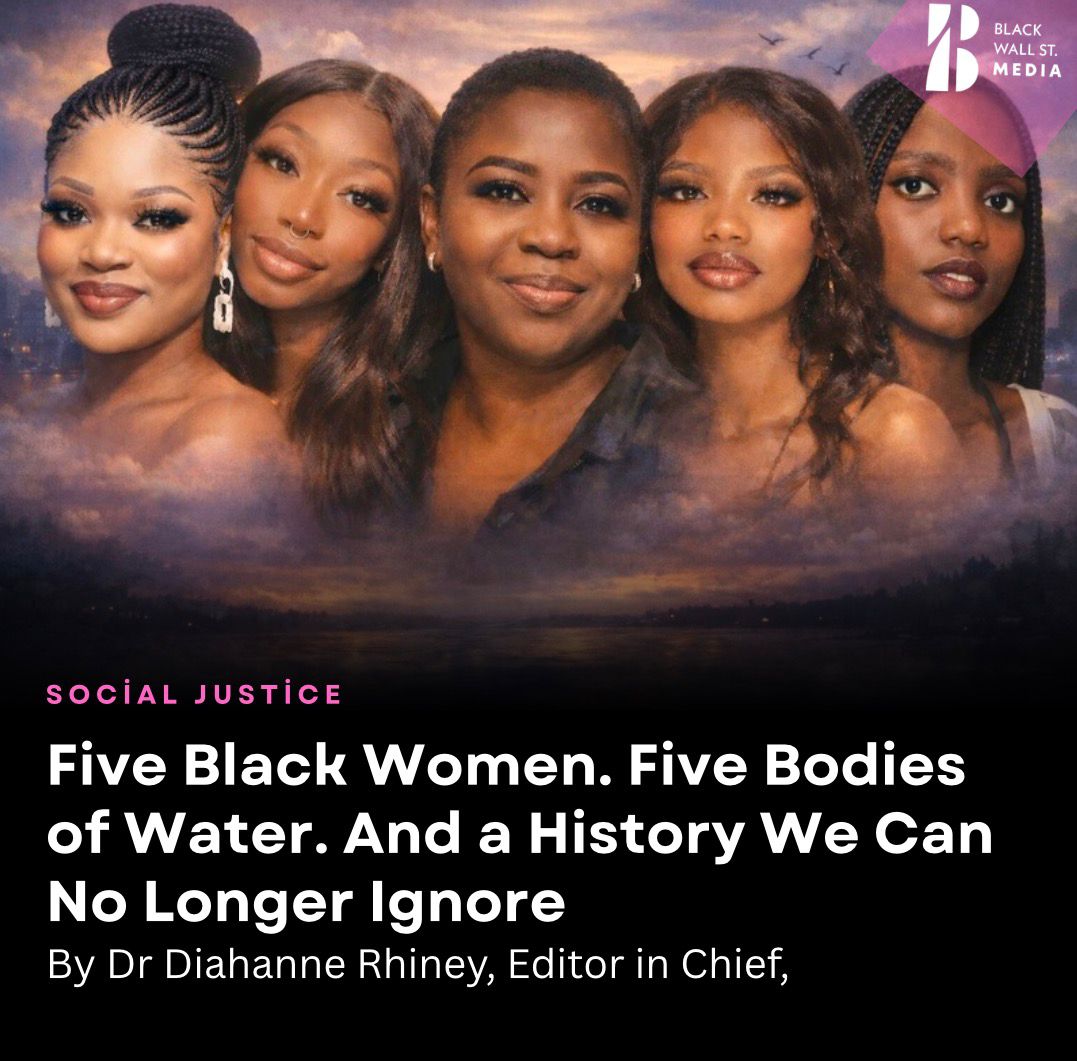
Five Black Women. Five Bodies of Water. And a History We Can No Longer Ignore
Read More
Mother’s Day and the Quiet Legacy of Our Mothers
Read More
Editor’s Letter March 2026
Read More
Locked Out of the Purse Strings
Read More
Editors Letter – January 2026
Read More
Editors Letter – October 2025
Read More
Editors Letter – September 2025
Read More
Editors Letter – August 2025
Read More
Editors Letter – July 2025
Read More