

Social Justice / Inequality
Black Parenting: Discipline as Protection
“They call it harsh. They rarely call it what it is.
Black parenting has long been judged without context, misunderstood as severity rather than seen as protection. But in a world where Black children are too often viewed through a harsher lens, discipline becomes something deeper than control. It becomes preparation. It becomes survival.
In the wake of events on Clapham High Street, the question of parenting has once again taken centre stage. But before we ask where the parents are, perhaps we should ask what they are up against.
This piece explores the truth behind Black parenting, the tension between protection and perception, and the shift towards healing in a world that still demands resilience.”
BWSMContributor
Black parenting has always been read through the wrong lens.
It is called “harsh” in a society that rarely pauses to ask what that harshness is responding to. It is judged in isolation, stripped of history, and too often condemned without reckoning with the conditions that shaped it.
And yet, when we look at moments like what unfolded on Clapham High Street in April 2026, the conversation around parenting, particularly Black parenting, re-emerges with urgency, contradiction, and, at times, hypocrisy.
Discipline in a World That Is Not Gentle
Across two days, hundreds of young people gathered in Clapham following viral social media calls, with incidents of looting, assaults, and disorder leading to arrests and a visible police response.
The public reaction was swift and familiar. Where are the parents? Why aren’t they controlling their children? Why weren’t they stricter?
Police urged parents to take responsibility, reinforcing a narrative that youth behaviour is a direct reflection of parental discipline.
But this is where the tension sits.
Because the same society that asks for stricter parenting is often the one that condemns it most harshly when it appears in Black homes.
The Double Bind of Black Parenting
Black parents have long understood something that moments like Clapham make visible. When children step outside, they are not simply navigating adolescence. They are navigating perception.
Strict discipline, in this context, is not arbitrary. It is anticipatory. It is the quiet calculation that says:
- If my child is seen as disruptive, they will not be given the benefit of the doubt.
- If they are perceived as aggressive, the consequences may escalate faster.
Many Black children face what researchers call adultification bias, being perceived as older, more responsible, or more threatening than they are. This reality changes everything: behaviour is judged more harshly, mistakes are treated as intent, and parenting becomes pre-emptive, not reactive.
So the raised voice, the insistence on respect, the intolerance for certain behaviours, these are not just about order. They are about protection.
Yet paradoxically, those same methods are often interpreted by wider society as excessive. Black parents are criticised for being too firm, too rigid, too unforgiving. And still, when disorder unfolds, as it did in Clapham, the call is for more discipline, not less.
Public Disorder, Private Judgement
Images of teenagers flooding shops, overwhelming police, and moving in large groups across Clapham High Street sparked concern not only about crime but about a perceived breakdown in authority.
But experts pushed back against the simplicity of that narrative. They pointed to deeper structural issues:
- Erosion of youth services and loss of safe community spaces
- Disproportionate school exclusions for Black children
- Generational underinvestment in opportunities and social support
Parenting does not operate in isolation from environment. You cannot discipline away the absence of youth clubs. You cannot punish your way out of social exclusion. You cannot strict parent a child into opportunities that no longer exist.
And yet, responsibility is often placed squarely at the feet of parents, disproportionately so when those parents are Black.
Cultural Memory and Survival
What is often labelled old school Black parenting—firm boundaries, corporal punishment, unwavering expectations of respect—did not emerge in comfort. It was forged in conditions where discipline could mean safety.
Generations carried that forward, not out of cruelty, but out of care. A child who knew how to respond to authority, how to regulate themselves, how to avoid confrontation, this was seen as a child better equipped to survive.
That inheritance still lives in many homes today. But when these practices are viewed without context, they are flattened into stereotype. The love that underpins them is erased, leaving only the method to be judged.
The Shift Between Fear and Healing
There is, however, a shift underway.
A new generation of Black parents is asking whether survival alone is enough. Whether discipline must always be hard to be effective. Whether protection can also look like emotional safety, communication, and softness.
Gentle parenting has entered the conversation—not as a rejection of discipline, but as a reimagining of it. Parents are beginning to consider the emotional and mental health cost to children of fear-based or overly strict methods. They are thinking about breaking cycles of trauma without compromising safety.
And yet, the Clapham moment complicates this shift. It raises difficult questions:
- Can gentler parenting withstand a society that still reacts harshly to perceived disorder?
- Are stricter methods a necessary shield, or a cycle that needs breaking?
- How can Black fathers and mothers be supported rather than blamed?
Media, Morality, and Misrepresentation
Media coverage of youth disorder often leans toward moral panic. Images of chaos. Language of breakdown. Calls for control.
But this framing misses the broader picture. Young people are seeking connection in a landscape where structured spaces have disappeared. Schools exclude disproportionately. Communities are underfunded. Youth are over-policed.
This is where Black parenting is particularly vulnerable to misrepresentation.
When discipline is visible, it is judged. When it is absent, it is blamed. There is little room for nuance, for understanding that parenting is shaped by forces far beyond the home.
Beyond the Question of Harshness
The question is not whether Black parenting is too harsh.
The question is why it has had to be.
Why generations felt the need to prepare their children not just for success, but for survival. Why discipline became a form of defence. Why love sometimes had to speak in a louder, firmer voice.
Moments like Clapham force another question: If society demands discipline from parents, what responsibility does it bear for the environments those children are growing up in?
A Wider Accountability
It is easy to look at a group of teenagers on a high street and ask where are the parents.
It is harder, but necessary, to ask:
- Where are the youth services that once held these spaces together?
- Where are the investments in community, in belonging, in opportunity?
- Where is the understanding that parenting alone cannot carry the weight of systemic neglect?
- How can policing, schools, and social services support rather than punish Black families?
Black parenting has never simply been about raising children.
It has been about raising them in spite of.
Until that truth is fully understood, it will continue to be misread, caught between a society that fears its outcomes and judges its methods, without ever confronting its own role in shaping both.

- Black Parenting: Discipline as Protection
 They call it harsh. They rarely call it what it is. Black parenting has long been judged without context, misunderstood as severity rather than seen as protection. But in a world where Black children are too often viewed through a harsher lens, discipline becomes something deeper than control. It becomes preparation. It becomes survival. In the wake of events on Clapham High Street, the question of parenting has once again taken centre stage. But before we ask where the parents are, perhaps we should ask what they are up against. This piece explores the truth behind Black parenting, the tension between protection and perception, and the shift towards healing in a world that still demands resilience.
 - Editor’s Letter April 2026
 We need to talk about the truth behind being overqualified and underpaid. As we step into a new financial year, the same uncomfortable question keeps resurfacing: Who really benefits from our labour—and at what cost? From pay gaps to invisible work, from limited representation to the constant pressure to prove ourselves, the economics of being Black is lived every day. This month’s Editor’s Letter breaks it down with honesty, evidence, and urgency. Read on, because naming the truth is the first step to changing it.
 - The Homecoming, as MOBOs marks 30 years with epic celebration.
 It was a night of legacy, star power and cultural pride as the MOBO Awards marked an incredible 30 years with a landmark celebration in Manchester. Bringing together global icons like Pharrell Williams, Estelle and Tiwa Savage, the milestone event proved why the MOBOs remain a cornerstone of Black music and culture. At the heart of it all was Estelle’s powerful homecoming, a full-circle moment that perfectly captured the spirit of an evening dedicated not just to honouring the past, but shaping the future.
 - Mayor Margaret Greer’s Gala Unites Enfield in Purpose
 Mayor Margaret Greer’s Charity Gala was more than an evening of elegance—it was a powerful celebration of community, heritage, and purpose in the heart of Enfield. As the borough’s first Black woman of Caribbean heritage to serve as Mayor, Cllr Greer brought together residents, leaders, and supporters for a night dedicated to uplifting vital causes and strengthening the spirit of unity. Read how this unforgettable evening reflected the power of representation, resilience, and the collective strength of the Enfield community.
 - Five Black Women. Five Bodies of Water. And a History We Can No Longer Ignore
 The Silence is the Story Five Black women. Five bodies of water. And a national conversation that barely registered a ripple. In this searing and vital piece, Dr Diahanne Rhiney, Editor in Chief of Black Wall St Media, confronts the uncomfortable historical pattern of how Black women’s lives are valued and often made invisible by the systems meant to protect them. From the tragic disappearances of Blessing Olusegun and Samaria Ayanle to the urgent necessity of economic sovereignty as a form of safety, this article is a call to action for visibility, protection, and the refusal to let history repeat itself. Read the full article below to understand why we must say their names.




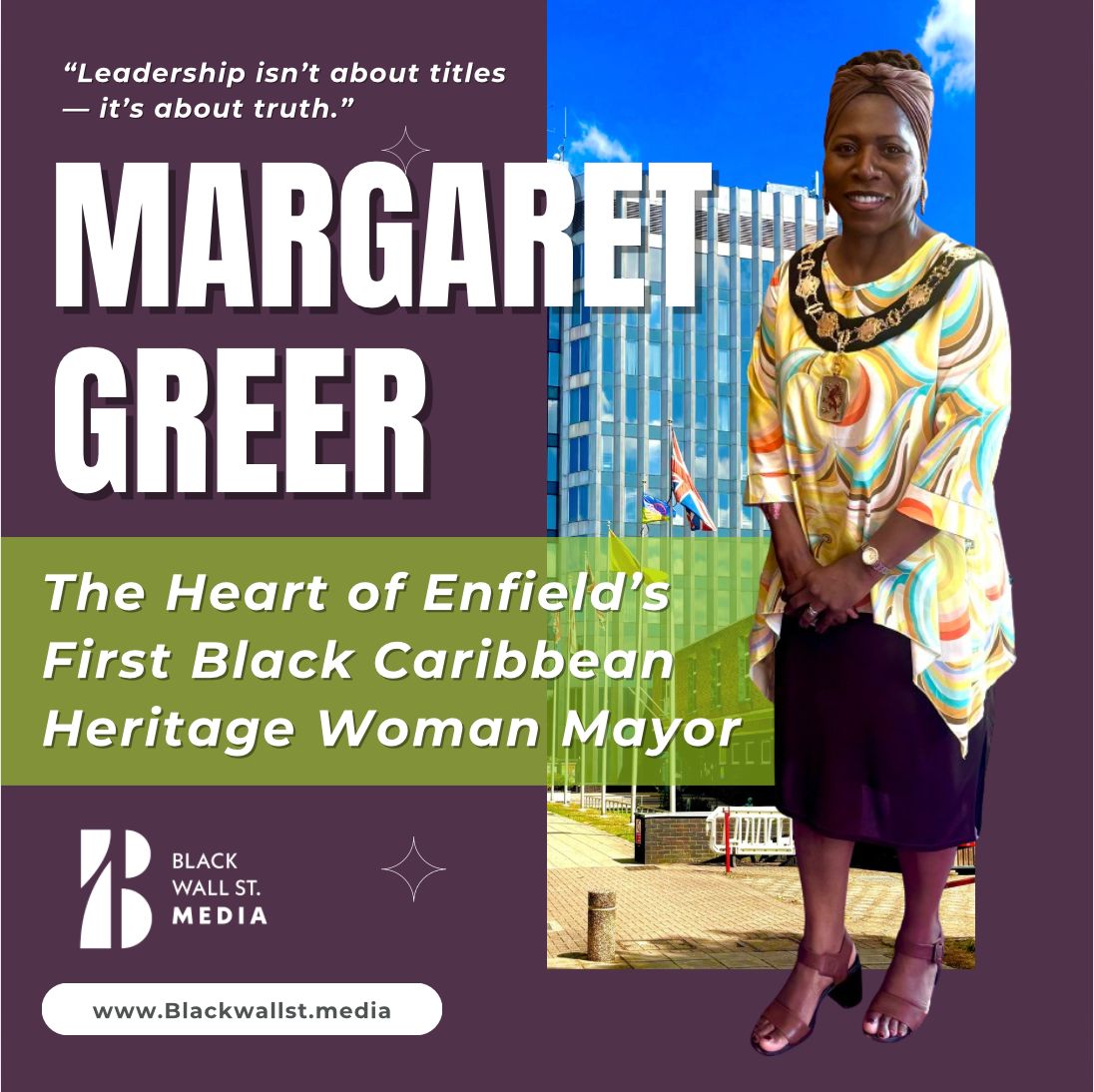
A Conversation with Mayor Margaret Greer
Read More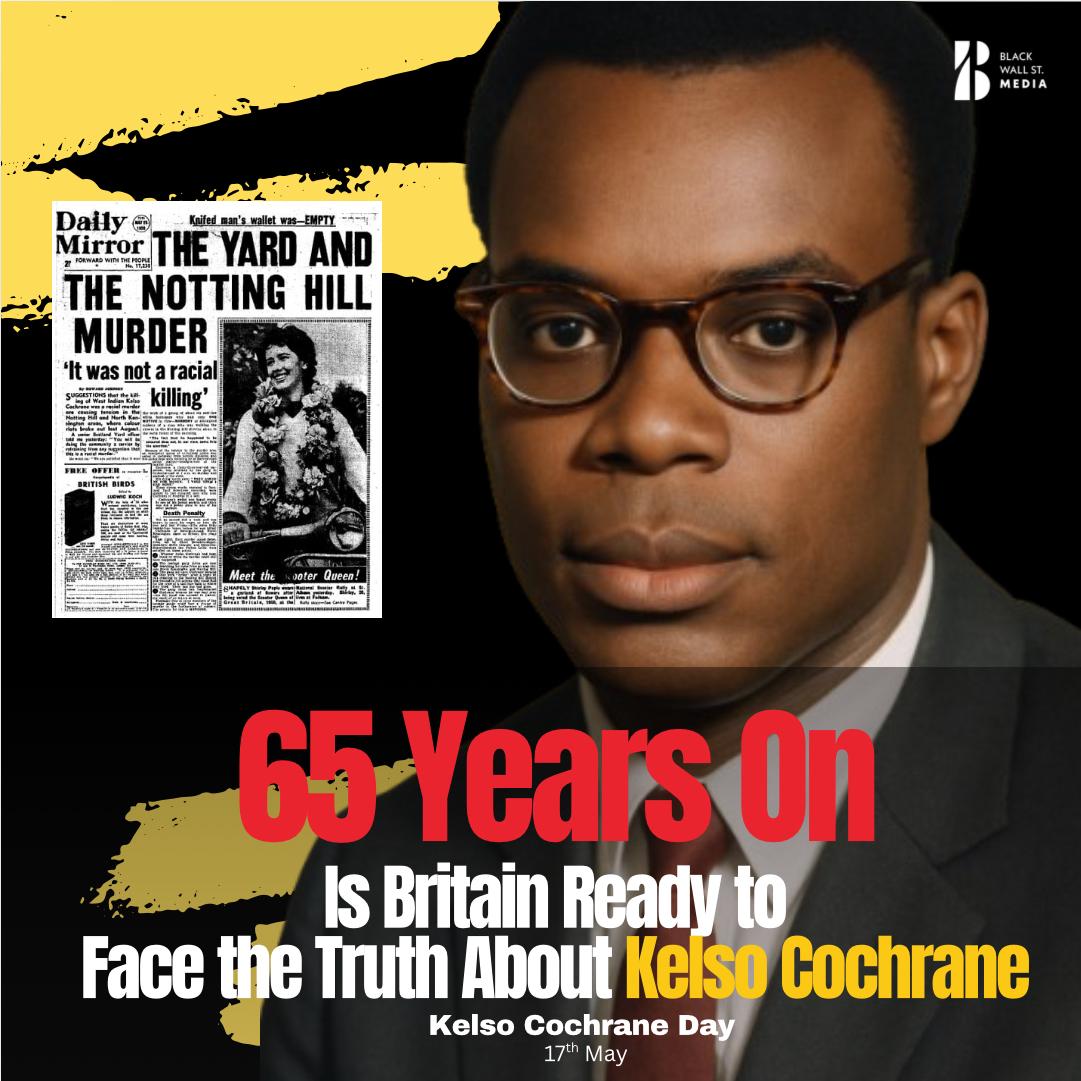
Kelso Cochrane: The Name Britain Tried to Forget
Read More
Ademola Adeyeba’s Mission to Help Black Youth Rise
Read More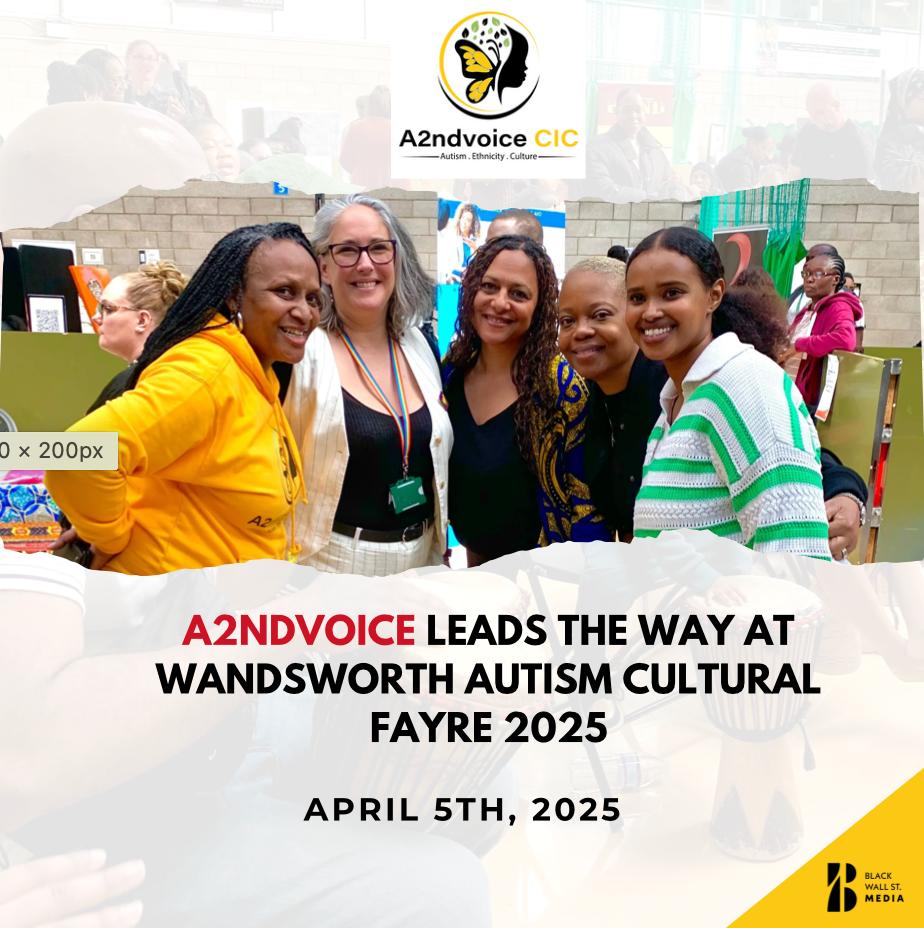
Cultural Milestone for Autism Awareness
Read More
Top Award for Tottenham Headteacher
Read More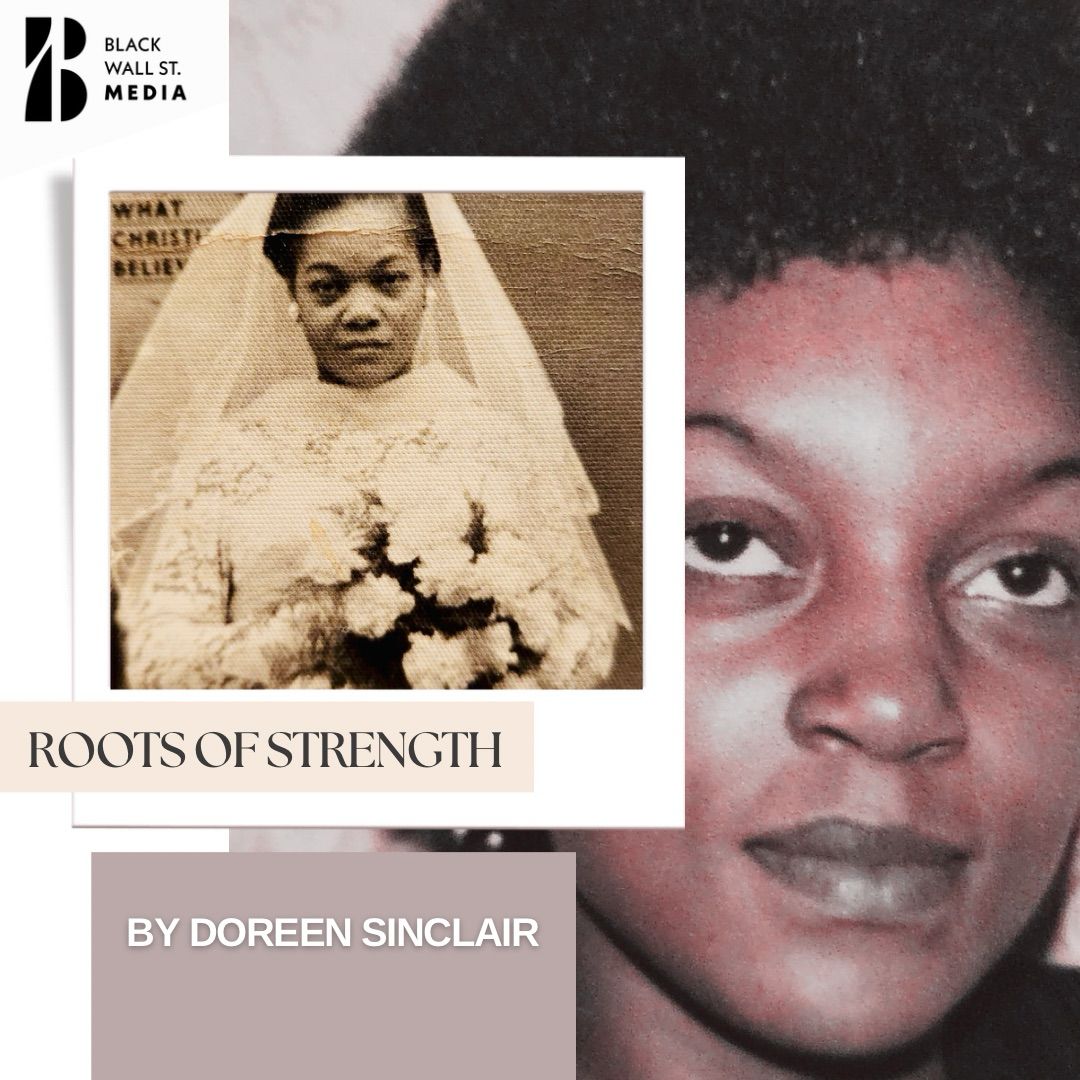
Roots of Strength
Read More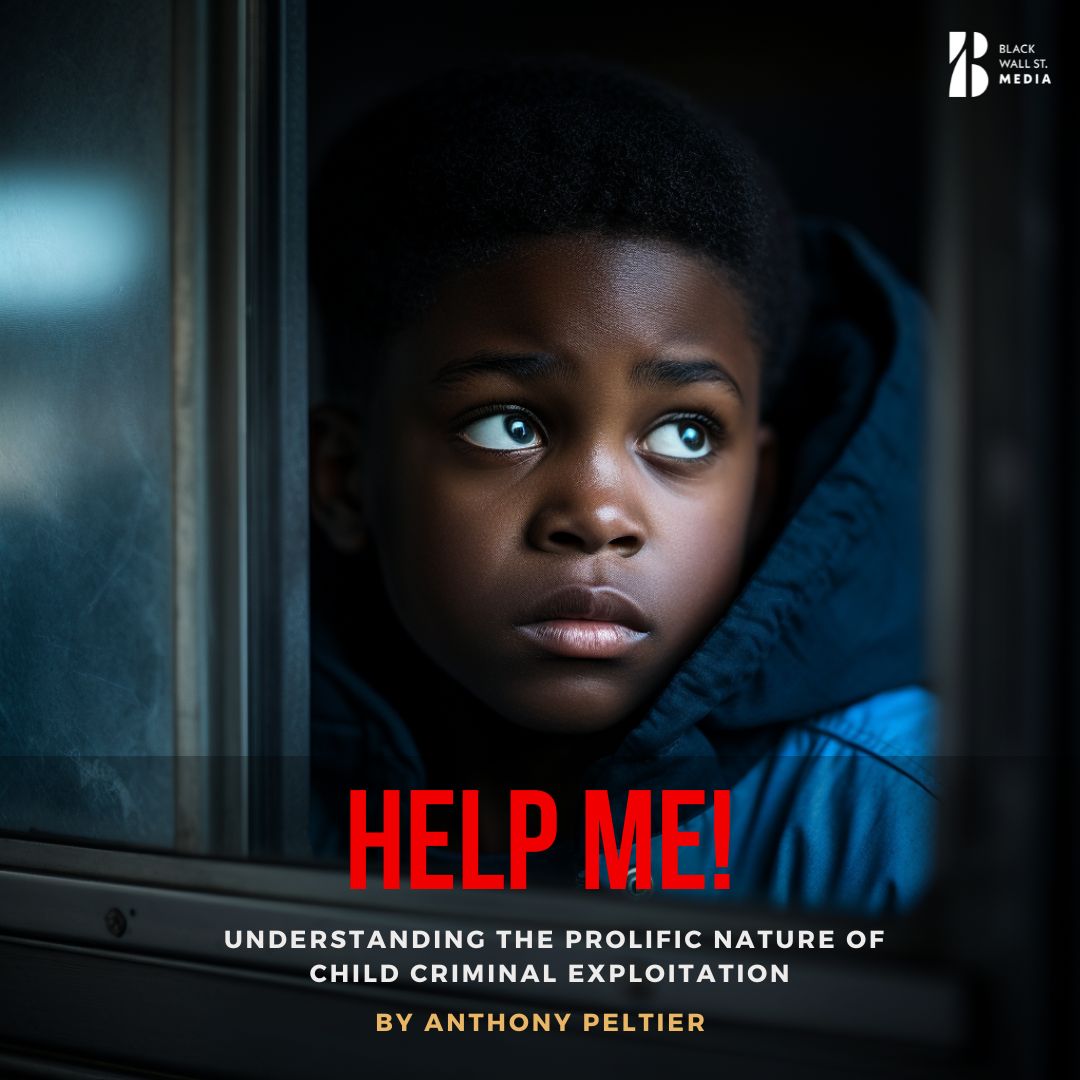
HELP ME
Read More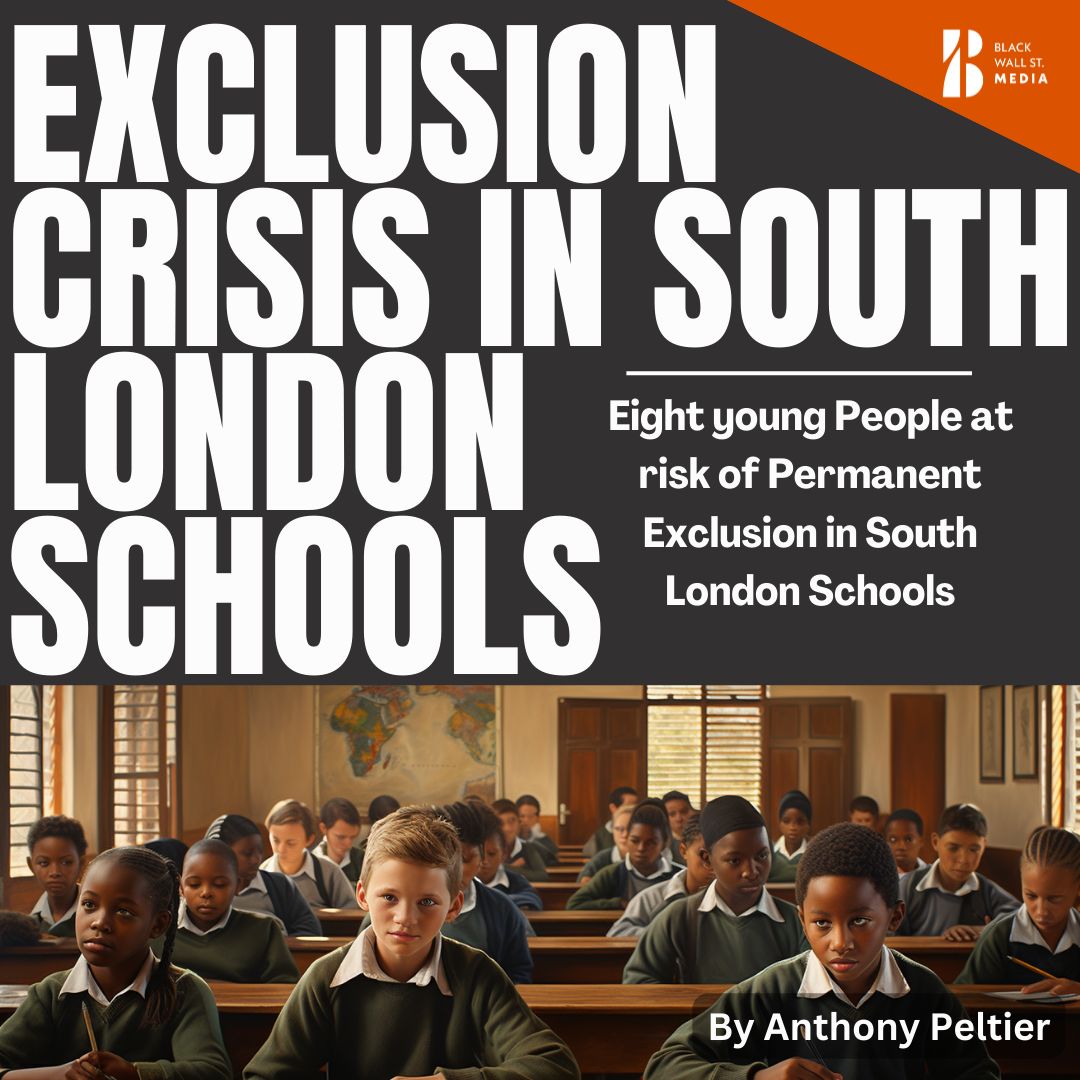
Educating for empowerment not exclusion
Read More
Why racialized leaders choose to walk away
Read More