

HEALTH
From Racism to Obesity: Unveiling the Alarming Connection in Children
“New Study Reveals Disturbing Link: Racism a Catalyst for Childhood Obesity”
Black Wall St. MediaContributor
Childhood obesity is a growing concern with significant implications for the health and well-being of children.
While numerous factors contribute to this issue, a recent study has shed light on a catalyst that exacerbates childhood obesity—racism.
The study found that children as young as 9 years old were more likely to meet the definition of obesity if they had experienced racism a year earlier.
This alarming revelation confirms the long-assumed link between racism and obesity and underscores the profound impact of racial discrimination on children’s health.
Adolfo Cuevas, an expert on racism and health at the NYU School of Global Public Health and co-author of the study, emphasized the critical nature of these findings.

The detrimental effects of racism on health have been well-documented, with discrimination being identified as a stressful life experience that negatively affects both mental and physical well-being.
Children of colour can discern unfair treatment based on their skin tone, leading to far-reaching implications for their health throughout their lives.
David Williams, a leading researcher in the field of racism and health, affirms the extensive body of research linking racial discrimination to poor health outcomes.
He highlights that discriminatory experiences have similar adverse effects on health as other stressful life events, contributing to worsened mental and physical health. These insights emphasize the urgency of reducing the occurrence of discrimination in society.
The study, published in JAMA Network Open, examined the obesity rates of over 6,000 children aged 9 to 11, revealing significant racial disparities.
Less than 7% of white children met the medical definition for obesity, while Asian American children had a rate of 9%.
Hispanic children of any race exhibited a rate of 18%, Native American or Alaskan Native children had a rate of 21%, and Black American children had the highest rate at over 24%.
The study also found that the more racial discrimination a child reported experiencing, the higher their body mass index tended to be a year later.

From Racism to Obesity
Moreover, socioeconomic factors also played a role in childhood obesity.
Children whose parents fell into the lowest income category were significantly more likely to meet the definition of obesity compared to those with parents in the highest income category.
Similarly, children with parents who had a high school diploma or less education had a higher risk of obesity compared to children with parents who held graduate degrees.
However, it remains challenging to determine the relative importance of racism compared to socioeconomic factors in influencing a child’s risk for obesity.


Interestingly, the study also revealed that Black children from wealthier families were more likely to report unfair treatment based on their race than Black children from less financially advantaged families.
This finding suggests that children from wealthier families may have more interactions with individuals from different racial backgrounds, while those from lower-income families may lead more segregated lives.
It highlights the complex reality faced by Black individuals in America—a double-edged sword where wealth does not necessarily shield them from racism.

Racism Impacts Children’s Health Trajectory
The study indicated that teachers, other children at school, and adults outside of school were the primary sources of racial discrimination identified by the children.
This underscores the crucial role of schools in creating inclusive environments that promote equality and respect for all students.
Schools should prioritize initiatives that foster inclusivity and work towards eradicating racism from educational settings.
To mitigate the health effects of discrimination, individuals who experience racism can bolster their resilience through strong social and community support networks.
Adolfo Cuevas and David Williams emphasize the importance of positive relationships with parents, teachers, and friends in buffering against the severe health consequences of racial discrimination.
Research conducted in Georgia demonstrated that teenagers who faced racial discrimination had higher levels of stress hormones, high blood pressure, increased weight, and elevated inflammation.
However, those who possessed strong support networks did not experience such severe health consequences.
Another study conducted in Canada examined the alarming suicide rate among First Nation young people, which was the highest in the world.
The researchers discovered that communities with minimal suicide problems were actively engaged in lobbying the Canadian government for land rights and control over their own services.
These communities also emphasized the teaching of cultural history to young people.
The ability to effect change in their lives and communities seemed to have a protective effect on their health, highlighting the importance of empowerment and cultural pride.
In conclusion, racism serves as a catalyst for childhood obesity, with significant implications for the health trajectory of affected individuals.
The study’s findings reinforce the urgent need to address racial discrimination and reduce its occurrence.
Efforts should be focused on creating inclusive environments, particularly within schools, to foster equality and respect.
Furthermore, strengthening social and community support networks can help individuals combat the health effects of racism.
By acknowledging the detrimental impact of racism on childhood obesity and taking concerted action to eradicate discrimination, we can strive towards a healthier and more equitable future for all children
Black Wall St. MediaContributor
A life lived beyond the limits of representation
INSANE ENERGY INCOMING!
- Alzheimer’s the Black doctor who helped decode the disease
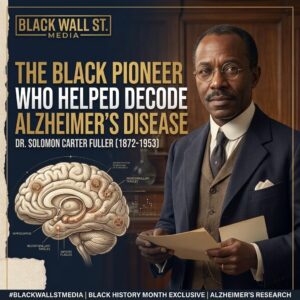 🧠✨ Celebrating an Unsung Hero! Dive into the captivating journey of Dr. Solomon Fuller, a pioneer in Alzheimer's research and a standout figure in Black history. From his roots in Liberia to groundbreaking discoveries, discover the legacy of a medical trailblazer who defied adversity. 🌟
 - The Voice of the Child, Young Person and; Service User
 Whose voices are we really hearing? And what happens when we truly listen? The 3rd DARDR/DVA & Criminal Justice Summit 2026 will bring together professionals, practitioners, community organisations, academics and people with lived experience to place children, young people and service users at the heart of the conversation. Under the theme “The Voice of the Child, Young Person & Service User,” this year’s Summit will explore domestic abuse, violence, safeguarding, exploitation, trauma and criminal justice — but most importantly, how listening can move beyond consultation and become meaningful action. 📅 Friday 27 November 2026 📍 Brent Civic Centre, Wembley 💻 Hybrid Event | CPD Accredited Read more about the Summit, the conversations it will explore and how to book your place.
 - The Crown in the Ledger: What Finding Britain’s Slave Traders Asked Us to Face
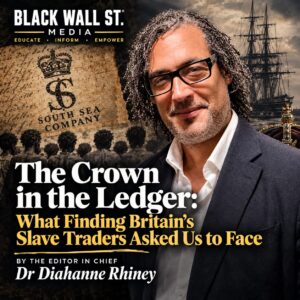 What happens when Britain’s history is no longer told through monuments, wealth and institutions, but through the ledger behind them? Finding Britain’s Slave Traders with David Olusoga brings names, companies, royal connections and fortunes into focus, forcing us to confront how deeply the transatlantic slave trade was embedded in British society. In “The Crown in the Ledger,” we explore what these records reveal about wealth, power, responsibility and the legacy that remains today. Read the full article and ask yourself: who owns what, who benefited, and what does honest accounting look like?
 - Is ‘Othello’ relevant today?
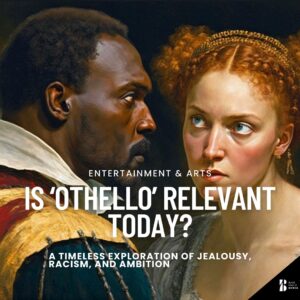 Othello: A Timeless Exploration of Jealousy, Racism, and Ambition
 - A life lived beyond the limits of representation
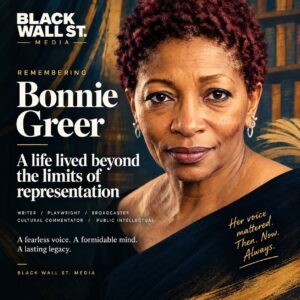 Bonnie Greer was never simply a writer, playwright or broadcaster. She was a cultural force who refused to be confined by the expectations placed on Black women in public life. From Chicago to Britain, from theatre and literature to television and institutional leadership, she built a life defined by intellect, independence and an unapologetic right to occupy space. As Britain remembers her following her death at 77, this article looks beyond the achievements and asks what her life represented: the power of cultural authority, the importance of institutional access, and the freedom to be fully human rather than simply inspirational.