Mental Health
The Emotional Side of Neurodiversity
“Understanding the Unspoken Challenges”
Dianne Greyson Thought Leader, Author, SpeakerContributor
I have seen many articles about neurodiversity over the last couple of years. This year seems to be a peak of information, advising and supporting those who are neurodiverse.
What I haven’t seen a lot of in articles are discussions about the emotional side of neurodiversity, I may have missed it, however, it seems to me that when talking about neurodiversity people should consider discussing the emotional aspect too.

Research shows that individuals who are neurodiverse often have difficulty regulating their emotions. This can lead to problems with anxiety, depression and impulsivity. It is important for individuals who are neurodiverse to learn self-care techniques that can help them to better manage their health (Life Skill Advocate.com).
Emotional processing can be a difficult thing to manage. For some, it can be a lack of understanding of self that causes the emotional triggers, others delayed emotional processing or highly intense emotional episode which could be brought on by frustration (Psychology Today).
I am someone with Dyslexia and I also have Dyscalculia. It has been difficult for me over the years to understand the intense emotional feeling I had when I got things wrong.
I would get angry with myself and sometimes I would be tearful because I just couldn’t understand why things were difficult. It was almost as if someone suddenly created an invisible barrier that I could not cross.
I also found it hard to accept negative feedback without getting anxious or stressed.
I would get hot flushes and headaches and had the feeling of failure. These feelings were not rational but I found it difficult to process them.
I know other neurodiverse people who have had similar experiences. One person said her emotions were so high that she had to leave her place of work because her stress levels were so immense.
The emotional strain it takes out on individuals will vary, this is dependent on many factors, I don’t believe I know anyone who is neurodiverse that doesn’t have emotional challenges. I would stay I still have them but I have learnt to manage them over the years.
It is not unique to adults either. Children who are neurodiverse experience emotional challenges which can cause them to be singled out as disruptive.
Schools prefer children to behave in a certain way and are not always equipped with the right skills to understand the emotional needs of a neurodiverse child.
From my experience, neurodiverse children have a great capacity to care for others and support their friends in times of trouble. However, they find it difficult to manage their emotions and often have outbursts over the smallest thing, they have bouts of ‘hyper happiness’ that seems to come from nowhere.
What would help these children would be an understanding environment that takes their emotional side of the neurodiversity into consideration. Having a nurturing environment will help to alleviate any emotional pressures they could be feeling.
Like children, adults need a safe environment that makes them feel supported. It is not likely that your member of staff who is neurodiverse will admit to having emotional stresses but it would be helpful if your organisation had a well-being initiative that was able to give support.
When I reflect back on my times of high anxiety and stress, I recognise that I could have done with someone to talk to about my feelings, someone to give me reassurance.
I also should have been more open about my experience to allow people to offer help and give me space to process. Instead, I managed the situation by myself which was not the best way to deal with the situation.
Looking for tell-tale signs of emotional distress can be difficult, however, it isn’t impossible. I know that there are disability networks that exist in organisations but, what could be helpful is a subgroup for neurodiverse people to support each other and build confidence so they can manage their emotions more effectively.
I am not purporting to be a neurodiverse expert such as Prof. Nancy Doyle or Marcia Brissett-Bailey BSc, PG Dip (QCG), MA,IPSEA I am however, someone with lived experience and a parent with neurodiverse children.
I hope that more recognition of the emotional needs of neurodiverse people will be discussed, so as to get a clearer picture of the reasonable adjustments needed to help to support the individual concerned.
“”
Dianne Greyson Thought Leader, Author, SpeakerContributor
A life lived beyond the limits of representation
INSANE ENERGY INCOMING!
- The Jamaican Sculptor Who Carved His Way Into History
 Have you heard of Alvin Marriott? A Jamaican sculptor whose extraordinary talent took him from carving limestone in Jamaica to helping restore the Houses of Parliament in Britain, teaching a new generation of artists and creating a monument to Bob Marley in his eighties. This Black History Month, discover the remarkable story of a man whose hands helped shape history, yet whose name remains unfamiliar to so many. It is time to look again, remember his contribution and give Alvin Marriott the recognition he deserves.
 - Damilola Taylor: The Boy Who Never Made It Home
 He was just ten years old. He loved football, supported Manchester United and dreamed of becoming a medical researcher so he could help his sister. On 27 November 2000, Damilola Taylor was fatally injured while walking home in Peckham. His death shocked Britain. His family endured years of waiting for justice. But his parents, Richard and Gloria Taylor, refused to let their son’s legacy be defined by the violence that took him. They established the Damilola Taylor Trust to help give other young people hope, opportunities and a better chance of a future. This Black History Month, we remember the child behind the headlines — his dreams, his family and the future he was never given the chance to live. Every child deserves to make it home. Every child deserves a future. Read our Black History Month feature with Black Wall St. Media.
 - Alzheimer’s the Black doctor who helped decode the disease
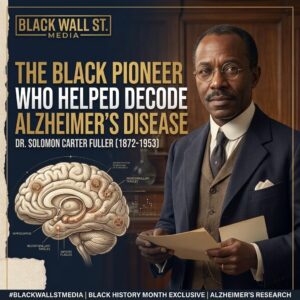 🧠✨ Celebrating an Unsung Hero! Dive into the captivating journey of Dr. Solomon Fuller, a pioneer in Alzheimer's research and a standout figure in Black history. From his roots in Liberia to groundbreaking discoveries, discover the legacy of a medical trailblazer who defied adversity. 🌟
 - The Voice of the Child, Young Person and; Service User
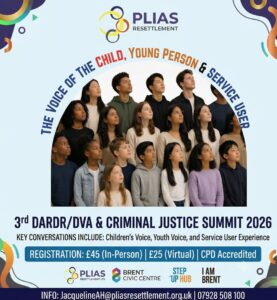 Whose voices are we really hearing? And what happens when we truly listen? The 3rd DARDR/DVA & Criminal Justice Summit 2026 will bring together professionals, practitioners, community organisations, academics and people with lived experience to place children, young people and service users at the heart of the conversation. Under the theme “The Voice of the Child, Young Person & Service User,” this year’s Summit will explore domestic abuse, violence, safeguarding, exploitation, trauma and criminal justice — but most importantly, how listening can move beyond consultation and become meaningful action. 📅 Friday 27 November 2026 📍 Brent Civic Centre, Wembley 💻 Hybrid Event | CPD Accredited Read more about the Summit, the conversations it will explore and how to book your place.
 - The Crown in the Ledger: What Finding Britain’s Slave Traders Asked Us to Face
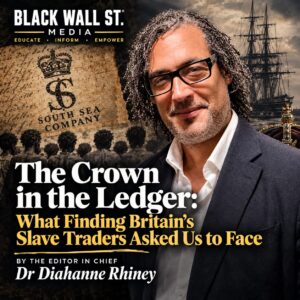 What happens when Britain’s history is no longer told through monuments, wealth and institutions, but through the ledger behind them? Finding Britain’s Slave Traders with David Olusoga brings names, companies, royal connections and fortunes into focus, forcing us to confront how deeply the transatlantic slave trade was embedded in British society. In “The Crown in the Ledger,” we explore what these records reveal about wealth, power, responsibility and the legacy that remains today. Read the full article and ask yourself: who owns what, who benefited, and what does honest accounting look like?