Cuito Cuanavale: From liberation struggles to Caribbean soft power
By John Stevenson
What can a battlefield in southeastern Angola teach us about the future of Africa-Caribbean relations?
More than many realise.
The Battle of Cuito Cuanavale, fought between 1987 and 1988, is often remembered as a decisive moment in the struggle against apartheid and colonial domination in southern Africa. However, its significance extends far beyond military history and remains one of the clearest examples of how a Caribbean nation helped shape the destiny of an African continent thousands of miles away.
The Caribbean’s role in African liberation
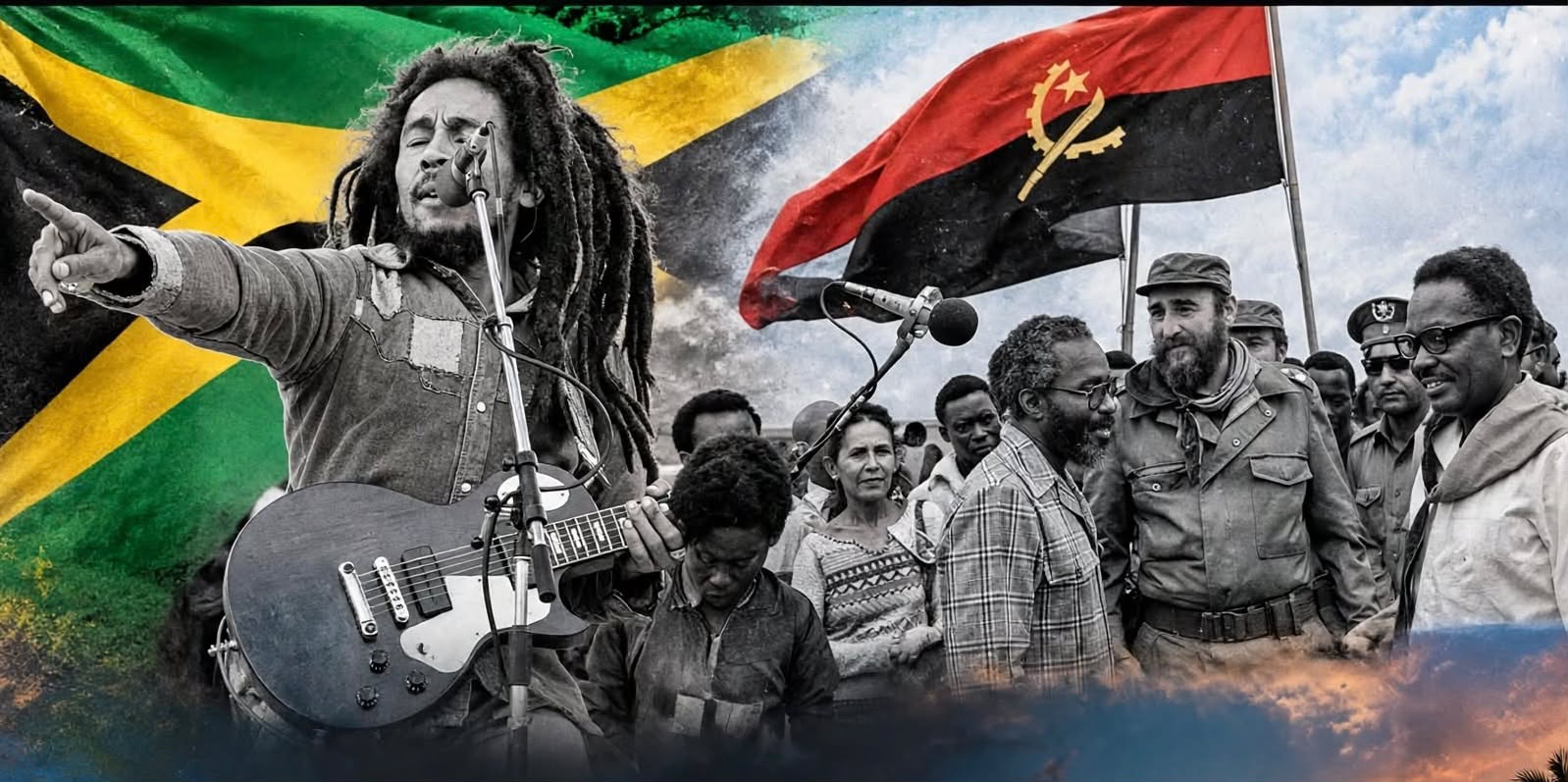
The story begins in 1975, when Fidel Castro sent Cuban troops to Angola (via Barbados and Guyana) to support the newly independent MPLA government against foreign intervention and the threat posed by apartheid South Africa.
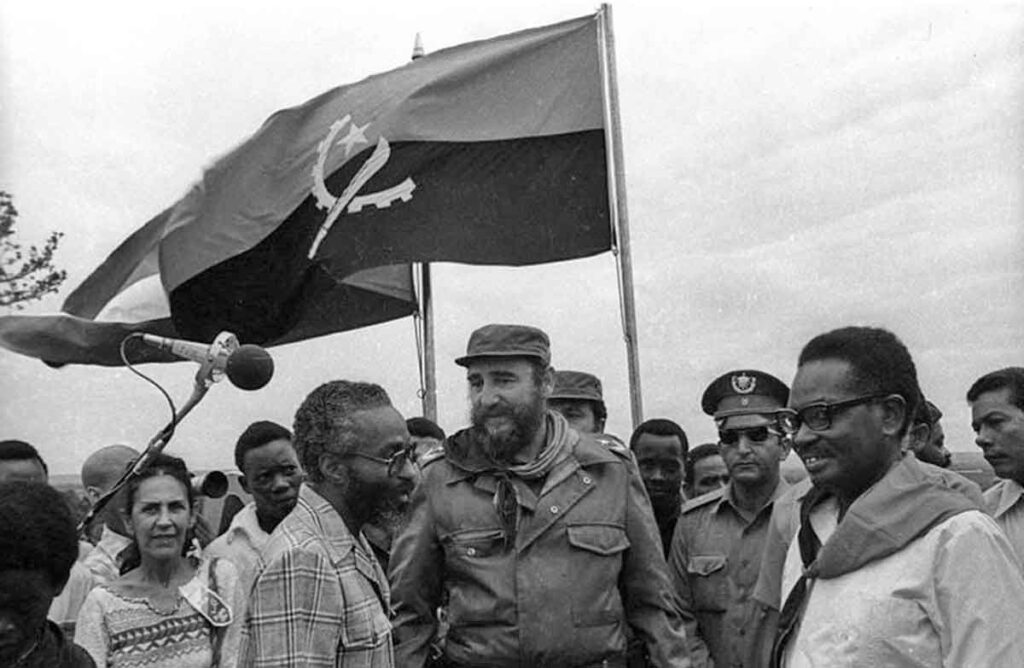
Castro’s decision was shaped by anti-colonial ideals, Cold War calculations and a sense of historical connection to Africa. Whatever one’s view of Cuban foreign policy, the intervention helped preserve the Angolan government and alter the political trajectory of southern Africa for decades to come.
At a time when discussions about Africa and the Caribbean often focus on slavery, reparatory justice and shared ancestry, Cuito Cuanavale reminds us that the relationship has also been forged through solidarity, sacrifice and common political purpose.
Too often, we speak of Africa as our past. This battle encourages us to see Africa as part of our future.
That perspective would have resonated with the Guyanese historian Walter Rodney, whose work consistently argued that Africa’s history and future are inseparable from those of its diaspora. More than half a century later, that insight remains strikingly relevant.
The Battle that changed Southern Africa
The conflict drew in Angolan government forces, Cuban troops, the South African Defence Force and fighters from SWAPO, Namibia’s liberation movement.
While historians continue to debate aspects of the military campaign, the political consequences are clearer. The battle helped create conditions that led to Namibian independence and accelerated the erosion of apartheid’s grip on southern Africa. For many observers, it shattered the myth that apartheid South Africa was militarily invincible.
Nelson Mandela later described Cuito Cuanavale as “a milestone in the history of the struggle for southern African liberation”.
More importantly, it altered perceptions. For many Africans, Cuba’s involvement represented something distinctive: descendants of the African diaspora contributing directly to Africa’s freedom.
That symbolic significance continues to resonate today.
A strategic lesson for the Caribbean
Across parts of southern Africa, Cuba still enjoys a reservoir of goodwill that far exceeds its economic size or geopolitical weight.
There is a lesson in this for the wider Caribbean.
For generations, Caribbean foreign relationships have been oriented primarily towards Britain, Europe and North America. Those relationships remain important, but they are no longer sufficient in a rapidly evolving global landscape.
Africa is home to some of the world’s fastest-growing populations, expanding consumer markets, vibrant creative industries and increasing diplomatic influence. It represents one of the most significant opportunities for deeper Caribbean engagement in the decades ahead.
Why we have not pursued these opportunities more ambitiously already?
Seeing Africa as a contemporary partner
The scholar W.E.B. Du Bois wrote of “double consciousness” and the tension of living between multiple identities and historical narratives.
Caribbean societies have long balanced African ancestry with European institutions and colonial inheritances. As a result, Africa is sometimes viewed primarily as a place of origin rather than a contemporary partner.
Cuito Cuanavale challenges that perspective.
It reminds us that the Caribbean played a role in shaping the future of an entire region.
That history should encourage us to think more boldly about what twenty-first century cooperation can achieve.
Universities can deepen research partnerships. Businesses can explore new trade corridors. Governments can collaborate on public health, climate resilience, digital innovation and youth development. Cultural organisations can expand exchanges in music, literature, film and fashion.
History alone will not build those bridges but it most certainly provides the confidence to cross them.
Caribbean soft power: Culture as a strategic asset
The legacy of Cuito Cuanavale also invites us to think about another source of Caribbean influence: soft power.
Long before governments spoke of South-South cooperation, Caribbean culture was already building connections across the Atlantic.
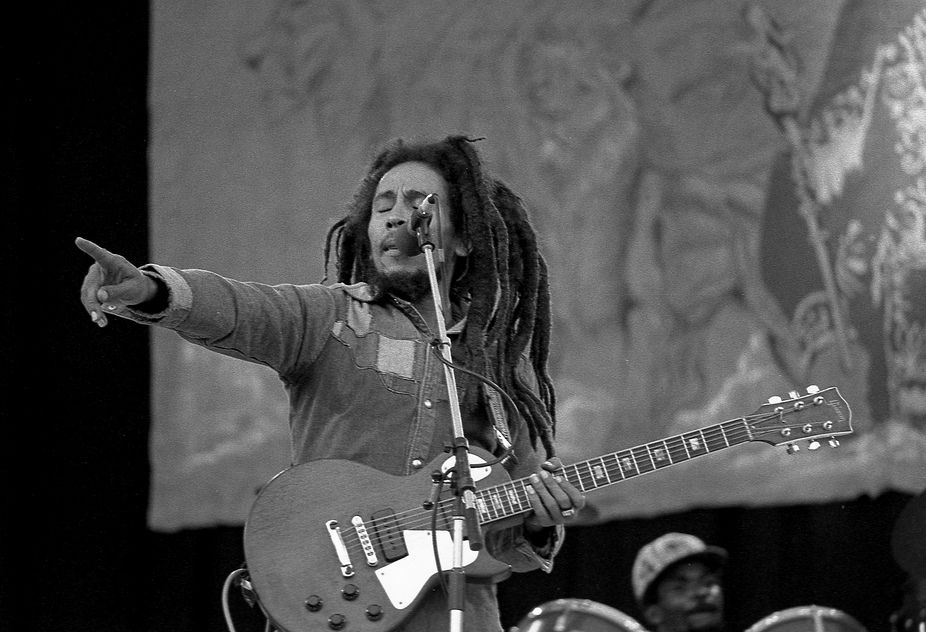
The music of Bob Marley became a soundtrack to liberation movements from Zimbabwe to South Africa. Reggae and Rastafari carried messages of resistance, dignity and self-determination that resonated deeply across the continent.
At the same time, African musicians were drawing inspiration from the Caribbean. Congolese rumba and Ghanaian Highlife emerged through the creative reinterpretation of Afro-Caribbean musical influences, becoming two of Africa’s most celebrated and enduring genres.
Together, these traditions demonstrate that culture has long been one of the most successful forms of Afro-Caribbean diplomacy.
As C.L.R. James famously asked, “What do they know of cricket who only cricket know?” His point was that culture can never be understood in isolation from the wider forces of history, politics and society. The same can be said of reggae, carnival and the many cultural traditions that continue to connect Africa and the Caribbean today.
Turning cultural influence into economic influence
That same power can be seen in Caribbean festivals and traditions.
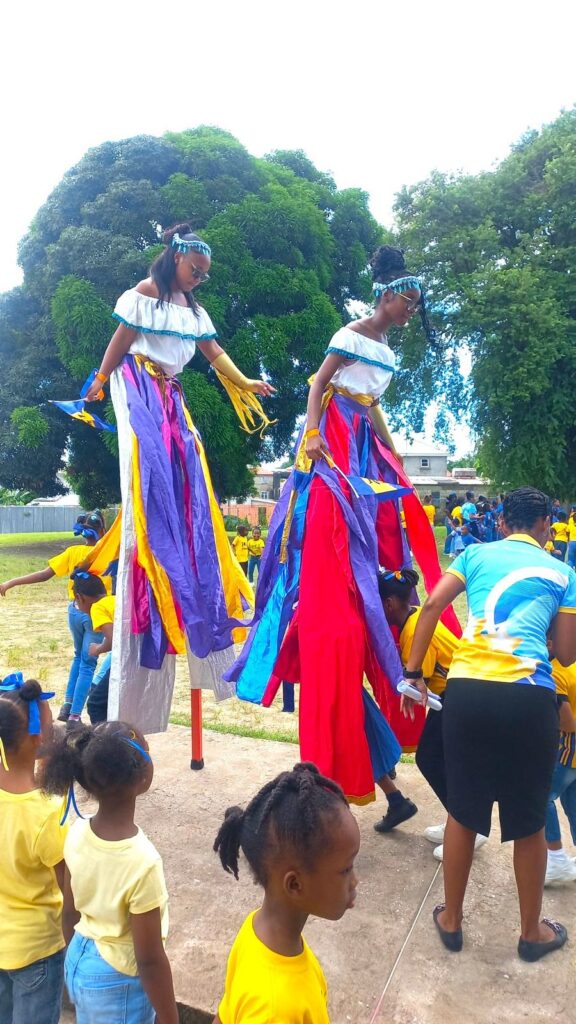
Jamaica’s Jonkonnu, Barbados’ Crop Over and the West African-rooted moko jumbie traditions found throughout the region are more than colourful spectacles. They are living expressions of a shared cultural inheritance that has survived, adapted and flourished over centuries.
Yet too few Africans are familiar with these traditions, just as too few Caribbeans appreciate the full extent of Africa’s influence on their own societies.
Greater exchange through tourism, festivals, fashion, film, education and the creative industries could help close that gap.
Global figures such as Rihanna have already demonstrated how Caribbean artistes can shape global tastes and command worldwide attention. The next challenge is to convert that cultural influence into deeper economic partnerships and power.
Shared heritage creates something no trade agreement can manufacture: trust, familiarity and a sense of common purpose.
The Atlantic as a shared future
The enduring significance of Cuito Cuanavale lies not simply in what happened on the battlefield. It lies in what the battle revealed: that the Atlantic Ocean is not only a reminder of a painful past, but a corridor to a common future.
The descendants of those once separated by slavery helped one another confront apartheid.
If that was possible then, what might be possible now?
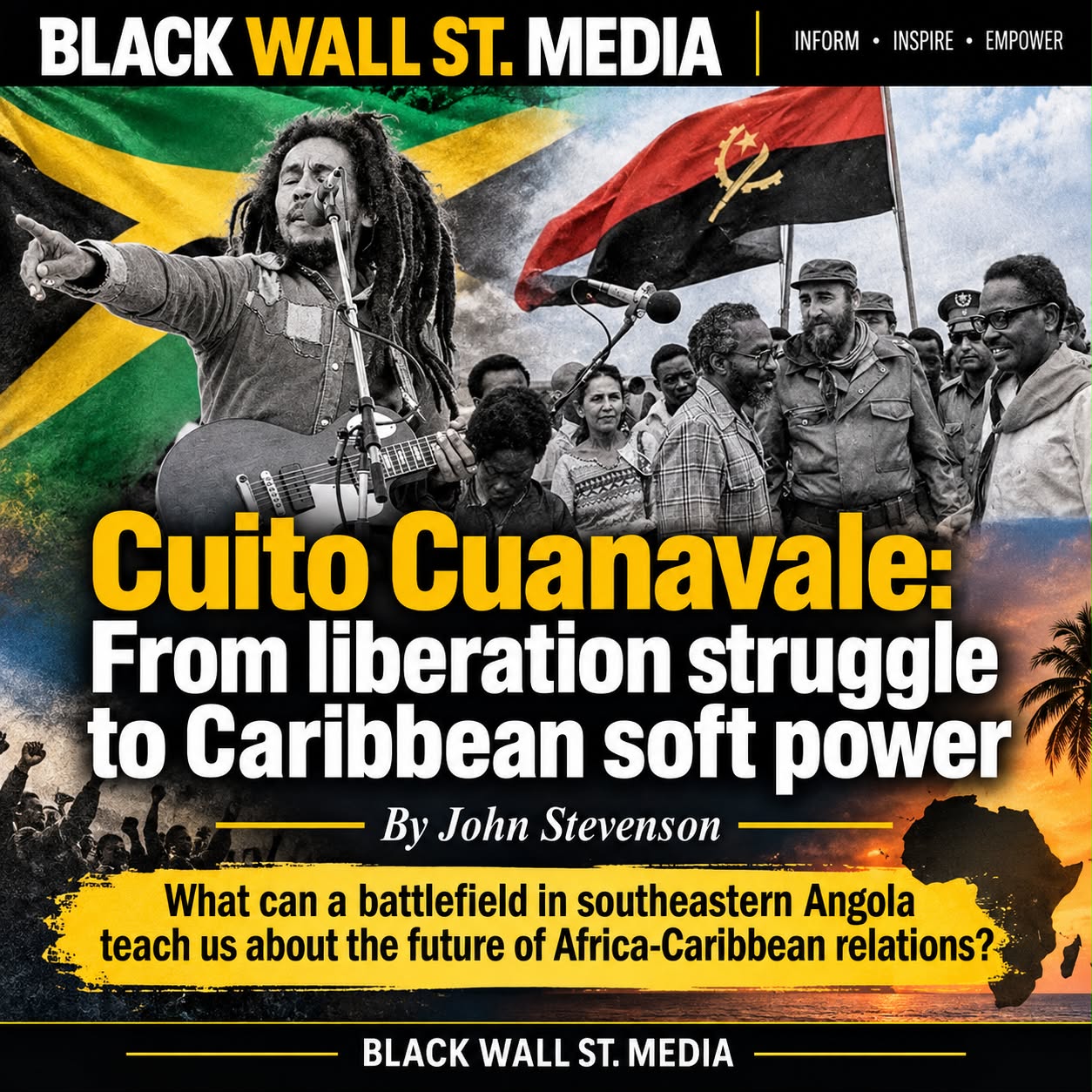
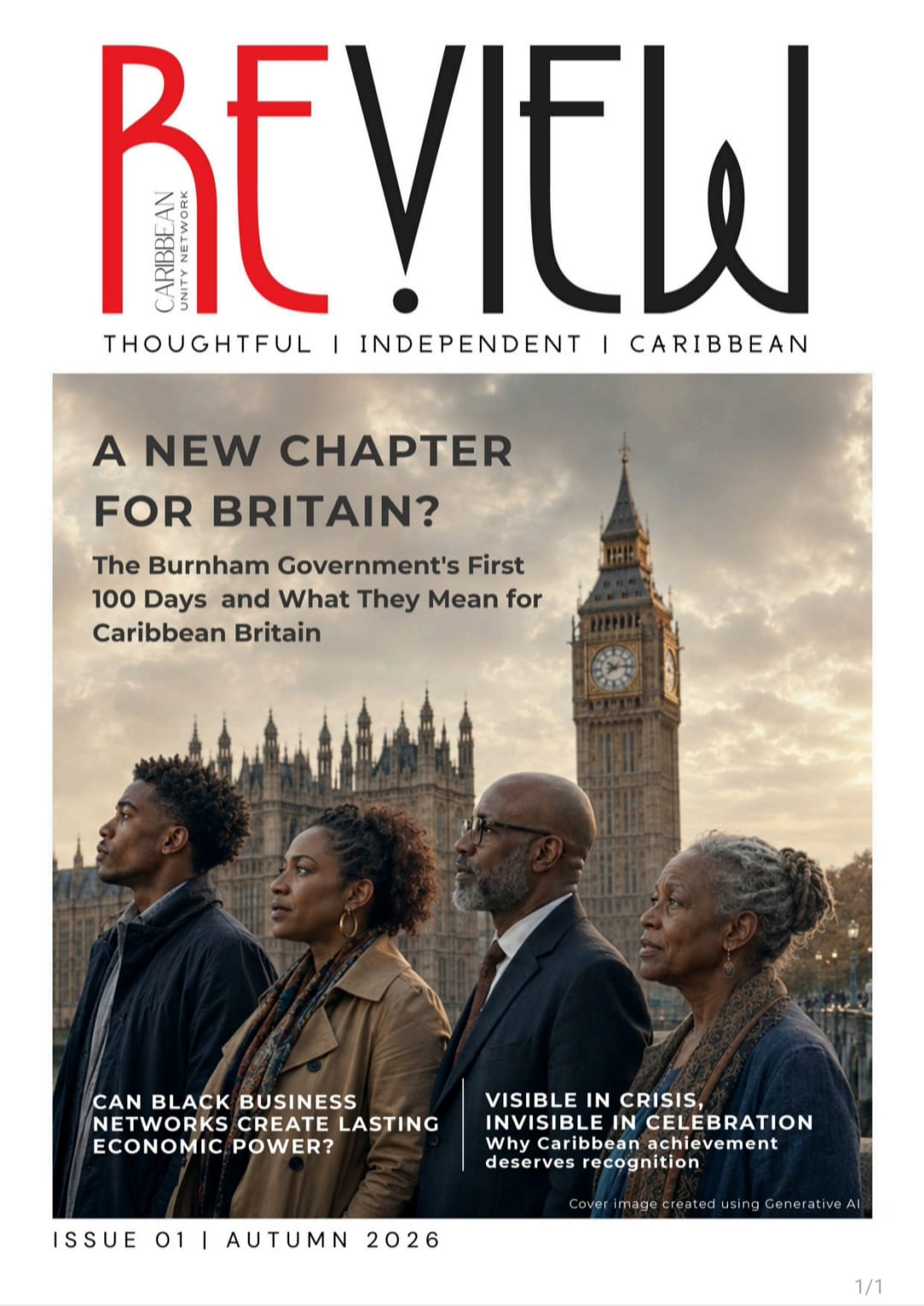
- Cuito Cuanavale: From liberation struggles to Caribbean soft power
 What can a historic battle in Angola teach us about the future of Africa and the Caribbean? In this thought-provoking article, John Stevenson explores how shared struggles, cultural connections and Caribbean solidarity helped shape African liberation, and why that shared history could hold the key to stronger partnerships, greater influence and new opportunities across the Atlantic.
- The Invoice Britain Paid to the Wrong Side
 Britain paid £20 million to compensate slave owners when slavery was abolished. But what did the formerly enslaved receive? Nothing. In this powerful and thought-provoking article, Dr Diahanne Rhiney challenges Britain to confront an uncomfortable truth: the financial debt to enslavers was honoured, but the debt of justice to the enslaved remains unpaid. Who benefited? Who was forgotten? And why does this history still matter today? Read The Invoice Britain Paid to the Wrong Side.
- Elizabeth Flanders Launches Caribbean Unity Network
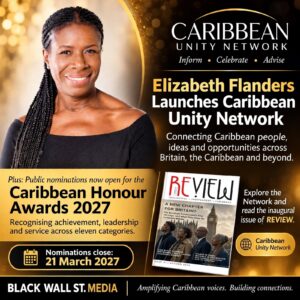 Elizabeth Flanders launches the Caribbean Unity Network, a new initiative bringing together publishing, professional services and recognition to strengthen connections between Caribbean communities and the global diaspora. With a vision of “unity without uniformity”, the Network aims to inform, celebrate and advise, while championing Caribbean achievement, enterprise and identity. Read about the launch, explore the inaugural issue of REVIEW and discover how to nominate outstanding individuals for the Caribbean Honour Awards 2027.
- GRENADA GOES TO THE POLLS: A FAMILY STILL WAITING FOR ANSWERS
 Ten months after Andrew Donald Frederick was found dead in Grenada, his family is still searching for answers. With conflicting conclusions surrounding his death, troubling questions raised by a second post-mortem and concerns about international cooperation, why are the questions still unanswered? Black Wall St. Media investigates the circumstances and calls on the Grenadian authorities to address the family's concerns. Justice cannot be buried in silence. Read our full report.
- BRITISH JAMAICAN CHAMBER OF COMMERCE APPOINTS INAUGURAL LEADERSHIP TEAM TO STRENGTHEN UK–JAMAICA TRADE AND INVESTMENT
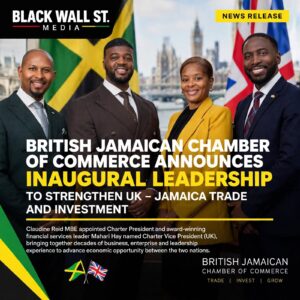 Britain and Jamaica share a rich history, but what does the future of their economic relationship look like? The newly established British Jamaican Chamber of Commerce is looking to turn shared heritage into meaningful trade, investment and enterprise. Meet its inaugural leaders, Claudine Reid MBE and Mahari Hay, and discover the ambition behind BritJACC. Read the full story.